If you are not already a Windscribe user Sign Up Now.
Search Results for: how to set
Windscribe WireGuard Setup
Preparing for Windscribe WireGuard Setup
Verify your Windscribe login information
Log in to your account on the Windscribe website.
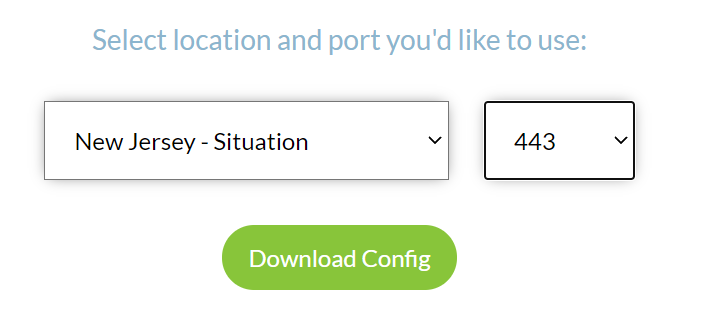
Go to the Windscribe WireGuard config generator page and select the Server location and Port you would like to use. Click Download Config.
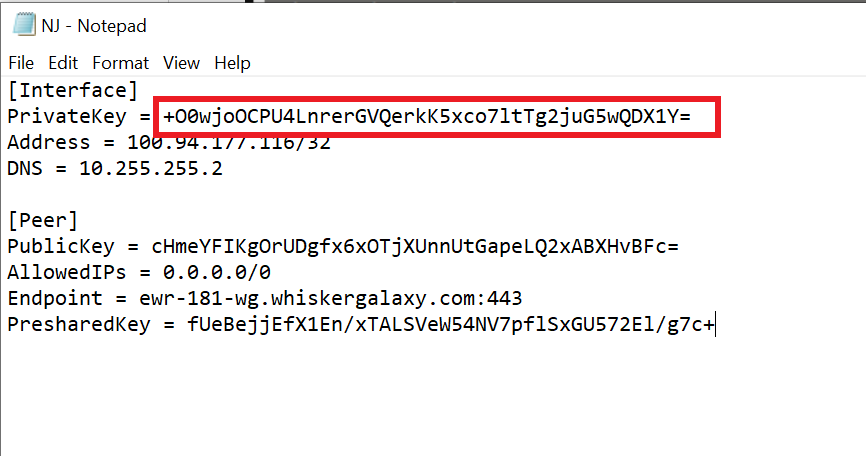
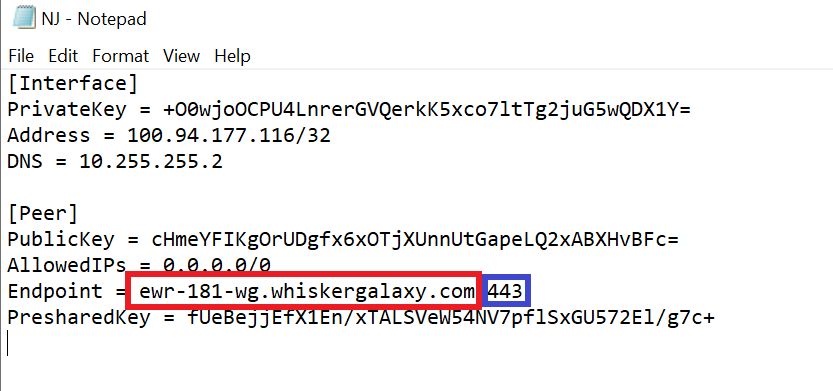
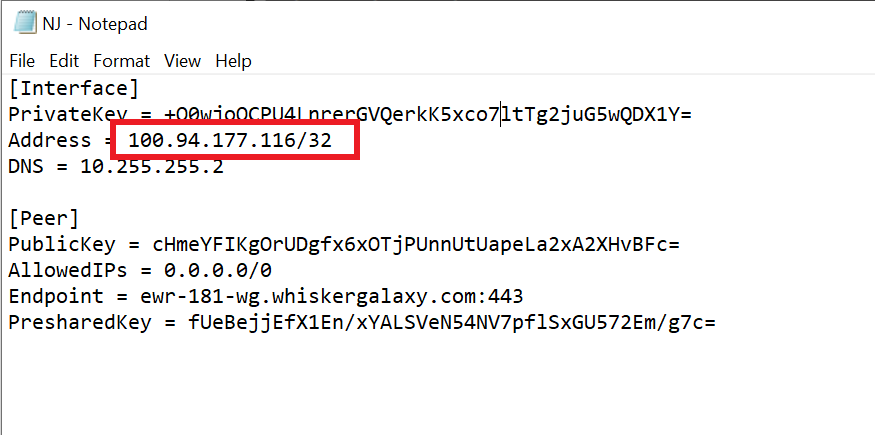
Open the .conf file that is downloaded using Notepad in Windows or TextEdit in Mac.
DD-WRT Router Setup for Windscribe WireGuard
Navigate to Setup > Tunnels
Enter Winscribe WireGuard settings
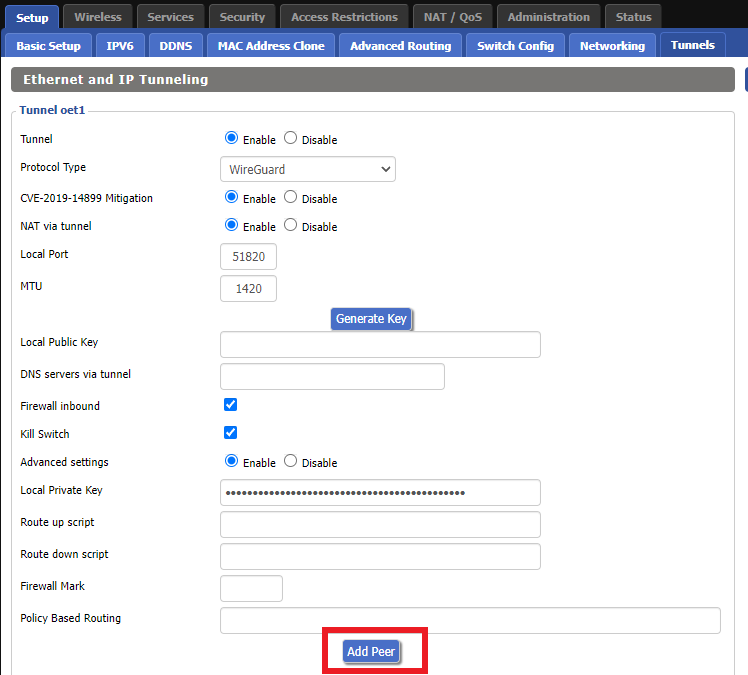
1. Click Add Tunnel.
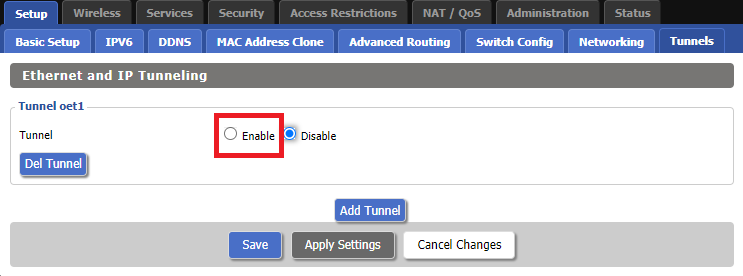
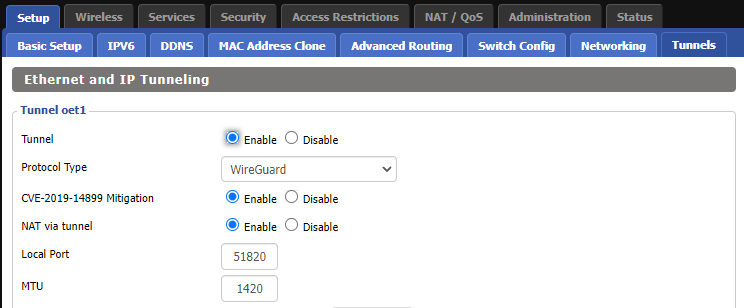
2. Set Tunnel to Enable.
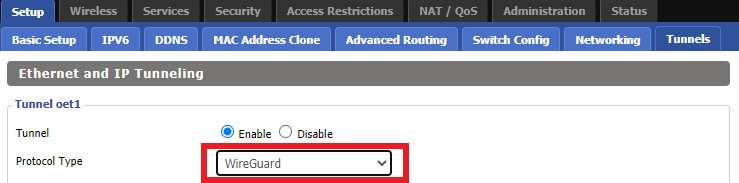
3. Select Wireguard from the dropdown.
3. Set CVE-2019-14899 Mitigation to Enable. Set NAT via Tunnel to Enable. Set Local Port to 51820. Set MTU to 1420.
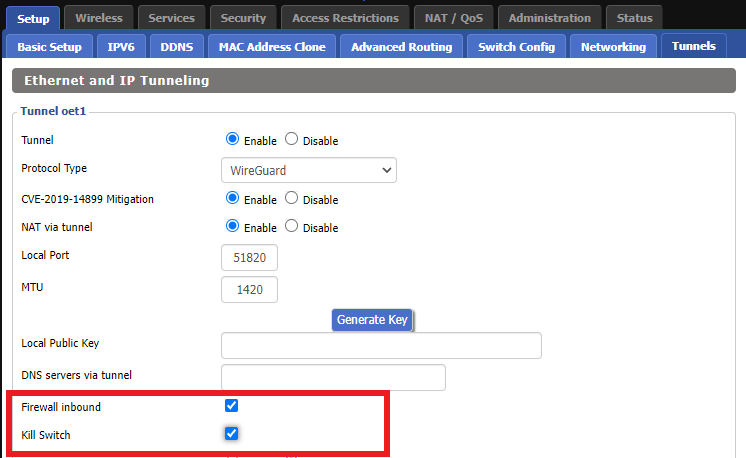
4. Check Firewall inbound and Kill Switch.
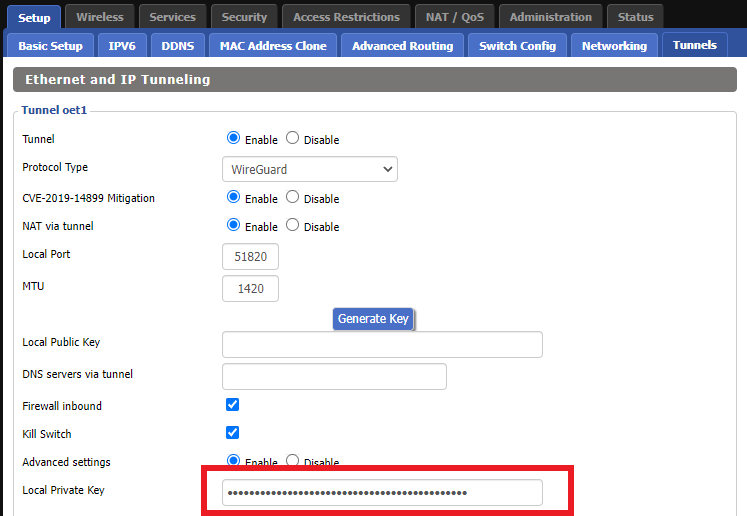
5. Set Advanced Settings to Enable and copy the PrivateKey from the .conf file and paste it into the Local Private Key field.
6. Click Add Peer.
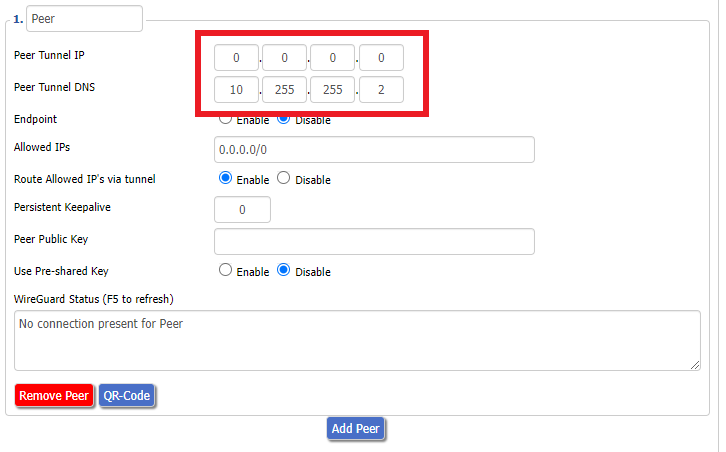
7. Set Peer Tunnel IP to 0.0.0.0. Set Peer Tunnel DNS to the DNS found in the .conf file.
8. Set Endpoint to Enable. Copy and Paste the Endpoint from the .conf file and paste it into the Endpoint Address field. Enter the same Port that appears next to the Endpoint.
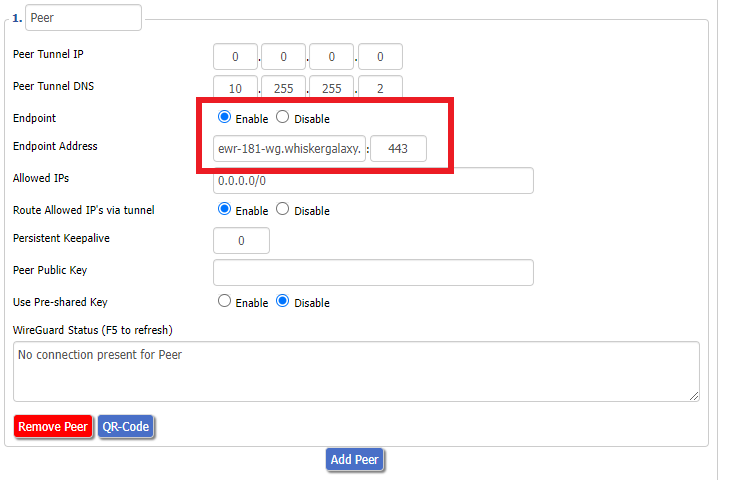
9. Leave Allowed IPs as 0.0.0.0/0. Set Router Allowed IP’s via tunnel to Enable. Set Persistent Keep Alive to 25.
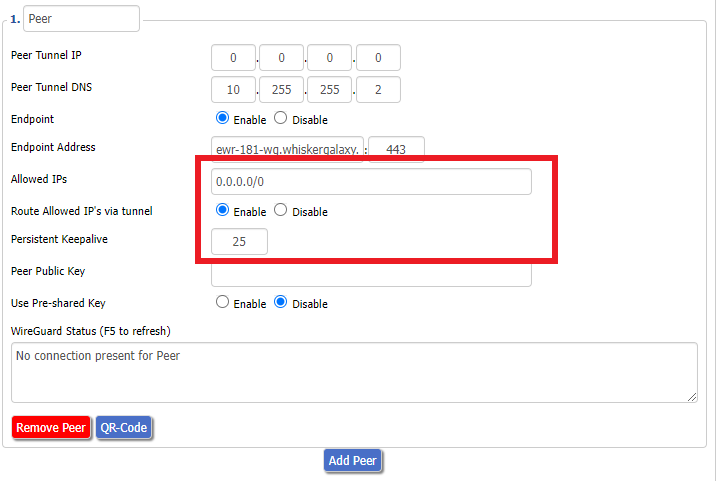
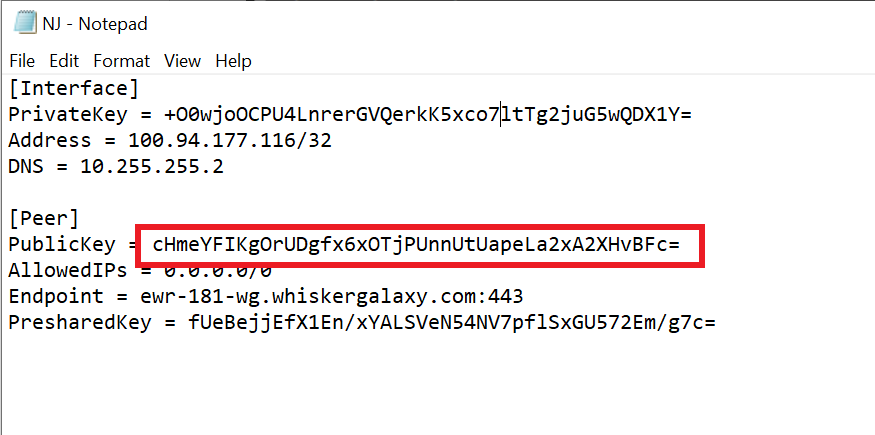
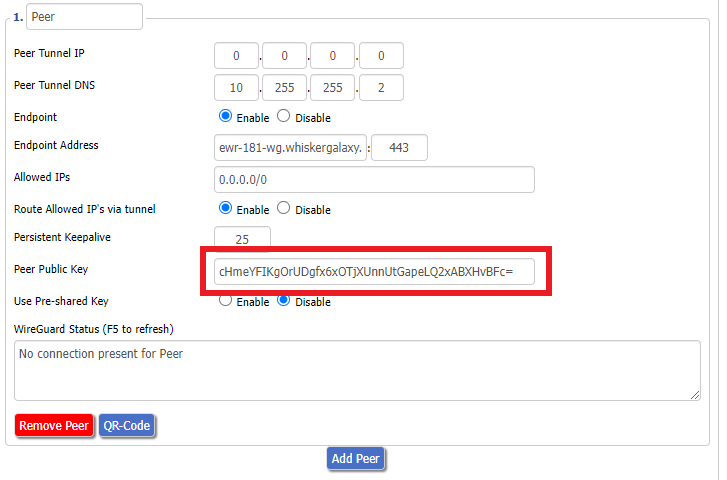
10. Copy and Paste the PublicKey from the .conf file and paste it into the Peer Public Key field.
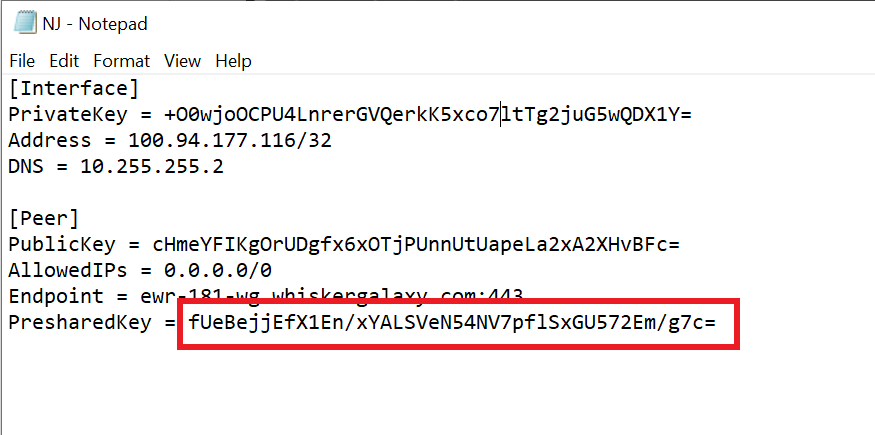
11. Set Use Pre-shared Key to Enable. Copy and Paste the Presharedkey from the .conf file and paste it into the Pre-Shared Key field.
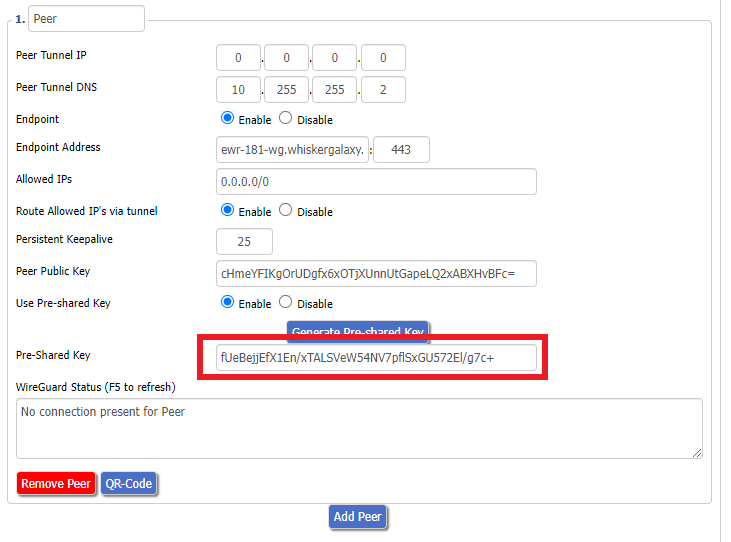
12. Copy the Address from the .conf file and paste it into the IP Addresses/Netmask(CIDR) field.
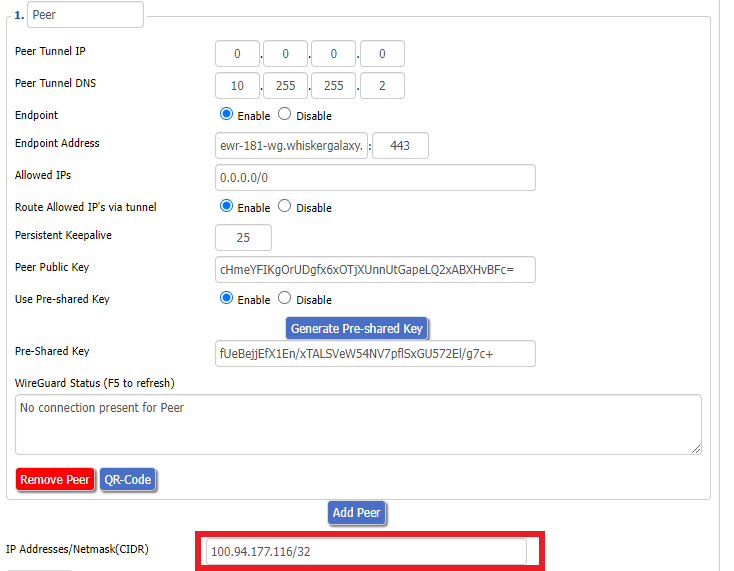
Certain DD-WRT builds will show two separate fields here: IP Address and Subnet Mask. If that is the case set the IP Address field to the Address without the /32 added and set the Subnet Mask to 255.255.255.255
21. At the bottom of the page click Save and then click Apply Settings.
Verify a successful Winscribe connection
Navigate to Setup > Tunnels
- You should Endpoint, Latest handshake, and Transfer in the WireGuard status area.
- Visit whatismyipaddress.com to verify your status as using Winscribe.
Back up your settings
Navigate to Administration > Backup
- Click the Backup button.
- A file named nvrambak.bin will be saved to your computer.
- You can load nvrambak.bin to restore your settings in the event of a reset.
IVPN WireGuard Setup
Preparing for IVPN WireGuard Setup
Verify your IVPN login information
If you are not already a IVPN user Sign Up Now.
Log in to your account on the IVPN website.
DD-WRT Router Setup for IVPN WireGuard
Navigate to Setup > Tunnels
Enter IVPN WireGuard settings
1. Click Add Tunnel.
2. Set Tunnel to Enable.
3. Select Wireguard from the dropdown.
3. Set MTU to 1412.
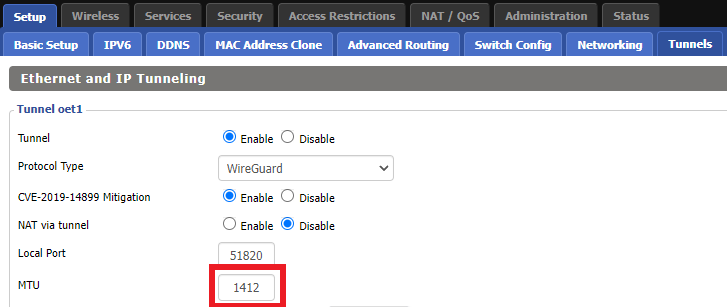
4. Click Generate Key.
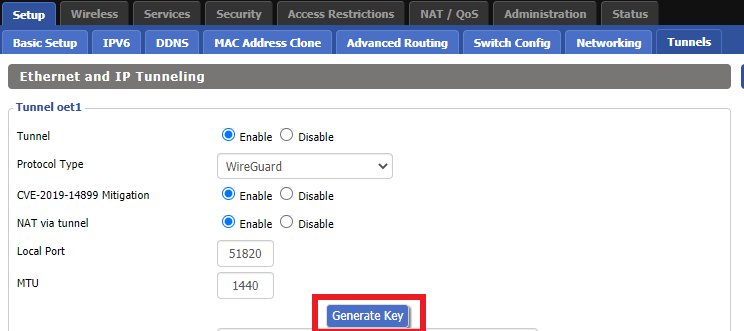
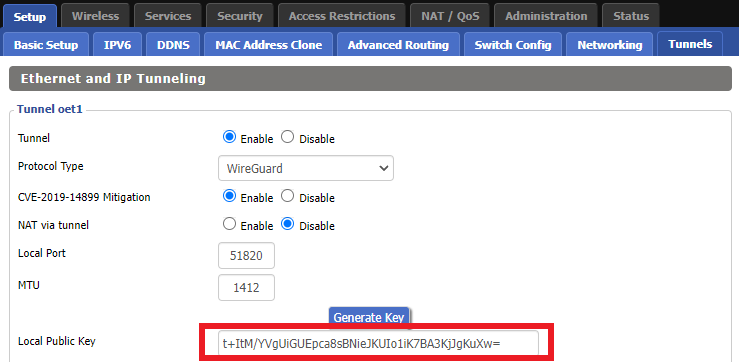
9. Copy the Local Public Key.
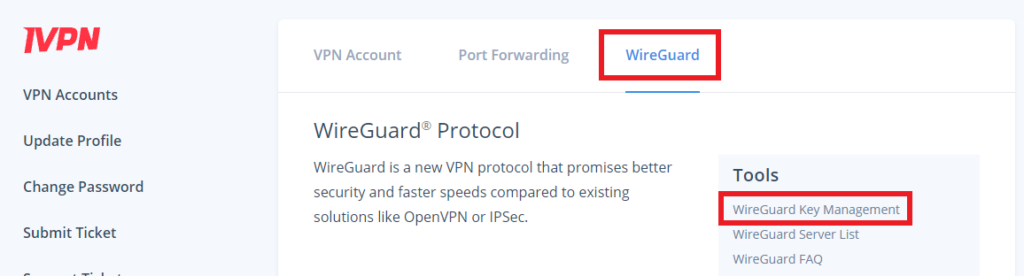
10. In a new tab (leave the DD-WRT settings opened), go to your IVPN Account and click WireGuard and then click WireGuard Key Management.
11. Click Add New Key.
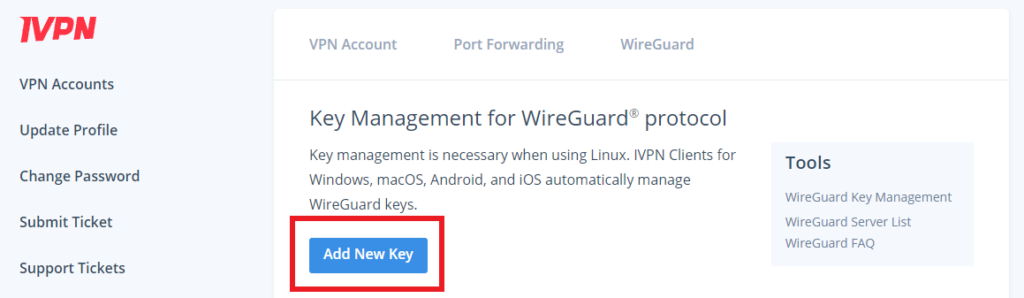
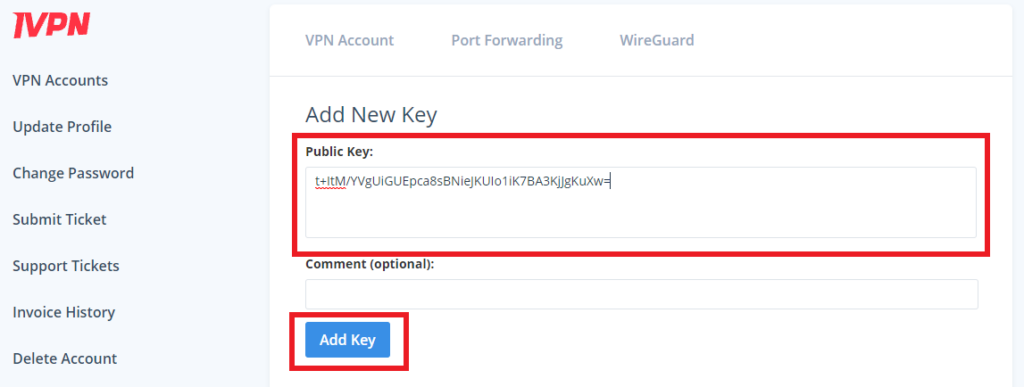
12. Paste the copied Local Public key to the Public Key field and click Add Key.
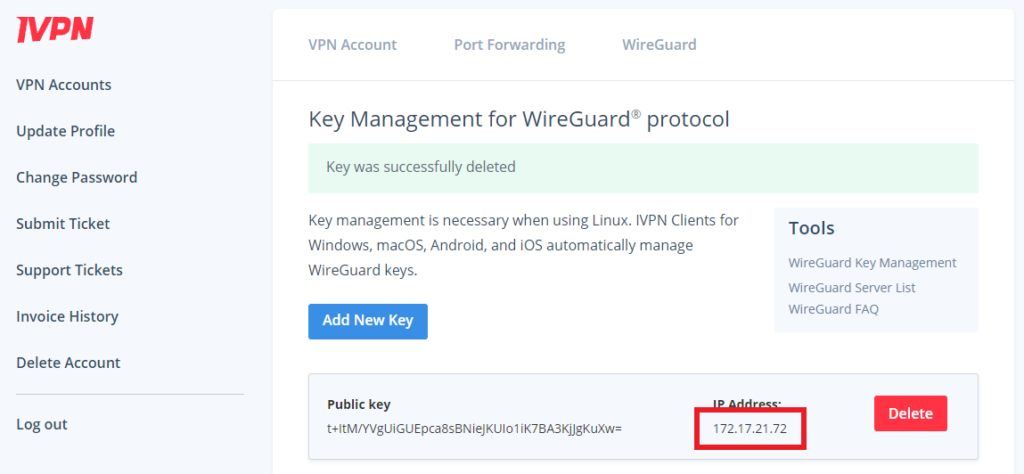
13.Copy the IP Address assigned to your public key and add it to the IP Addresses/Netmask(CIDR) field followed by a /32 subnet mask.
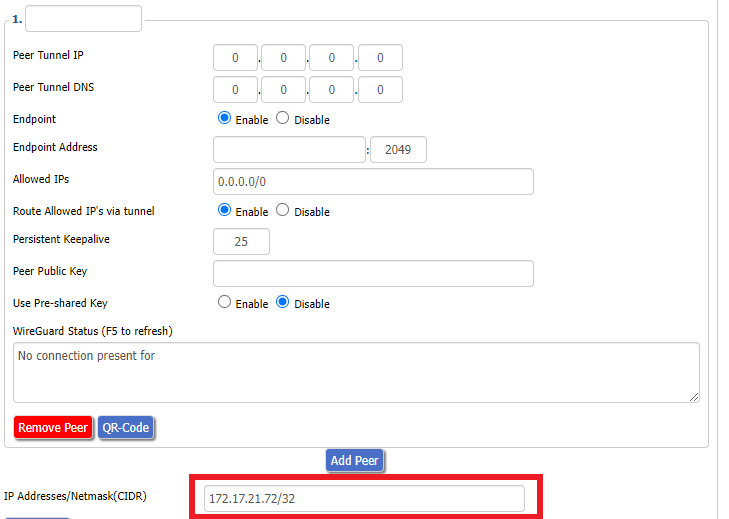
Certain DD-WRT builds will show two separate fields here: IP Address and Subnet Mask. If that is the case set the IP Address field to the Address without the /32 added and set the Subnet Mask to 255.255.255.255
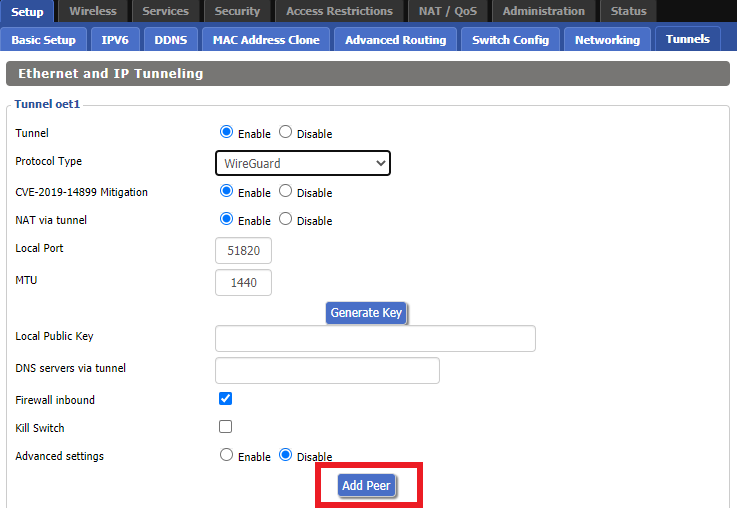
14. Click Add Peer.
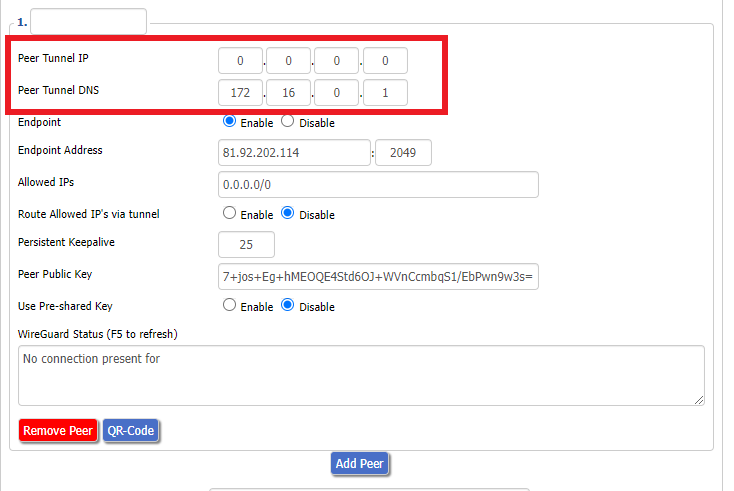
15. Set the Peer Tunnel IP to 0.0.0.0. Set Peer Tunnel DNS to 172.16.0.1
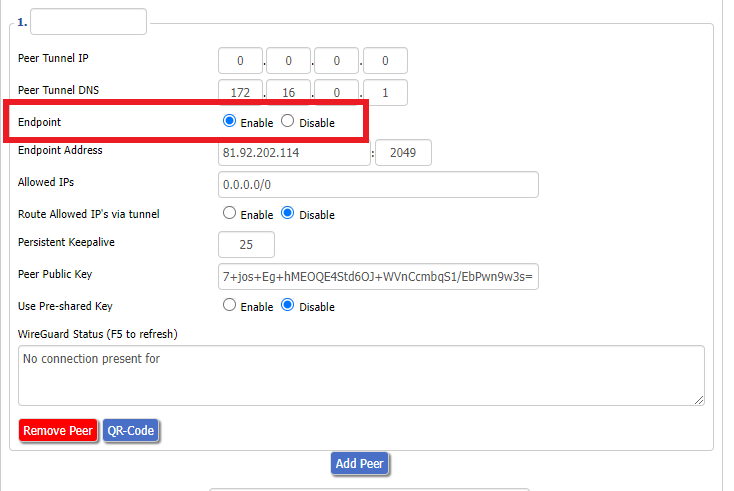
16. Set Endpoint to Enable.
17. Go to the IVPN Server Status page and copy the server name for the WireGuard server location you want to connect to.
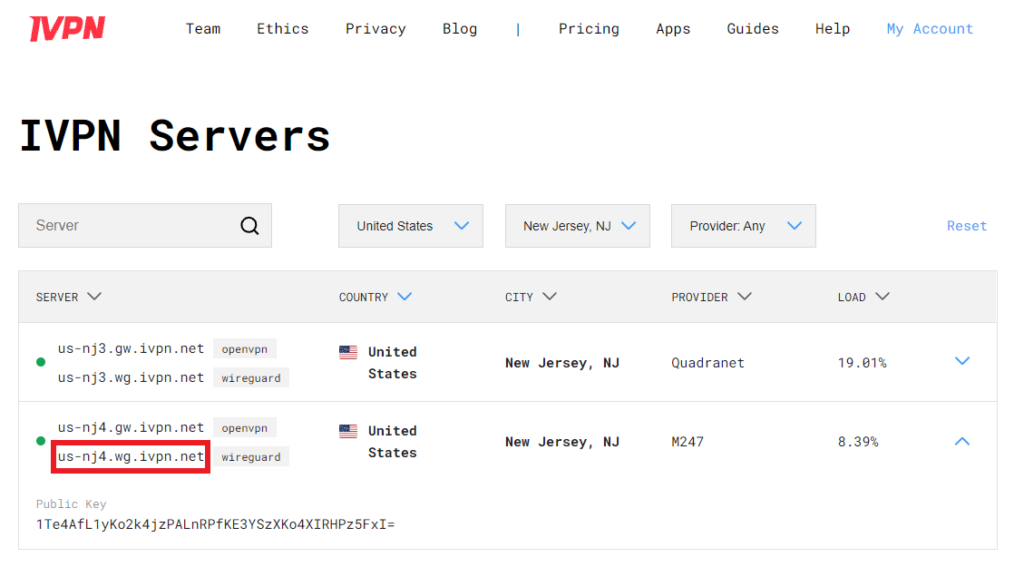
Be sure to copy the WireGuard server address and not the OpenVPN server address.
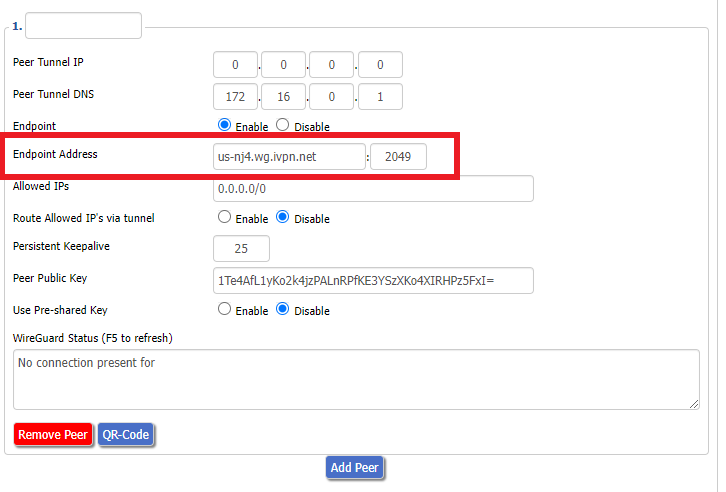
18. Paste the server name you copied into the Endpoint Address field and set the Port to 2049.
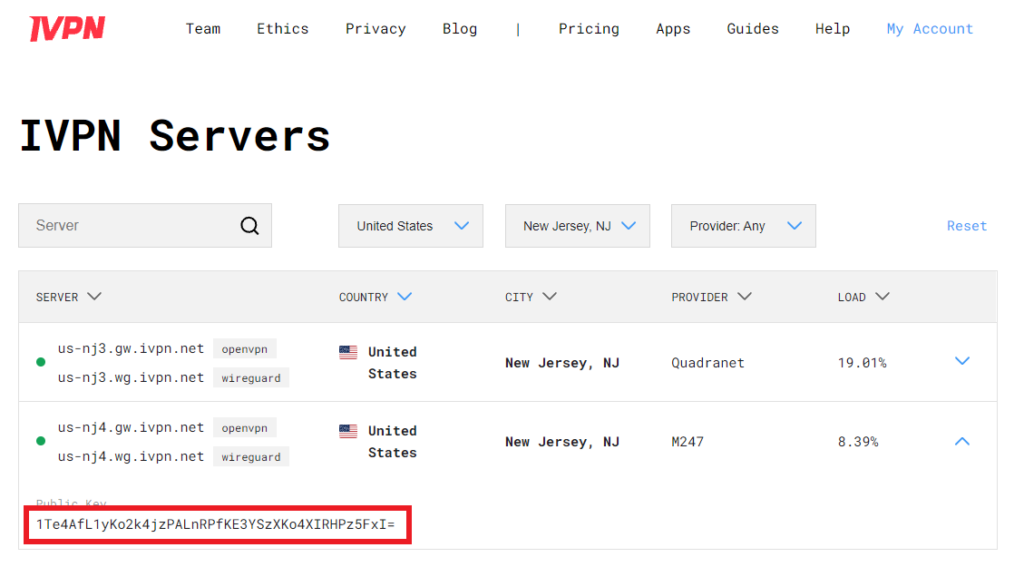
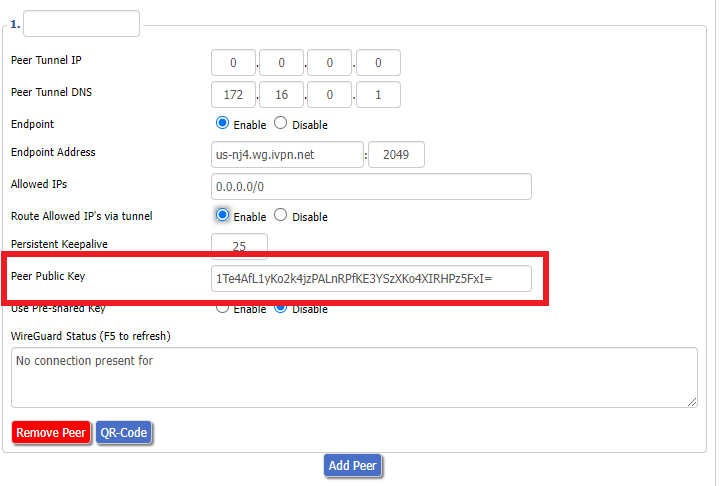
19. On the IVPN Server Status page copy the Public Key of the server location you entered. Paste the Public Key into the Peer Public Key field.
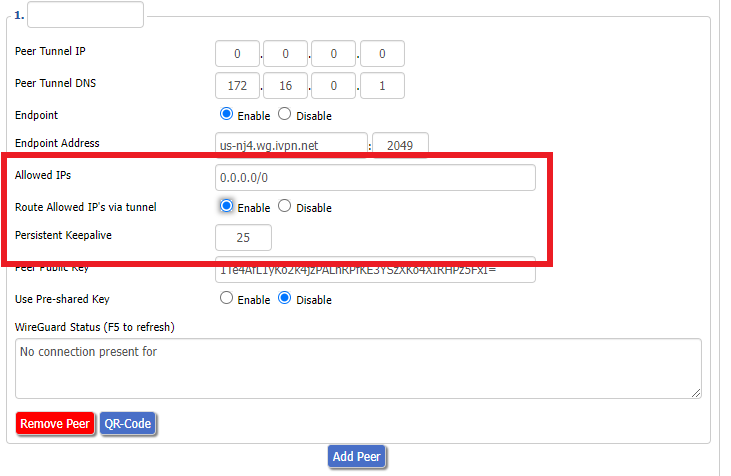
20. Leave Allowed IPs as 0.0.0.0/0. Set Router Allowed IP’s via tunnel to Enable. Set Persistent Keep Alive to 25.
21. At the bottom of the page click Save and then click Apply Settings.
Set IVPN DNS servers
Navigate to Setup > Basic Setup
Set Static DNS 1 to 172.16.0.1
Set Static DNS 2 to 198.245.51.147
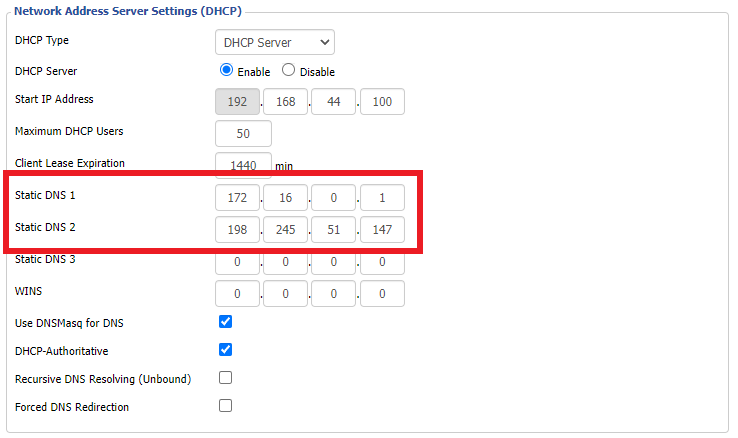
Click Apply Settings.
Reboot the FlashRouter
Navigate to Administration > Management
Scroll to the bottom of the page and click the red Reboot Router button. Wait for the FlashRouter to reboot and then reconnect.
Verify a successful IVPN connection
Navigate to Setup > Tunnels
- You should Endpoint, Latest handshake, and Transfer in the WireGuard status area.
- Visit IVPN’s website to verify your status as using IVPN.
Back up your settings
Navigate to Administration > Backup
- Click the Backup button.
- A file named nvrambak.bin will be saved to your computer.
- You can load nvrambak.bin to restore your settings in the event of a reset.
Internet and Wifi Setup on Asus Merlin Firmware
Listed below are important links to setup instructions for connecting an Asus Merlin firmware router to the internet and WiFi.
DD-WRT Router Setup Guide

Quick Start Guide for DD-WRT FlashRouters
Find setup guides, FAQs and troubleshooting tips for DD-WRT configured FlashRouters.

AC1450, R6220, R6230, R6250, R6260, R6300 V1, R6300 V2, R6400 V1, R6400 V2, R6700 V1, R6700 V2, R6700 V3, R7000, R7000P, R7800, R8000, R9000, XR500

RT-AC56U/R, RT-AC68U V1, RT-AC68U V2, RT-AC1900P, RT-AC87U, RT-AC3100, RT-AC5300

WRT1200AC, WRT1900AC V1, WRT1900AC V2, WRT1900ACS V1, WRT1900ACS V2, WRT32X, WRT3200ACM

Search Support Articles
Troubleshooting
- Why can’t I send emails while connected to VPN?
- What is a DNS leak and how can I prevent a DNS leak in my router?
- My VPN stopped working on my FlashRouter.
- Why is my connection speed slower?
- Why are streaming services blocked while connected to VPN?
- How do I find my router local IP address?
- How do I reset and reconfigure my FlashRouter?
- How do I check for static network settings on my devices?
- Why is my router not connecting to internet?
- How to fix an Unidentified Network or Limited Connection.
- Why are some of my devices not connecting to the internet?
- Why is the internet LED red on my router?
- Why is the power light on my FlashRouter blinking?
- My 2.4GHz network is not showing up
- My 5.0GHz network is not showing up
- My WiFi password is not working
- Why did my WiFi SSID change to ‘dd-wrt’?
- Why are devices disconnecting from Wireless?
- Why is my WiFi signal weak?
More Ways to Get Help

Wireless Repeater Bridge Setup
If you need to extend your connection capabilities and you are not able to wire directly into your main router, you can setup a FlashRouter as a Wireless Repeater Bridge. In Wireless Repeater Bridge mode the FlashRouter connects to your main router on the same subnet via WiFi, and then transmits your internet signal via the FlashRouter for internet access anywhere in your home or office.
Preparing for Wireless Repeater Bridge Setup
Verify your wireless information
In order to setup your FlashRouter as a Wireless Repeater Bridge, you will need the exact SSID and password of your existing wireless network. Make sure you have this information before proceeding.
We recommend using a 2.4GHz network to repeat as this network will have more range. Be sure to click Add under the 2.4GHz settings and not the 5GHz settings.
Locate the Local IP Address of the existing wireless network
Locate the Local IP Address of the existing router that the FlashRouter will be bridged to.
DD-WRT Router Setup for Wireless Repeater Bridge
Disable Firewall
Navigate to Security > Firewall
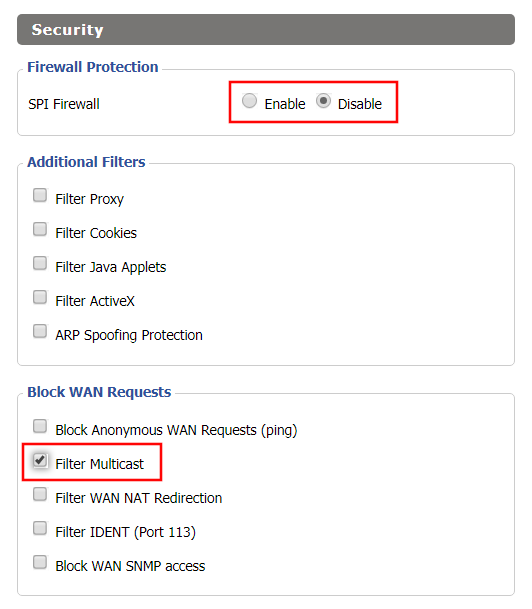
- Set SPI Firewall to Disable.
- Uncheck all boxes except for Filter Multicast.
- Click Save.
Disable DNSmasq
Navigate to Services > Services
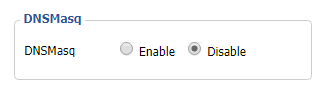
- Set DNSmasq to Disable.
- Click Save.
Enter Wireless settings
Navigate to Wireless > Basic Settings
Select Add in the Virtual Interface area.
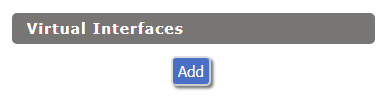
In the Wireless Physical Interface settings for the 2.4GHz network set the Wireless Mode to Repeater Bridge.
Change the Wireless Network Name (SSID) to match exactly with the Wireless Network Name of the network that you will bridge to.
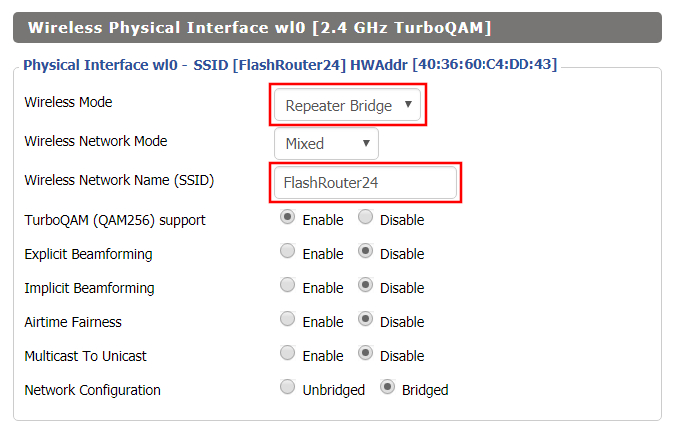
In the Virtual Interfaces settings change the Wireless Network Name (SSID) to FlashRouter24 or any other unique SSID.
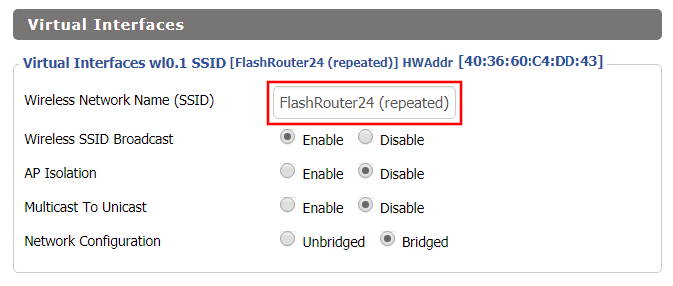
CLICK SAVE
Enter Wireless Security settings
Navigate to Wireless > Wireless Security
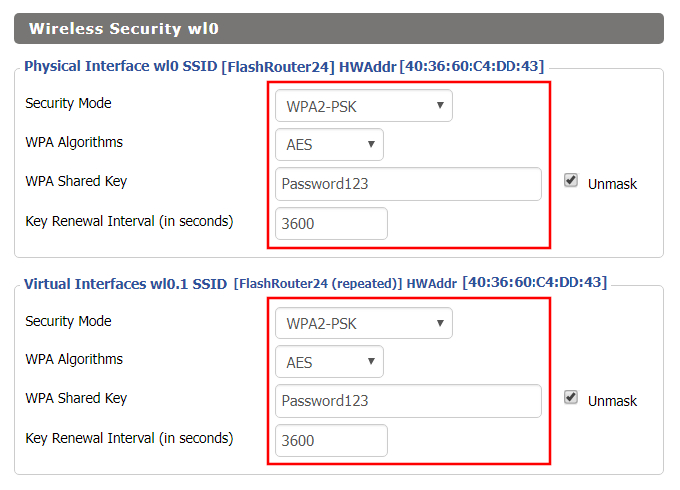
- Duplicate the wireless security settings that are set for the other bands for the newly created virtual interface.
- Change the WPA Shared Key to match exactly with the Wireless Password of the network that you will bridge to.
- Click Save.
Change the FlashRouter's Local IP Address
Navigate to Setup > Basic Setup
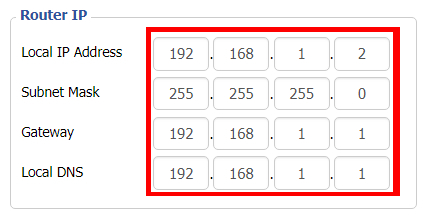
- Set the Local IP Address to a different address on the same subnet as the existing network that you noted early. (example: if the existing network is 192.168.1.1 then set the Local IP Address to 192.168.1.2)
- Set the Gateway to the Local IP Address of the existing network. (example: 192.168.1.1)
- Set the Local DNS to the Local IP Address of the existing network. (example: 192.168.1.1)
- Click Save.
Change the FlashRouter's Operating Mode
Navigate to Setup > Advanced Routing
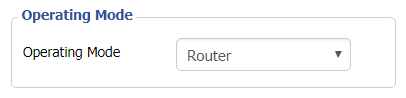
- Set the Operating Mode to Router.
- Click Apply Settings.
Reboot your FlashRouter
Power off the FlashRouter for 30 seconds and then power it back on. When it boots back up you will be able to access the FlashRouter’s settings at the new Local IP Address that you set. Your existing network and the FlashRouter’s network will now be bridged wirelessly.
Back up your settings
Navigate to Administration > Backup
- Click the Backup button.
- A file named nvrambak.bin will be saved to your computer.
- You can load nvrambak.bin to restore your settings in the event of a reset.
How do I read my Wireless status?
The wireless status page is very helpful in diagnosing where a wireless issue stems from. Make sure the settings displayed on this page match the actual settings you have set in the DD-WRT Wireless settings. Review our recommended wireless settings for your FlashRouter if you are not getting accurate readouts.
Navigate to Status > Wireless
Interface
Select from the wireless interface that you want to view the readouts for.
MAC Address
Used to identify the wireless interface.
Chipset
Displays the wireless hardware that your FlashRouter uses.
Radio
Should always be set to Radio is On unless you have intentionally disabled the wireless on the FlashRouter. If this is displaying Radio is Off for certain wireless interfaces we recommend adjusting the Wireless Channel on the Wireless > Basic Settings page.
Mode
This should read as AP unless you are using an Advanced Wireless setup such as a Repeater, Client, or Repeater Bridge.
Network
Displays the wireless network mode that you have set for a specific wireless interface.
SSID
Displays the wireless network name that you have set for a specific wireless interface.
Channel
Displays the channel that you have set for a specific wireless interface. If this reads as Unknown it is best to select a new wireless channel or reboot the FlashRouter and check again.
TX Power
Displays the wireless transmit power that you have set for a specific wireless interface. If this reads as Unknown it is best reboot the FlashRouter and check again.
Rate
Displays an approximation of the max wireless speed available on a wireless band.
ACK Timing
Displays the ACK Timing that you have set for a specific wireless interface. If this reads as Unknown it is best reboot the FlashRouter and check again.
Encryption
Should always read as Enabled, WPA2 Personal.
Received (RX)
If this appears as 0% and there are no errors then it means that no devices have connected to the wireless interface yet. If this appears as 0% and the errors match the amount of OK packets you will need to adjust the wireless settings on the Wireless > Basic Settings page.
Transmitted (TX)
If this appears as 0% you will need to adjust the wireless settings on the Wireless > Basic Settings page.
How do I reset and reconfigure my FlashRouter?
When is a router reset needed?
A reset of the FlashRouter should only be performed in the following instances:
- You have exhausted all other troubleshooting methods and cannot access your router settings.
- A backup file was saved of your previously working settings.
- Username and password to access the FlashRouter’s settings are not working.
- Power light on the router is blinking steadily.
- Firmware upgrade was performed with Reset to Default settings selected.
Reset Router
Asus FlashRouters:
- While the router is powered off press and hold the WPS button on the back or side of the router. Power up the router while continuing to hold the WPS. Continue to hold for 15 seconds as the router powers on (note this could be up to 45 seconds on some models before lights flash).
- You will see the lights on the router flashing steadily and this is how you know you have reset the router.
- Let the router sit for about a minute and then reboot the router.
Linksys and Netgear FlashRouters:
- While the router is plugged in, find the reset button located on the back of the router. You will need a pin or pencil to hold down the button for 15 seconds.
- You will see the lights on the back of the router flash simultaneously and this is how you know you have reset the router.
- Let the router sit for about a minute and then reboot the router.
Access Router Settings
1. Connect to the FlashRouter’s network via ethernet cable or wireless.
The wireless network will appear as “dd-wrt” and will likely not require a password to join. If it does require a password to join the password will be the default wireless password found on the bottom of the router.
2. Open your web browser and enter 192.168.1.1 in the URL.
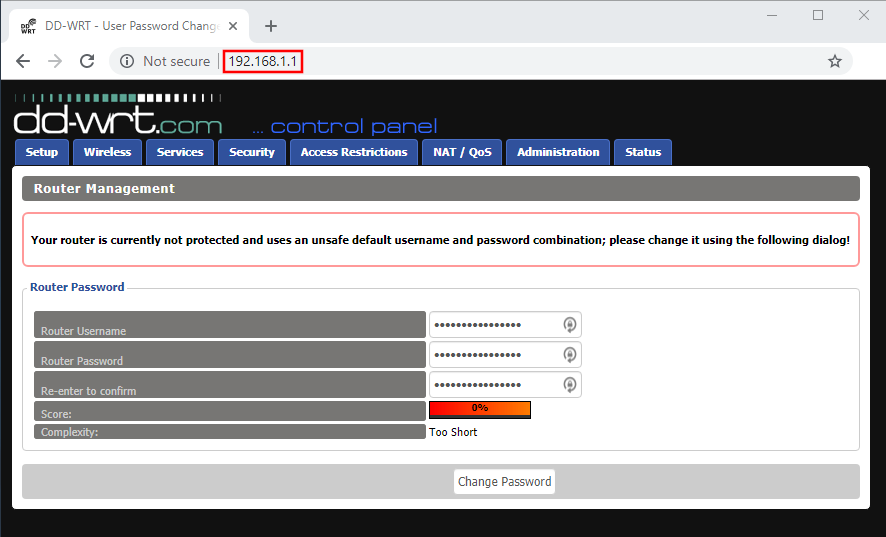
3. Delete the dots and enter the new administration login in the Router Username, Router Password, and Re-enter to confirm fields.
TYPE CAREFULLY when setting the administration login as a typo will result in needing to reset the router again.
Change Local IP Address and DNS
Navigate to Setup > Basic Setup
1. Set the Local IP Address to 192.168.11.1
2. Set the Static DNS 1 to 8.8.8.8
3. Set the Static DNS 2 to 8.8.4.4
4. Set the Static DNS 3 to 208.67.220.220
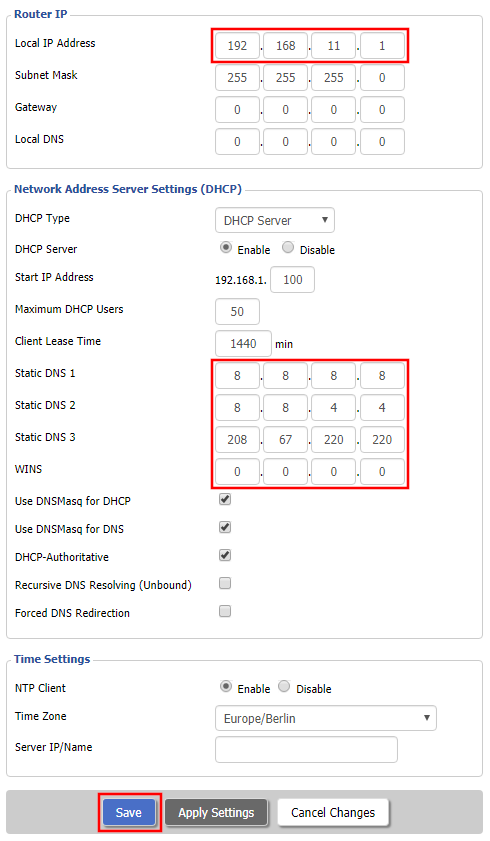
CLICK SAVE
Setup WiFi
Navigate to Wireless > Basic Settings
Find your FlashRouter model in the WiFi Setup section and replicate the wireless settings on this page.
CLICK APPLY SETTINGS
REBOOT ROUTER
Connect to the FlashRouter's network
You will be able to connect to the newly setup wireless network using the details you set. The router will now be accessible at 192.168.11.1
Back up your settings
- Click the Backup button.
- A file named nvrambak.bin will be saved to your computer.
- You can load nvrambak.bin to restore your settings in the event of a reset.
Mullvad WireGuard Setup
Preparing for Mullvad WireGuard Setup
Verify your Mullvad login information
If you are not already a Mullvad user Sign Up Now.
Log in to your account on the Mullvad website.
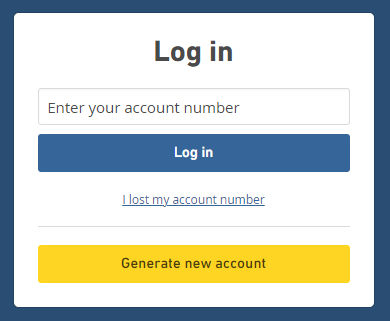
Select Manage ports and WireGuard Keys displayed on the account page.

DD-WRT Router Setup for Mullvad WireGuard
Navigate to Setup > Tunnels
Enter Mullvad WireGuard settings
1. Click Add Tunnel.
2. Set Tunnel to Enable.
3. Select Wireguard from the dropdown.
4. Click Add Peer.
5. Set Endpoint to Enable.
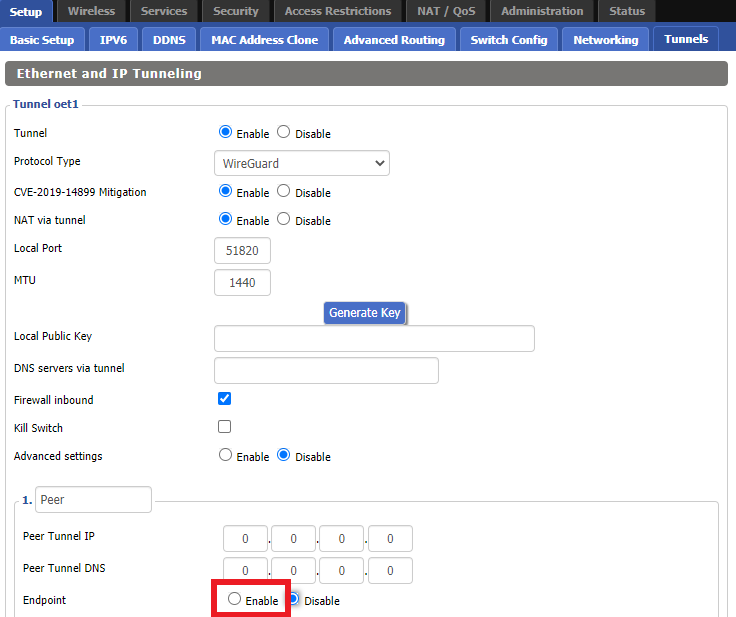
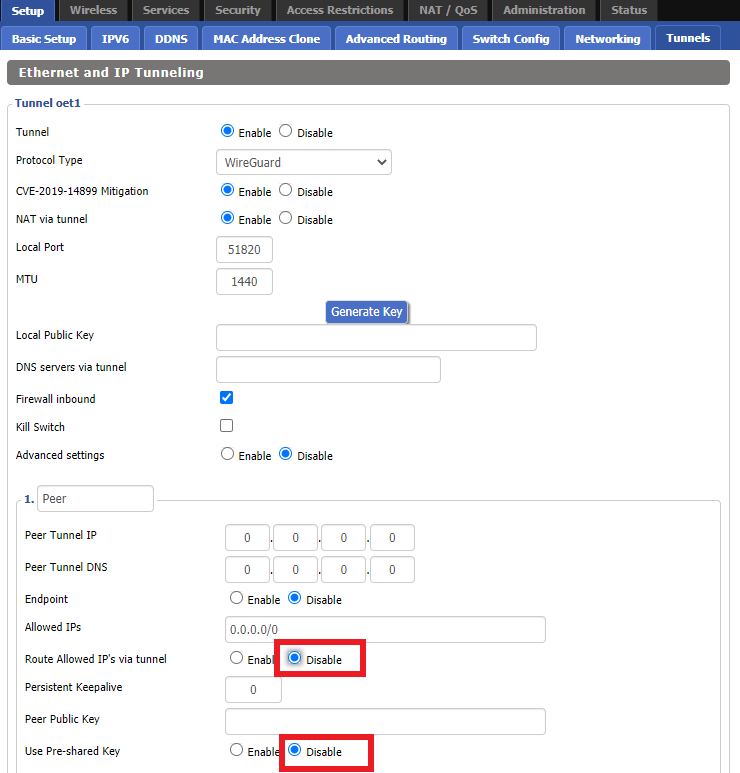
6. Set Router Allowed IP’s via tunnel and Use Pre-shared Key to Disable.
7. Click Generate Key.
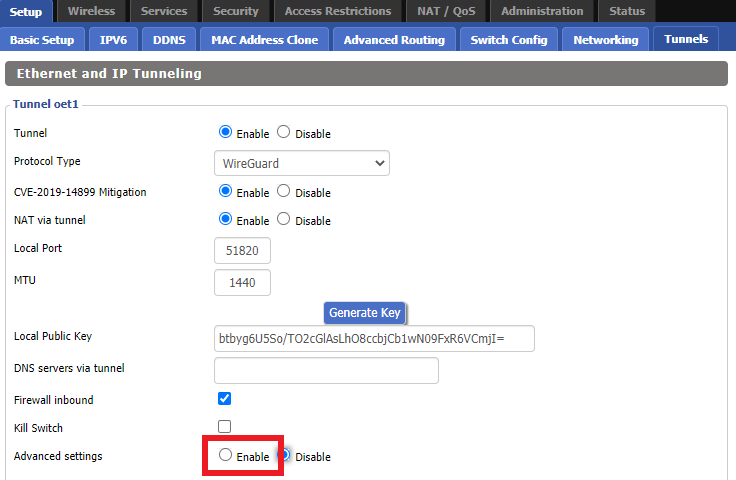
8. Set Advanced Settings to Enable.
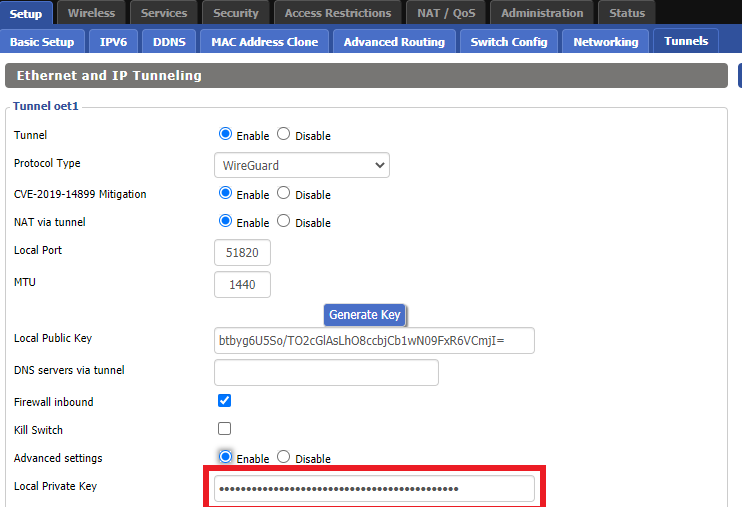
9. Copy the Local Private Key.
10. In a new tab (leave the DD-WRT settings opened), go to your Mullvad Account and click Manage Ports and WireGuard Keys.

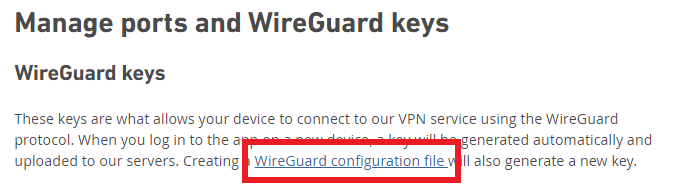
11. Click WireGuard configuration file.
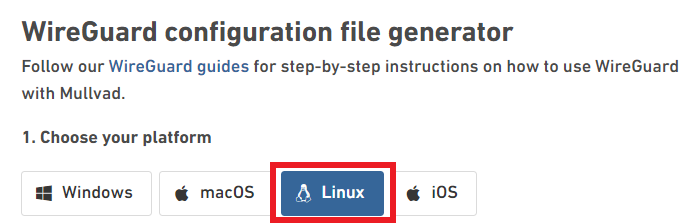
12. Select Linux as your Platform.
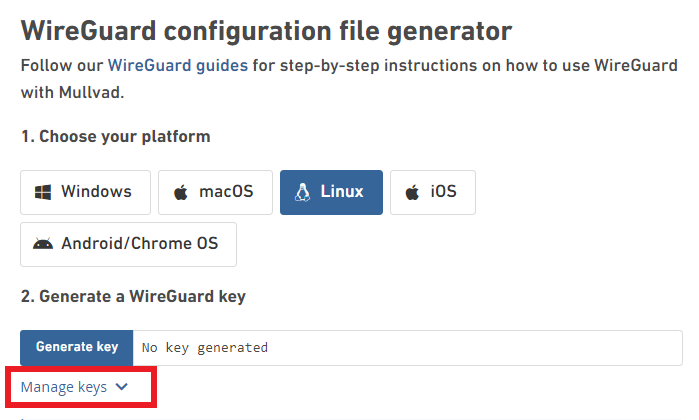
13. Click Manage Keys.
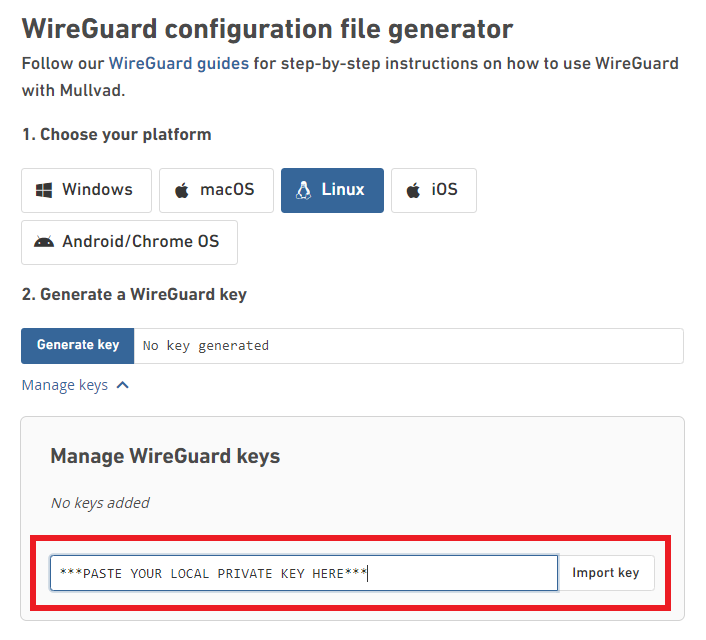
14. Paste the copied Local Private key to the Manage WireGuard Keys field and click Import Keys.
15. Select your Country, City, and Server number that you want to connect to.
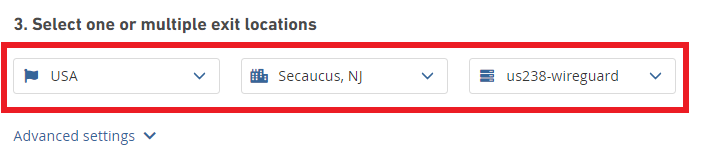
16. Click Advanced Settings.
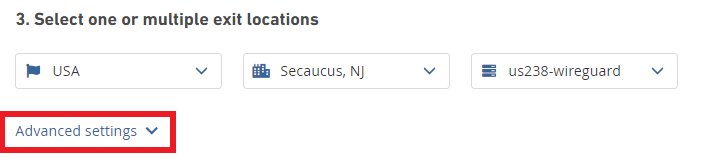
17. Set the Tunnel Traffic to Only IPv4.
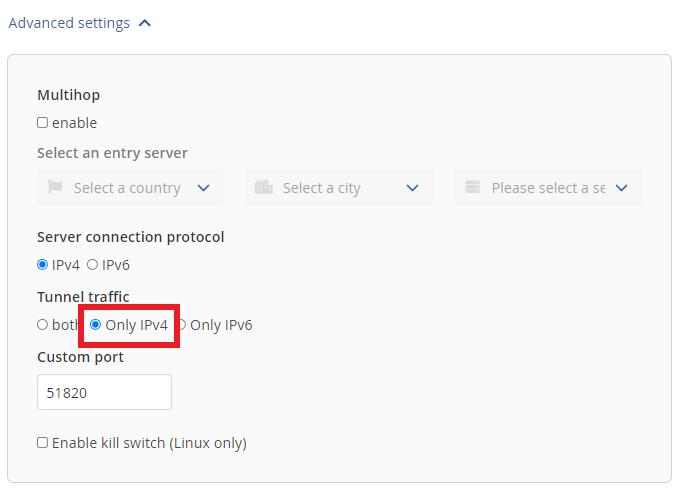
18. Click Download File.
19. Open the config file that was downloaded to your computer with NotePad or Notepad++ for Windows or TextEdit for Mac.
20. In the downloaded config file under [Interface] enter the Address into the IP Addresses/Netmask(CIDR) field in the DD-WRT settings.
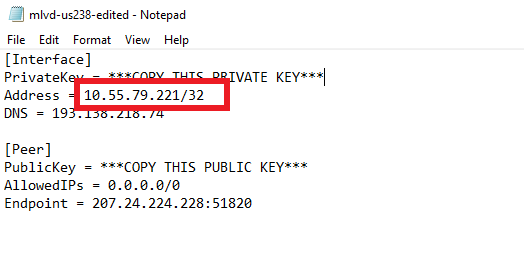
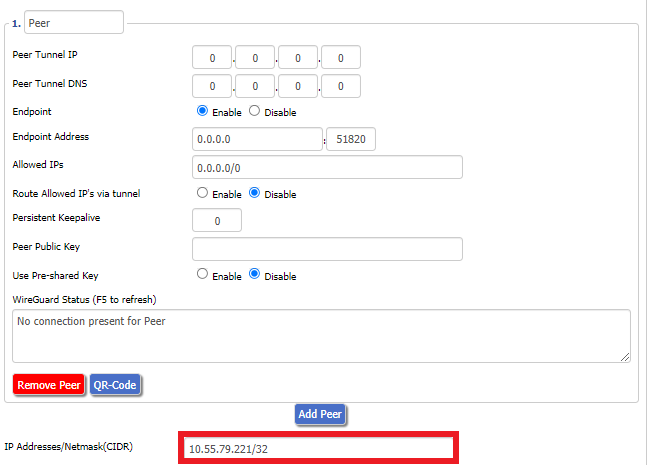
Certain DD-WRT builds will show two separate fields here: IP Address and Subnet Mask. If that is the case set the IP Address field to the Address without the /32 added and set the Subnet Mask to 255.255.255.255
21. In the config file under [Peer] copy the PublicKey and paste it into the Peer Public Key field in the DD-WRT Settings.
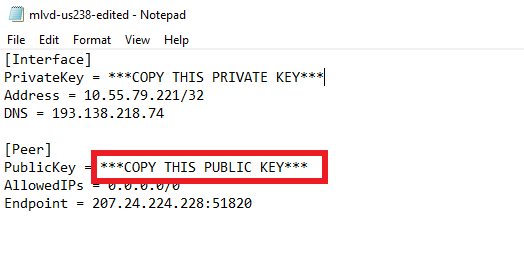
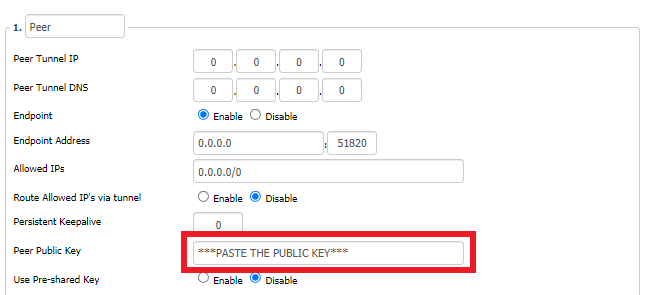
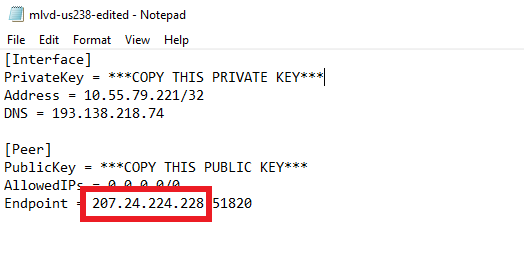
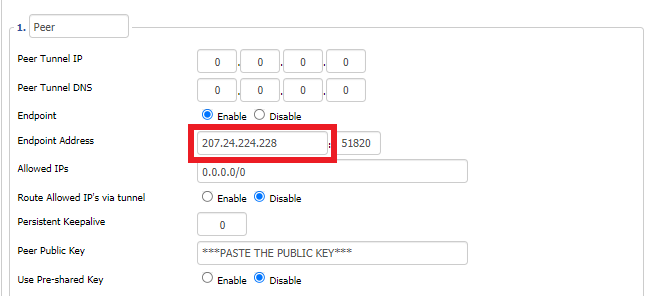
22. In the config file under [Peer] copy the Endpoint and paste it into the Endpoint Address field.
23. At the bottom of the page click Save and then click Apply Settings.
Enter Mullvad WireGuard Commands
Navigate to Administration > Commands
1. Copy and paste the text below and click Save Startup.
sleep 30
echo "Update route table on startup..."
WGSERVER=$(/usr/sbin/nvram get oet1_rem0)
WANGW=$(/usr/sbin/nvram get wan_gateway)
WANIF=$(/usr/sbin/nvram get wan_iface)
route add -host $WGSERVER gw $WANGW dev $WANIF
route del default
route add default dev oet1
ip route flush cache
mkdir -p /tmp/etc/config
ln -s /tmp/custom.sh /tmp/etc/config/wg-route-fix.wanup
echo "... Done route table update."
2. Copy and paste the text below and click Save Custom.
#!/bin/sh
sleep 5
echo "Update route table on wanup ..."
WGSERVER=$(/usr/sbin/nvram get oet1_rem0)
WANGW=$(/usr/sbin/nvram get wan_gateway)
WANIF=$(/usr/sbin/nvram get wan_iface)
route add -host $WGSERVER gw $WANGW dev $WANIF
route del default
route add default dev oet1
ip route flush cache
echo "... Done route table update."
3. Copy and paste the text below and click Save Firewall.
WANIF=$(/usr/sbin/nvram get wan_iface)
iptables -t nat -I POSTROUTING -o oet1 -j MASQUERADE
iptables -I FORWARD -i br0 -o $WANIF -m state –state NEW -j REJECT –reject-with icmp-host-prohibited
iptables -I FORWARD -i br0 -p tcp -o $WANIF -m state –state NEW -j REJECT –reject-with tcp-reset
Set Mullvad DNS servers
Navigate to Setup > Basic Setup
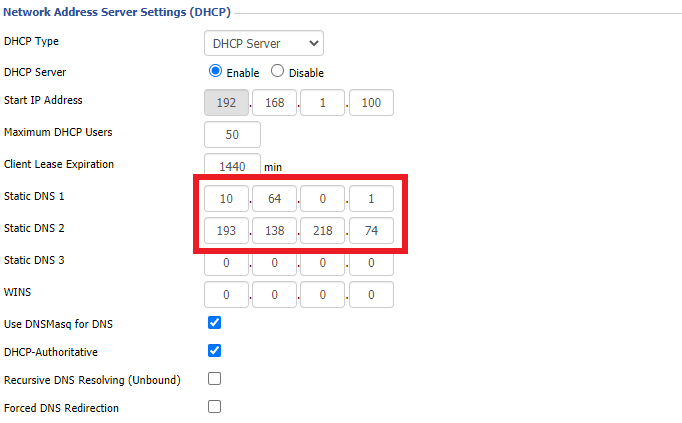
Set Static DNS 1 to 10.64.0.1
Set Static DNS 2 to 193.138.218.74
Click Apply Settings.
Reboot the FlashRouter
Navigate to Administration > Management
Scroll to the bottom of the page and click the red Reboot Router button. Wait for the FlashRouter to reboot and then reconnect.
Verify a successful Mullvad connection
Navigate to Setup > Tunnels
- You should see Endpoint, Latest handshake, and Transfer in the WireGuard status area.
- Visit Mullvad’s IP Check to verify your status as using Mullvad.
Back up your settings
Navigate to Administration > Backup
- Click the Backup button.
- A file named nvrambak.bin will be saved to your computer.
- You can load nvrambak.bin to restore your settings in the event of a reset.
Wireless Access Point Setup
A Wireless Access Point is a setup that has the FlashRouter using an existing network’s DHCP instead of assigning its own. The FlashRouter’s WAN/Internet port should be not be connected to your modem or other router while performing this setup.
Preparing for Wireless Access Point Setup
Locate the Local IP Address of the existing wireless network
Locate the Local IP Address of the existing router that the FlashRouter will be bridged to.
DD-WRT Router Setup for Wireless Access Point
Disable Firewall
Navigate to Security > Firewall
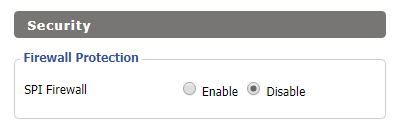
- Set SPI Firewall to Disable.
- Click Save.
Disable DNSmasq
Navigate to Services > Services
- Set DNSmasq to Disable.
- Click Save.
Change the FlashRouter's Local IP Address
Navigate to Setup > Basic Setup
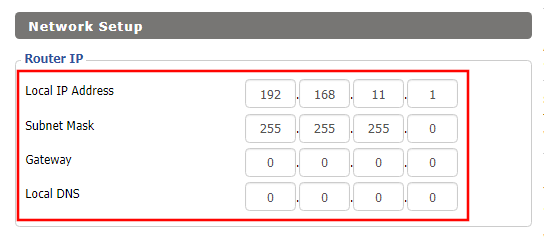
- Set the Local IP Address to a different address on the same subnet as the existing network that you noted early. (example: if the existing network is 192.168.1.1 then set the Local IP Address to 192.168.1.2)
- Set the Gateway to the Local IP Address of the existing network. (example: 192.168.1.1)
- Set the Local DNS to the Local IP Address of the existing network. (example: 192.168.1.1)
- Click Save.
Change the FlashRouter's DHCP settings
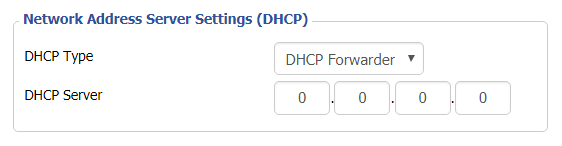
- Set the DHCP Type to DHCP Forwarder.
- Click Save.
Change the FlashRouter's Operating Mode
Navigate to Setup > Advanced Routing
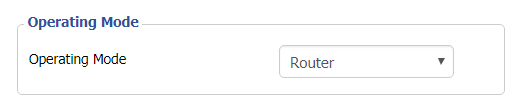
- Set the Operating Mode to Router.
- Click Apply Settings.
Reboot your FlashRouter
- Power off the FlashRouter for 30 seconds and connect from the other router’s LAN port to one of the FlashRouter’s LAN port then power it back on. When it boots back up you will be able to access the FlashRouter’s settings at the new Local IP Address that you set.
Back up your settings
Navigate to the Administration > Backup page.
- Click the Backup button.
- A file named nvrambak.bin will be saved to your computer.
- You can load nvrambak.bin to restore your settings in the event of a reset.
How do I set a Static IP for my device in DD-WRT?
It can be very useful to setup static local IP addresses for devices on your FlashRouter network. By assigning specific IP’s to specific devices you can better control and manage how your network and the internet interacts with each device.
Once you setup a static IP you can set access restrictions, monitor and control bandwidth, as well as bypass a router VPN connection or setup a device specific Kill Switch. Without a static IP assignment you may lose device specific settings when the DHCP lease to the router expires.
Navigate to Services > Services
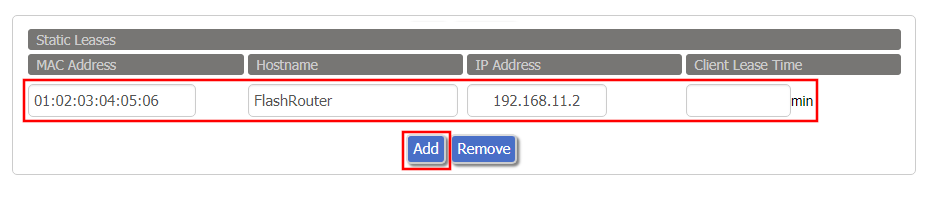
- Under Static Leases click Add once.
- Fill in the newly appeared fields.
- MAC Address: Enter the device’s MAC address which can be found on the device itself or on the Status > LAN page.
- Hostame: Enter a name for the device. Make sure that there are no spaces.
- IP Address: Enter the desired static IP Address of the device. It should be on the same subnet as the FlashRouter (192.168.11.x)
- Client Lease Time: Leave this field blank.
- Click Apply Settings
- Repeat the steps above for each individual static IP address you would like to setup. If you click Add before clicking Apply Settings you will lose the configuration.
If a device has wireless and ethernet capabilities the MAC Addresses will be different for a wireless connection and an ethernet connection. Make sure to set a static IP for both MAC Addresses in this case.
Wireless Client Bridge Setup
If you need to extend your wired connection capabilities and you are not able to wire directly into your main router, you can setup a FlashRouter as a Wireless Client Bridge. In Wireless Client Bridge mode the FlashRouter connects to your main router via WiFi, and then transmits your internet signal via the FlashRouter LAN ports for wired internet access anywhere in your home or office.
Preparing for Wireless Client Bridge Setup
Verify your wireless information
In order to setup your FlashRouter as a Wireless Client Bridge, you will need the exact SSID and password of your existing wireless network. Make sure you have this information before proceeding.
We recommend using a 2.4GHz network to repeat as this network will have more range.
Locate the Local IP Address of the existing wireless network
Locate the Local IP Address of the existing router that the FlashRouter will be bridged to.
DD-WRT Router Setup for Wireless Client Bridge
Disable Firewall
Navigate to Security > Firewall
- Set SPI Firewall to Disable.
- Uncheck all boxes except for Filter Multicast.
- Click Save.
Disable DNSmasq
Navigate to Services > Services
- Set DNSmasq to Disable.
- Click Save.
Enter Wireless settings
Navigate to Wireless > Basic Settings
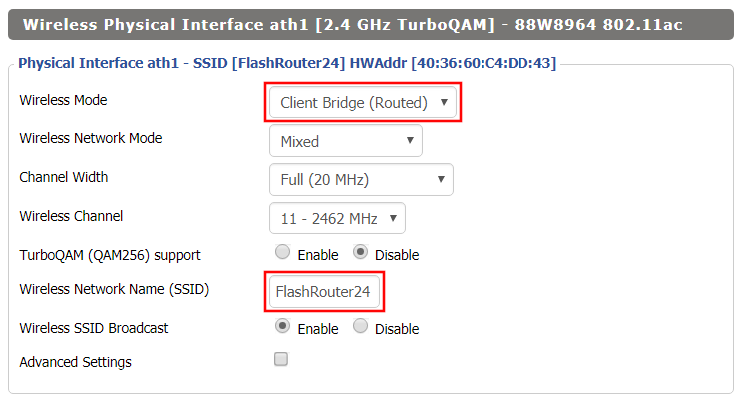
- In the Wireless Physical Interface settings for the 2.4GHz network set the Wireless Mode to Client Bridge.
- Change the Wireless Network Name (SSID) to match exactly with the Wireless Network Name of the network that you will bridge to.
- Click Save.
Enter Wireless Security settings
Navigate to Wireless > Wireless Security
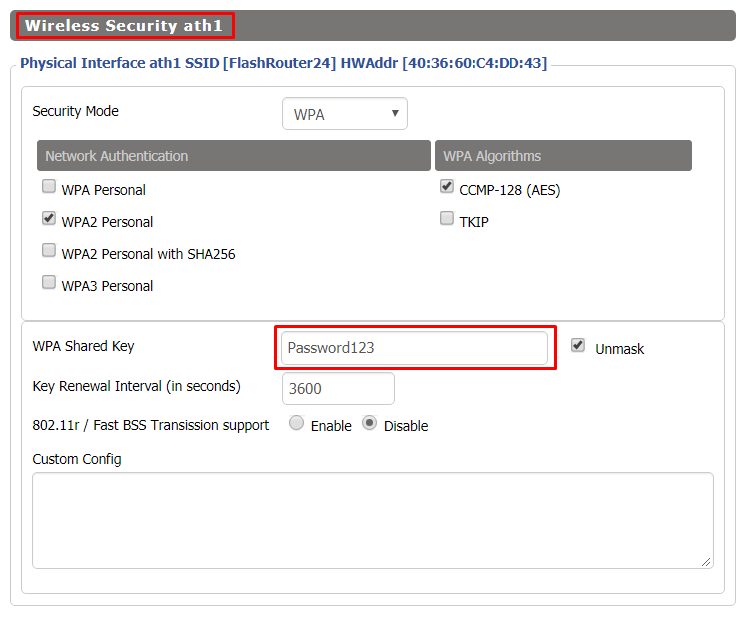
- Change the WPA Shared Key to match exactly with the Wireless Password of the network that you will bridge to.
- Click Save.
Change the FlashRouter's Local IP Address
Navigate to Setup > Basic Setup
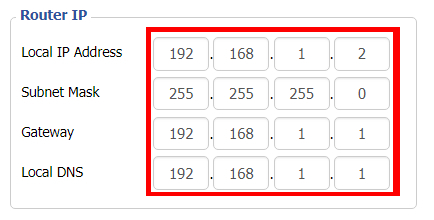
- Set the Local IP Address to a different address on the same subnet as the existing network that you noted early. (example: if the existing network is 192.168.1.1 then set the Local IP Address to 192.168.1.2)
- Set the Gateway to the Local IP Address of the existing network. (example: 192.168.1.1)
- Set the Local DNS to the Local IP Address of the existing network. (example: 192.168.1.1)
- Click Apply Settings.
Reboot your FlashRouter
Power off the FlashRouter for 30 seconds and then power it back on. When it boots back up you will be able to access the FlashRouter’s settings at the new Local IP Address that you set. Your existing network and the FlashRouter’s network will now be bridged wirelessly.
Your FlashRouter is now providing wired connection access to your main router network. Wireless connections to the FlashRouter are disabled in this setup.
Back up your settings
Navigate to Administration > Backup
- Click the Backup button.
- A file named nvrambak.bin will be saved to your computer.
- You can load nvrambak.bin to restore your settings in the event of a reset.
PrivateInternetAccess (PIA) Manual OpenVPN Setup
Preparing for Manual PIA Setup
Verify your PIA login information
If you are not already a PIA user Sign Up Now.
Log in to your account on the PIA website.

PIA Server Addresses
The below servers are the only servers compatible with PIA router connections. Dedicated IP Addresses are not able to connect via routers.
United States
us-california.privacy.network
us-newjersey.privacy.network
us-chicago.privacy.network
us-texas.privacy.network
us-florida.privacy.network
us-seattle.privacy.network
us3.privacy.network
us-siliconvalley.privacy.network
us-newyorkcity.privacy.network
us-washingtondc.privacy.network
us-atlanta.privacy.network
us-houston.privacy.network
us-denver.privacy.network
United Kingdom
uk-london.privacy.network
uk-manchester.privacy.network
Canada
ca-toronto.privacy.network
ca-montreal.privacy.network
Australia
au-sydney.privacy.network
aus-melbourne.privacy.network
aus-perth.privacy.network
Germany
de-berlin.privacy.network
de-frankfurt.privacy.network
Rest of the World
ae.privacy.network
austria.privacy.network
dz.privacy.network
ad.privacy.network
ar.privacy.network
yerevan.privacy.network
bahamas.privacy.network
bangladesh.privacy.network
brussels.privacy.network
sofia.privacy.network
cambodia.privacy.network
china.privacy.network
cyprus.privacy.network
czech.privacy.network
denmark.privacy.network
egypt.privacy.network
fi.privacy.network
france.privacy.network
georgia.privacy.network
greenland.privacy.network
hungary.privacy.network
is.privacy.network
in.privacy.network
iran.privacy.network
ireland.privacy.network
man.privacy.network
israel.privacy.network
italy.privacy.network
japan.privacy.network
kazakhstan.privacy.network
liechtenstein.privacy.network
lu.privacy.network
macau.privacy.network
malta.privacy.network
mexico.privacy.network
md.privacy.network
monaco.privacy.network
mongolia.privacy.network
montenegro.privacy.network
morocco.privacy.network
nl-amsterdam.privacy.network
nz.privacy.network
nigeria.privacy.network
no.privacy.network
panama.privacy.network
philippines.privacy.network
poland.privacy.network
qatar.privacy.network
ro.privacy.network
rs.privacy.network
saudiarabia.privacy.network
spain.privacy.network
srilanka.privacy.network
sweden.privacy.network
swiss.privacy.network
sg.privacy.network
tr.privacy.network
taiwan.privacy.network
ua.privacy.network
venezuela.privacy.network
vietnam.privacy.network
za.privacy.network
DD-WRT Router Setup for PIA
Navigate to Services > VPN
PIA offers two different Encryption levels.
Default Encryption (AES-128) typically provides faster speeds.
Strong Encryption (AES-256) provides stronger encryption.
Follow the table below of the one that fits your needs.
Enter PIA settings (Default Encryption)
OpenVPN Client
Start OpenVPN Client
If you wish to disable your VPN connection simply set this to Disable at any time and click Apply Settings.
Server IP/Name
Copy and paste the server you would like to connect to from the server list above. Be sure there are no extra spaces or characters.
If you wish to change PIA connection locations, THIS IS THE ONLY FIELD YOU NEED TO CHANGE.
Port
1198
Tunnel Device
TUN
Tunnel Protocol
UDP
Encryption cipher
AES-128-CBC
Hash Algorithm
SHA1
First Data Cipher
Not set
Second Data Cipher
Not set
Third Data Cipher
Not set
Userpass Authentication
Enable
Username
Enter the Username you successfully logged in to your PIA account with.
Password
Enter the Password you successfully logged in to your PIA account with.
Advanced Options
Enable
TLS Cipher
None
LZO Compression
Disabled
NAT
Enable
Firewall Protection
Enable
Additional Config
persist-key
persist-tun
Policy Based Routing
This field can be used for split VPN and Dual Gateway routing.
CA Cert
-----BEGIN CERTIFICATE-----
MIIFqzCCBJOgAwIBAgIJAKZ7D5Yv87qDMA0GCSqGSIb3DQEBDQUAMIHoMQswCQYD
VQQGEwJVUzELMAkGA1UECBMCQ0ExEzARBgNVBAcTCkxvc0FuZ2VsZXMxIDAeBgNV
BAoTF1ByaXZhdGUgSW50ZXJuZXQgQWNjZXNzMSAwHgYDVQQLExdQcml2YXRlIElu
dGVybmV0IEFjY2VzczEgMB4GA1UEAxMXUHJpdmF0ZSBJbnRlcm5ldCBBY2Nlc3Mx
IDAeBgNVBCkTF1ByaXZhdGUgSW50ZXJuZXQgQWNjZXNzMS8wLQYJKoZIhvcNAQkB
FiBzZWN1cmVAcHJpdmF0ZWludGVybmV0YWNjZXNzLmNvbTAeFw0xNDA0MTcxNzM1
MThaFw0zNDA0MTIxNzM1MThaMIHoMQswCQYDVQQGEwJVUzELMAkGA1UECBMCQ0Ex
EzARBgNVBAcTCkxvc0FuZ2VsZXMxIDAeBgNVBAoTF1ByaXZhdGUgSW50ZXJuZXQg
QWNjZXNzMSAwHgYDVQQLExdQcml2YXRlIEludGVybmV0IEFjY2VzczEgMB4GA1UE
AxMXUHJpdmF0ZSBJbnRlcm5ldCBBY2Nlc3MxIDAeBgNVBCkTF1ByaXZhdGUgSW50
ZXJuZXQgQWNjZXNzMS8wLQYJKoZIhvcNAQkBFiBzZWN1cmVAcHJpdmF0ZWludGVy
bmV0YWNjZXNzLmNvbTCCASIwDQYJKoZIhvcNAQEBBQADggEPADCCAQoCggEBAPXD
L1L9tX6DGf36liA7UBTy5I869z0UVo3lImfOs/GSiFKPtInlesP65577nd7UNzzX
lH/P/CnFPdBWlLp5ze3HRBCc/Avgr5CdMRkEsySL5GHBZsx6w2cayQ2EcRhVTwWp
cdldeNO+pPr9rIgPrtXqT4SWViTQRBeGM8CDxAyTopTsobjSiYZCF9Ta1gunl0G/
8Vfp+SXfYCC+ZzWvP+L1pFhPRqzQQ8k+wMZIovObK1s+nlwPaLyayzw9a8sUnvWB
/5rGPdIYnQWPgoNlLN9HpSmsAcw2z8DXI9pIxbr74cb3/HSfuYGOLkRqrOk6h4RC
OfuWoTrZup1uEOn+fw8CAwEAAaOCAVQwggFQMB0GA1UdDgQWBBQv63nQ/pJAt5tL
y8VJcbHe22ZOsjCCAR8GA1UdIwSCARYwggESgBQv63nQ/pJAt5tLy8VJcbHe22ZO
sqGB7qSB6zCB6DELMAkGA1UEBhMCVVMxCzAJBgNVBAgTAkNBMRMwEQYDVQQHEwpM
b3NBbmdlbGVzMSAwHgYDVQQKExdQcml2YXRlIEludGVybmV0IEFjY2VzczEgMB4G
A1UECxMXUHJpdmF0ZSBJbnRlcm5ldCBBY2Nlc3MxIDAeBgNVBAMTF1ByaXZhdGUg
SW50ZXJuZXQgQWNjZXNzMSAwHgYDVQQpExdQcml2YXRlIEludGVybmV0IEFjY2Vz
czEvMC0GCSqGSIb3DQEJARYgc2VjdXJlQHByaXZhdGVpbnRlcm5ldGFjY2Vzcy5j
b22CCQCmew+WL/O6gzAMBgNVHRMEBTADAQH/MA0GCSqGSIb3DQEBDQUAA4IBAQAn
a5PgrtxfwTumD4+3/SYvwoD66cB8IcK//h1mCzAduU8KgUXocLx7QgJWo9lnZ8xU
ryXvWab2usg4fqk7FPi00bED4f4qVQFVfGfPZIH9QQ7/48bPM9RyfzImZWUCenK3
7pdw4Bvgoys2rHLHbGen7f28knT2j/cbMxd78tQc20TIObGjo8+ISTRclSTRBtyC
GohseKYpTS9himFERpUgNtefvYHbn70mIOzfOJFTVqfrptf9jXa9N8Mpy3ayfodz
1wiqdteqFXkTYoSDctgKMiZ6GdocK9nMroQipIQtpnwd4yBDWIyC6Bvlkrq5TQUt
YDQ8z9v+DMO6iwyIDRiU
-----END CERTIFICATE-----
CLICK APPLY SETTINGS
Leave all settings not mentioned above as their default setting.
Enter PIA settings (Strong Encryption)
OpenVPN Client
Start OpenVPN Client
If you wish to disable your VPN connection simply set this to Disable at any time and click Apply Settings.
Server IP/Name
Copy and paste the server you would like to connect to from the server list above. Be sure there are no extra spaces or characters.
If you wish to change PIA connection locations, THIS IS THE ONLY FIELD YOU NEED TO CHANGE.
Port
1197
Tunnel Device
TUN
Tunnel Protocol
UDP
Encryption cipher
AES-256-CBC
Hash Algorithm
SHA256
First Data Cipher
Not set
Second Data Cipher
Not set
Third Data Cipher
Not set
Userpass Authentication
Enable
Username
Enter the Username you successfully logged in to your PIA account with.
Password
Enter the Password you successfully logged in to your PIA account with.
Advanced Options
Enable
TLS Cipher
None
LZO Compression
Adaptive
NAT
Enable
Firewall Protection
Enable
Additional Config
persist-key
persist-tun
Policy Based Routing
This field can be used for split VPN and Dual Gateway routing.
CA Cert
-----BEGIN CERTIFICATE-----
MIIHqzCCBZOgAwIBAgIJAJ0u+vODZJntMA0GCSqGSIb3DQEBDQUAMIHoMQswCQYD
VQQGEwJVUzELMAkGA1UECBMCQ0ExEzARBgNVBAcTCkxvc0FuZ2VsZXMxIDAeBgNV
BAoTF1ByaXZhdGUgSW50ZXJuZXQgQWNjZXNzMSAwHgYDVQQLExdQcml2YXRlIElu
dGVybmV0IEFjY2VzczEgMB4GA1UEAxMXUHJpdmF0ZSBJbnRlcm5ldCBBY2Nlc3Mx
IDAeBgNVBCkTF1ByaXZhdGUgSW50ZXJuZXQgQWNjZXNzMS8wLQYJKoZIhvcNAQkB
FiBzZWN1cmVAcHJpdmF0ZWludGVybmV0YWNjZXNzLmNvbTAeFw0xNDA0MTcxNzQw
MzNaFw0zNDA0MTIxNzQwMzNaMIHoMQswCQYDVQQGEwJVUzELMAkGA1UECBMCQ0Ex
EzARBgNVBAcTCkxvc0FuZ2VsZXMxIDAeBgNVBAoTF1ByaXZhdGUgSW50ZXJuZXQg
QWNjZXNzMSAwHgYDVQQLExdQcml2YXRlIEludGVybmV0IEFjY2VzczEgMB4GA1UE
AxMXUHJpdmF0ZSBJbnRlcm5ldCBBY2Nlc3MxIDAeBgNVBCkTF1ByaXZhdGUgSW50
ZXJuZXQgQWNjZXNzMS8wLQYJKoZIhvcNAQkBFiBzZWN1cmVAcHJpdmF0ZWludGVy
bmV0YWNjZXNzLmNvbTCCAiIwDQYJKoZIhvcNAQEBBQADggIPADCCAgoCggIBALVk
hjumaqBbL8aSgj6xbX1QPTfTd1qHsAZd2B97m8Vw31c/2yQgZNf5qZY0+jOIHULN
De4R9TIvyBEbvnAg/OkPw8n/+ScgYOeH876VUXzjLDBnDb8DLr/+w9oVsuDeFJ9K
V2UFM1OYX0SnkHnrYAN2QLF98ESK4NCSU01h5zkcgmQ+qKSfA9Ny0/UpsKPBFqsQ
25NvjDWFhCpeqCHKUJ4Be27CDbSl7lAkBuHMPHJs8f8xPgAbHRXZOxVCpayZ2SND
fCwsnGWpWFoMGvdMbygngCn6jA/W1VSFOlRlfLuuGe7QFfDwA0jaLCxuWt/BgZyl
p7tAzYKR8lnWmtUCPm4+BtjyVDYtDCiGBD9Z4P13RFWvJHw5aapx/5W/CuvVyI7p
Kwvc2IT+KPxCUhH1XI8ca5RN3C9NoPJJf6qpg4g0rJH3aaWkoMRrYvQ+5PXXYUzj
tRHImghRGd/ydERYoAZXuGSbPkm9Y/p2X8unLcW+F0xpJD98+ZI+tzSsI99Zs5wi
jSUGYr9/j18KHFTMQ8n+1jauc5bCCegN27dPeKXNSZ5riXFL2XX6BkY68y58UaNz
meGMiUL9BOV1iV+PMb7B7PYs7oFLjAhh0EdyvfHkrh/ZV9BEhtFa7yXp8XR0J6vz
1YV9R6DYJmLjOEbhU8N0gc3tZm4Qz39lIIG6w3FDAgMBAAGjggFUMIIBUDAdBgNV
HQ4EFgQUrsRtyWJftjpdRM0+925Y6Cl08SUwggEfBgNVHSMEggEWMIIBEoAUrsRt
yWJftjpdRM0+925Y6Cl08SWhge6kgeswgegxCzAJBgNVBAYTAlVTMQswCQYDVQQI
EwJDQTETMBEGA1UEBxMKTG9zQW5nZWxlczEgMB4GA1UEChMXUHJpdmF0ZSBJbnRl
cm5ldCBBY2Nlc3MxIDAeBgNVBAsTF1ByaXZhdGUgSW50ZXJuZXQgQWNjZXNzMSAw
HgYDVQQDExdQcml2YXRlIEludGVybmV0IEFjY2VzczEgMB4GA1UEKRMXUHJpdmF0
ZSBJbnRlcm5ldCBBY2Nlc3MxLzAtBgkqhkiG9w0BCQEWIHNlY3VyZUBwcml2YXRl
aW50ZXJuZXRhY2Nlc3MuY29tggkAnS7684Nkme0wDAYDVR0TBAUwAwEB/zANBgkq
hkiG9w0BAQ0FAAOCAgEAJsfhsPk3r8kLXLxY+v+vHzbr4ufNtqnL9/1Uuf8NrsCt
pXAoyZ0YqfbkWx3NHTZ7OE9ZRhdMP/RqHQE1p4N4Sa1nZKhTKasV6KhHDqSCt/dv
Em89xWm2MVA7nyzQxVlHa9AkcBaemcXEiyT19XdpiXOP4Vhs+J1R5m8zQOxZlV1G
tF9vsXmJqWZpOVPmZ8f35BCsYPvv4yMewnrtAC8PFEK/bOPeYcKN50bol22QYaZu
LfpkHfNiFTnfMh8sl/ablPyNY7DUNiP5DRcMdIwmfGQxR5WEQoHL3yPJ42LkB5zs
6jIm26DGNXfwura/mi105+ENH1CaROtRYwkiHb08U6qLXXJz80mWJkT90nr8Asj3
5xN2cUppg74nG3YVav/38P48T56hG1NHbYF5uOCske19F6wi9maUoto/3vEr0rnX
JUp2KODmKdvBI7co245lHBABWikk8VfejQSlCtDBXn644ZMtAdoxKNfR2WTFVEwJ
iyd1Fzx0yujuiXDROLhISLQDRjVVAvawrAtLZWYK31bY7KlezPlQnl/D9Asxe85l
8jO5+0LdJ6VyOs/Hd4w52alDW/MFySDZSfQHMTIc30hLBJ8OnCEIvluVQQ2UQvoW
+no177N9L2Y+M9TcTA62ZyMXShHQGeh20rb4kK8f+iFX8NxtdHVSkxMEFSfDDyQ=
-----END CERTIFICATE-----
CLICK APPLY SETTINGS
Leave all settings not mentioned above as their default setting.
Verify a successful PIA connection
Navigate to Status > OpenVPN
- You should now see a CONNECTED SUCCESS message.
- Visit PIA’s IP Check to verify your new IP address and virtual location.
In some cases you may notice that the location is not showing the same location as the server you have input in your router settings; this is because geo tracking tools are often tricked by VPN connections. As long as you see an IP address that is not the same as your normal Internet IP address then you are indeed connected to PIA.
Back up your settings
Navigate to Administration > Backup
- Click the Backup button.
- A file named nvrambak.bin will be saved to your computer.
- You can load nvrambak.bin to restore your settings in the event of a reset.
How to change the PIA server
- Copy the new PIA server address from the above server list.
- Paste the server into the Server IP/Name field.
- Click Apply Settings.
CyberGhost Merlin OpenVPN Setup
Preparing for CyberGhost Setup
Obtain your CyberGhost OpenVPN information
If you are not already a CyberGhost user Sign Up Now.
1. Log in to your account on the CyberGhost website.
2. Select VPN.
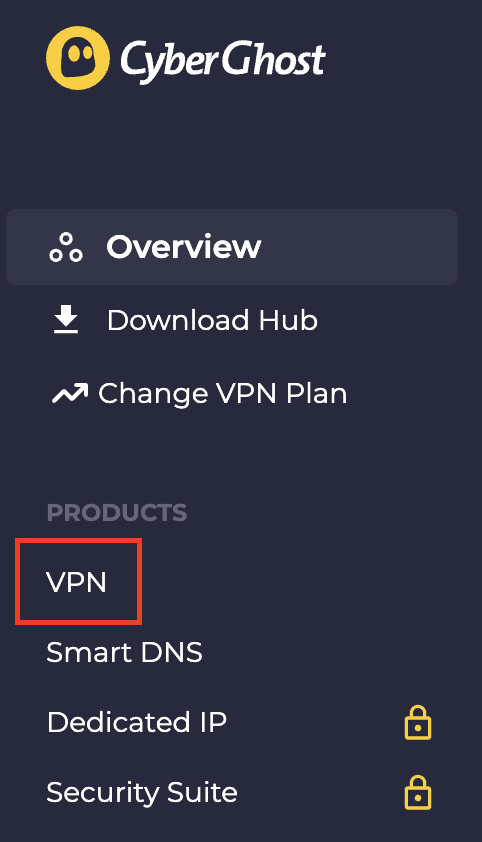
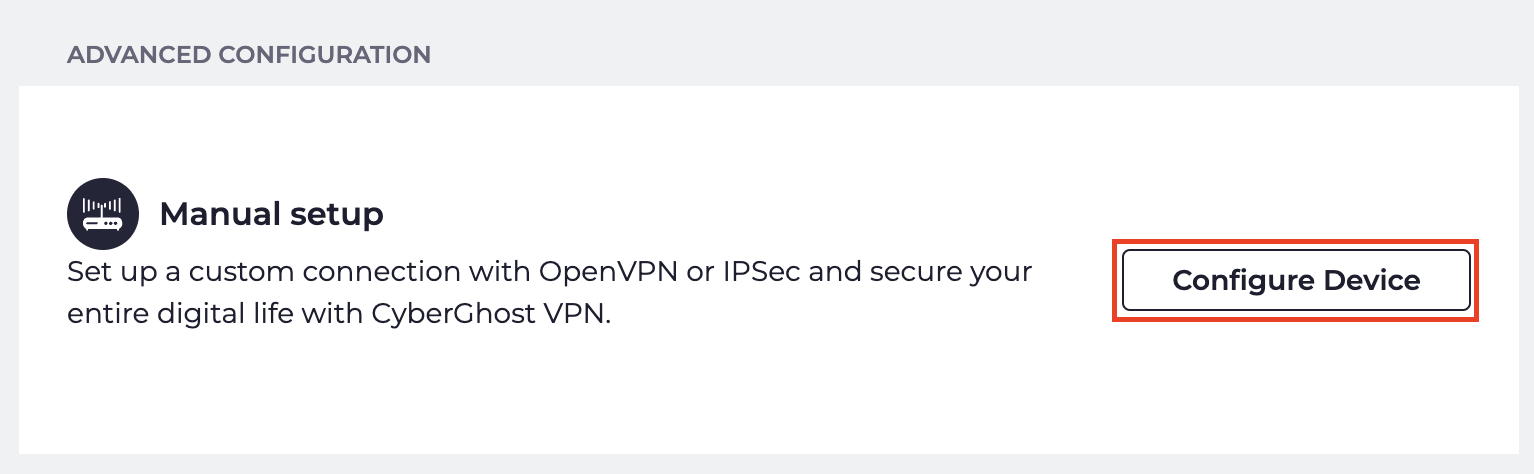
3. Click Configure New Device.
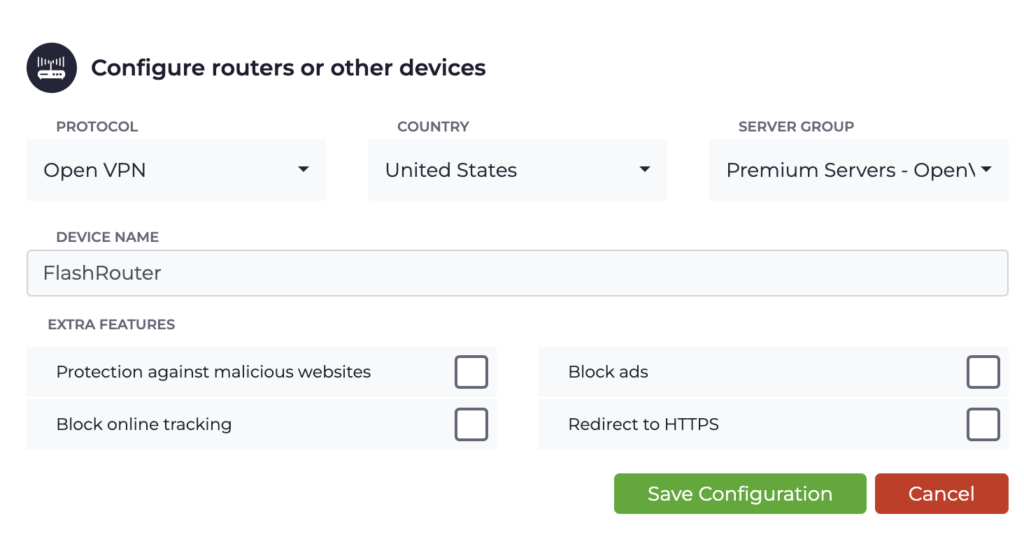
4. Set Protocol to OpenVPN. Select the Country you would like to connect to. Select the Server Group. Name the device in the Device Name field. Click Save Configuration.
5. Press View configuration.

6. Copy the Username, and Password that appear to a notepad, since you will need this information later in the setup process. Click Download Configuration.
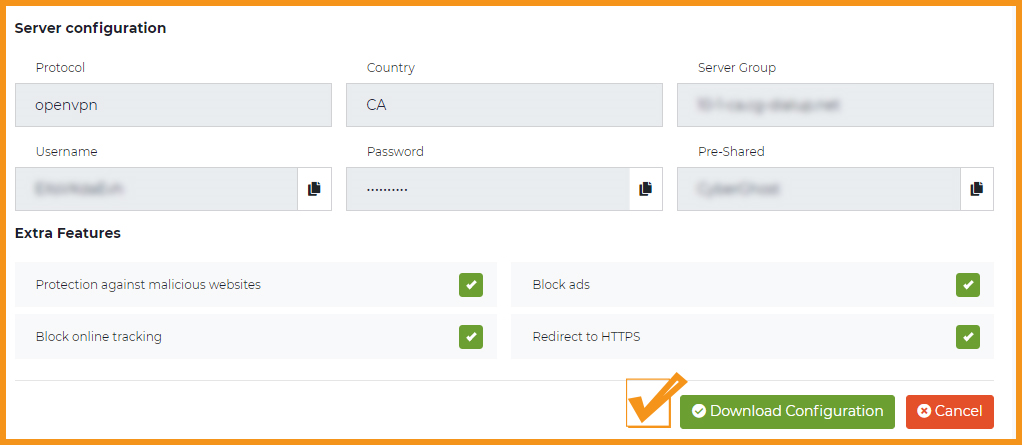
Open the folder that was downloaded. Then open the ca.crt the client.crt, and client.key files with NotePad++ for Windows or TextEdit for Apple. All CyberGhost servers have different keys and certificates.
Merlin Router Setup for CyberGhost
Login to Asus Merlin firmware settings in a browser on any computer or smart device connected to the Merlin FlashRouter’s network.
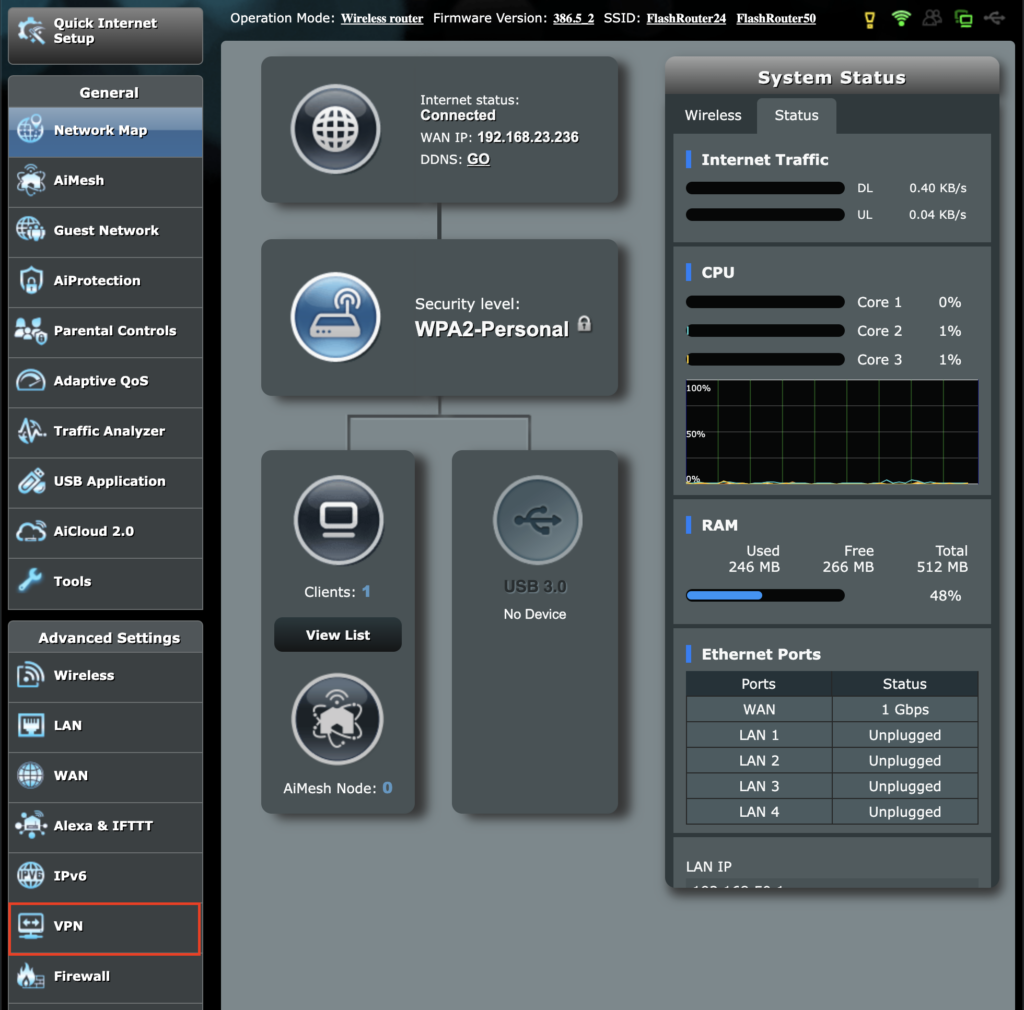
1. Navigate to the VPN tab.
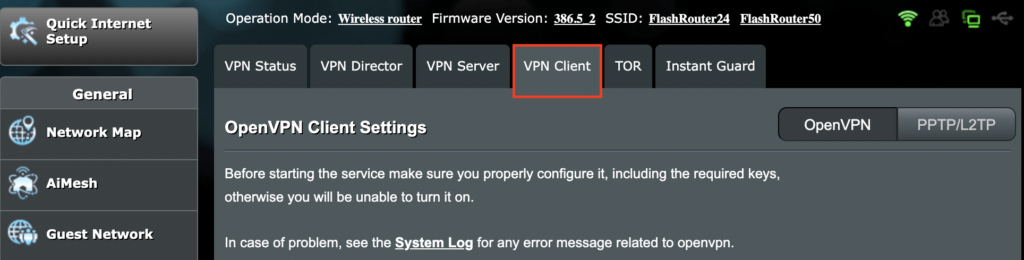
2. Navigate to the VPN Client tab.
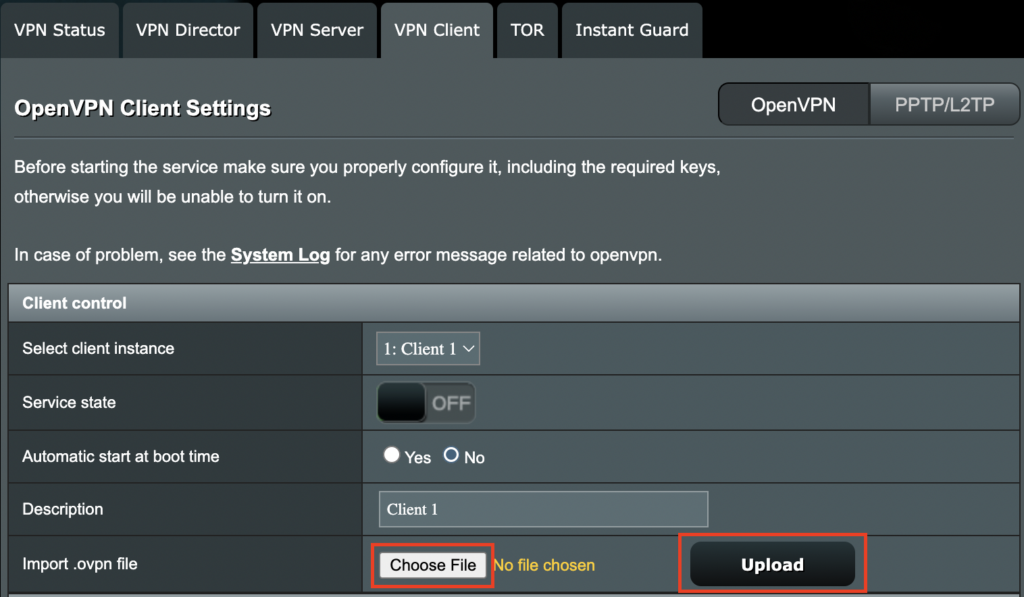
3. Click Choose file and select the .ovpn file from the folder you downloaded earlier. Then click Upload.
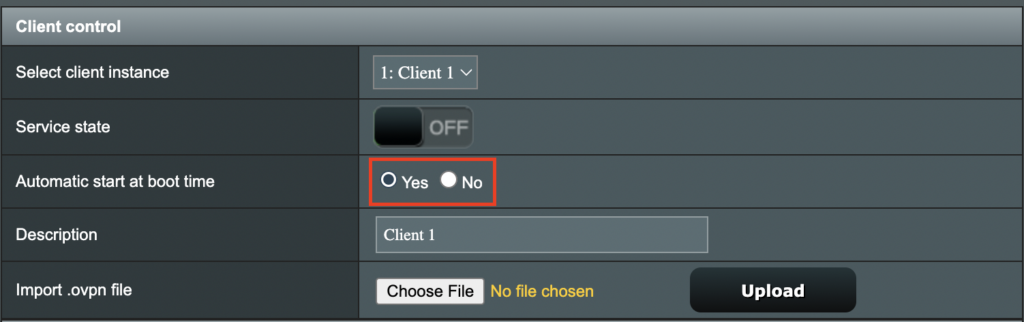
4. Set Automatic Start at boot time to Yes if you want the VPN connection to begin automatically when the router is powered off and back on.
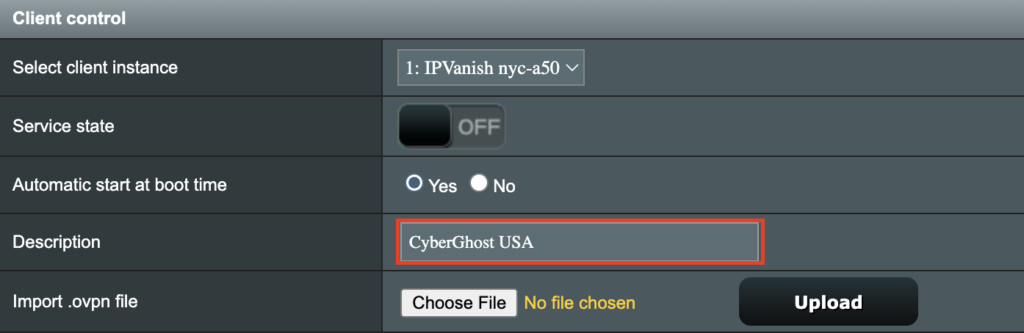
5. In the Description field enter in the name you’d like to use for this OpenVPN Client profile. We typically advise entering in the location here. Our example server was in USA so I have entered in CyberGhost USA.
6. Set Accept DNS Configuration to Strict. Set Redirect Internet traffic through tunnel to Yes (all). Set Kill Switch to Yes or No depending on if you want the Internet to be killed if the VPN connection drops.
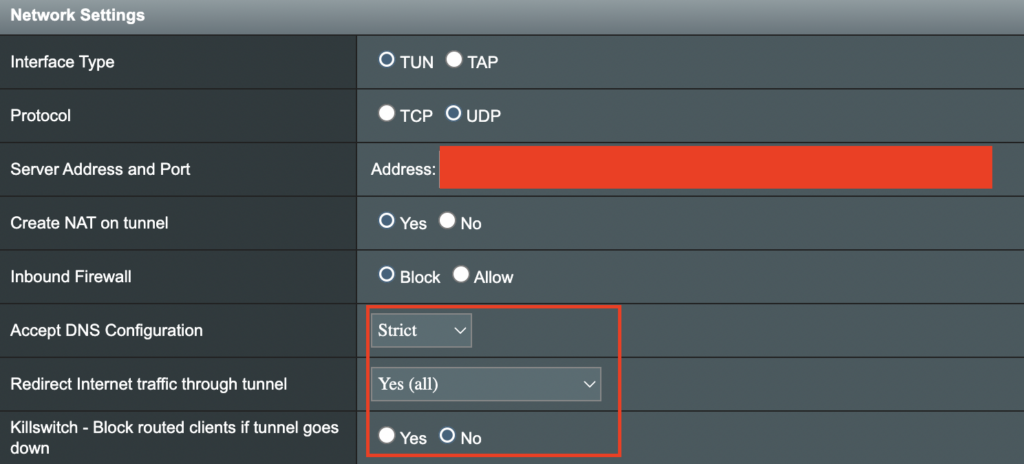
If you only want certain devices to connect to the OpenVPN Client profile you are setting up instead of all the devices connected to the FlashRouter’s network please set the Redirect Internet traffic through tunnel to VPN Director. Then complete the instructions on this page and then view our VPN Director guide.
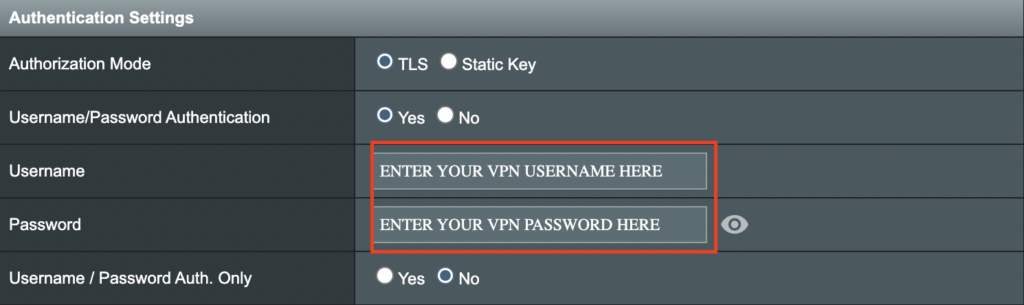
7. Enter your CyberGhost OpenVPN username and password that you obtained earlier. Do not enter your account login.
8. Click the Edit button in the Keys and Certificates area.
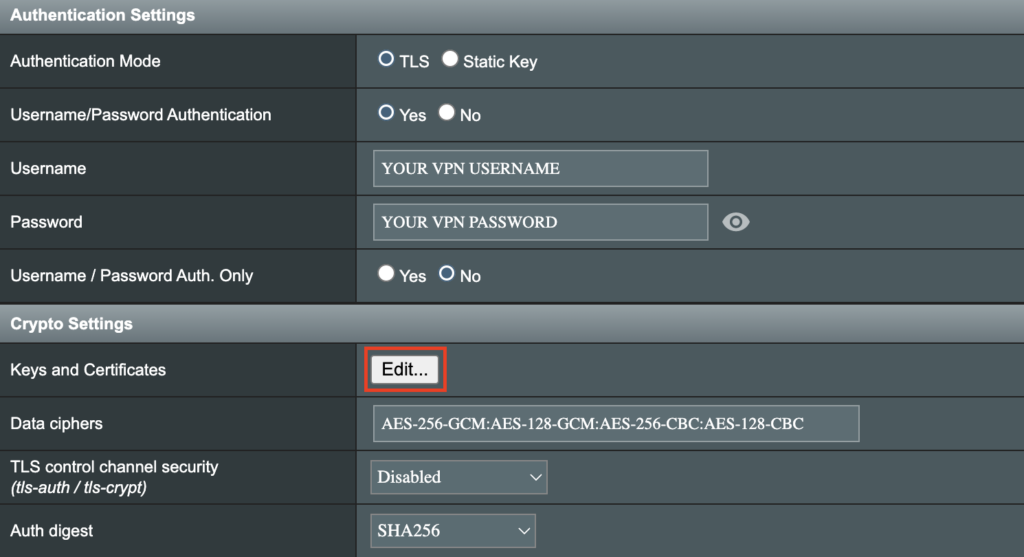
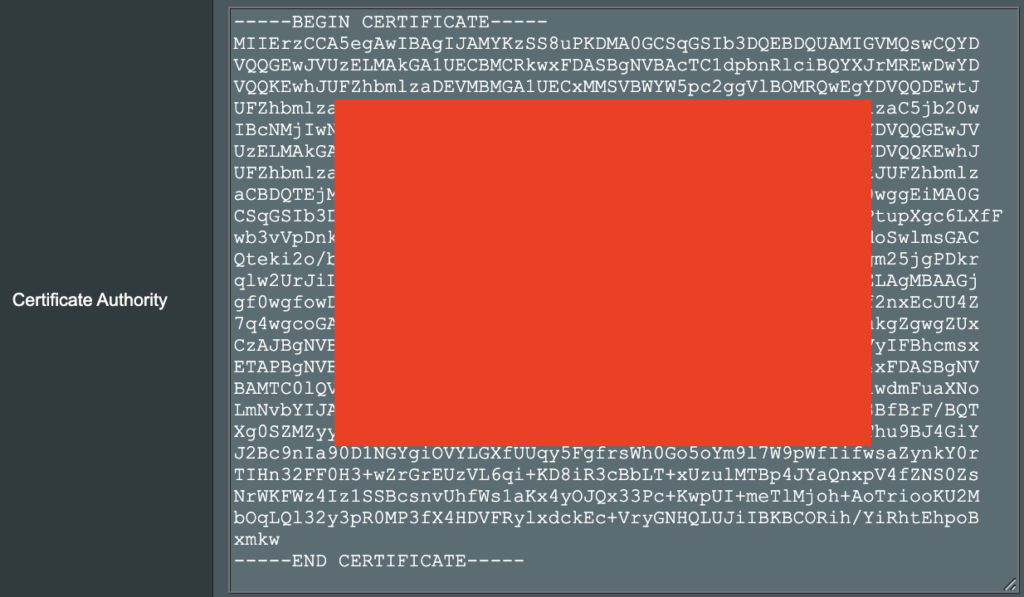
9. In the Certificate Authority field paste in the entire content of the ca.crt file.
—– BEGIN xxx —– / —– END xxx —– block (including those two lines).
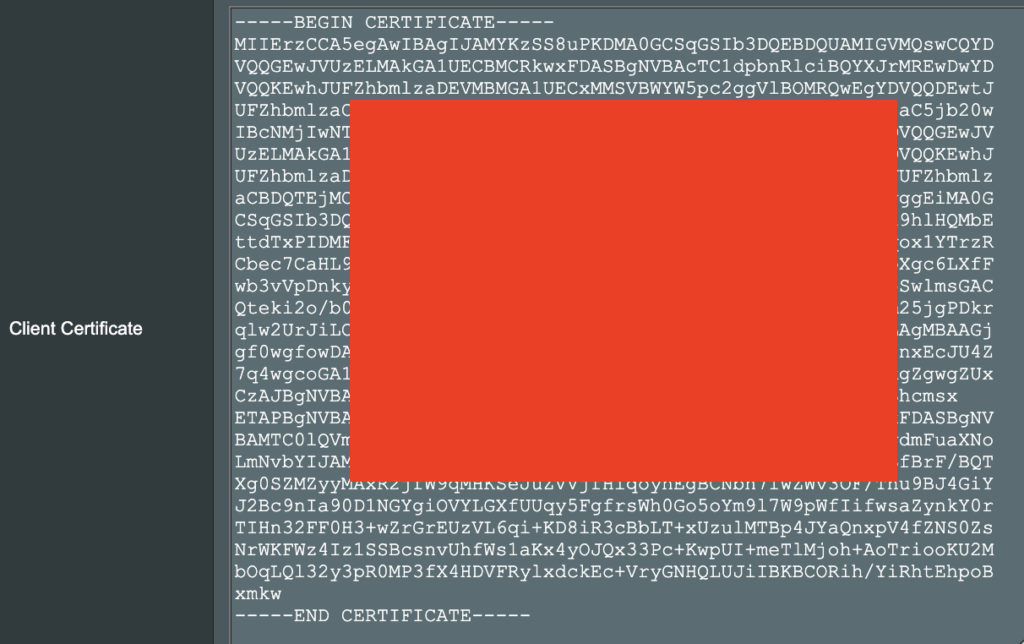
10. In the Client Certificate field paste in the entire content of the client.crt file.
—– BEGIN xxx —– / —– END xxx —– block (including those two lines).
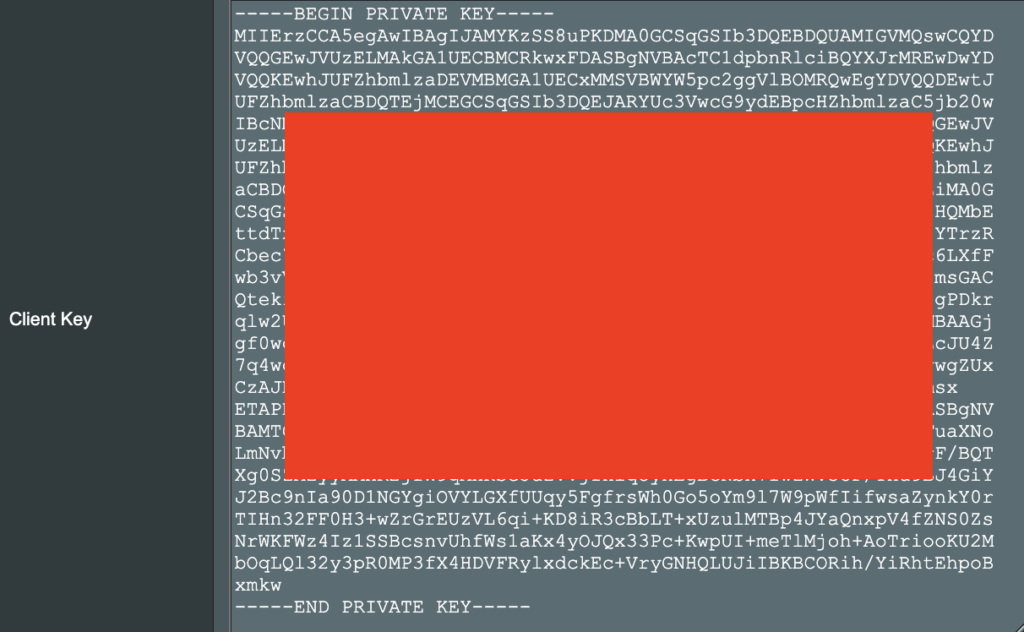
11. In the Client Key field paste in the entire content of the client.key file.
—– BEGIN xxx —– / —– END xxx —– block (including those two lines).
12. Click Save at the bottom of that window.
13. Click Apply at the bottom of the page.
14. At the top of the page set the Service State toggle to ON to activate the VPN connection.

Verify a successful CyberGhost connection
- You should now see a CONNECTED message.
- Visit What is my IP Address from a private/incognito browser to verify your new IP address and virtual location.
How do I check for static network settings on my devices?
Static network settings set on a device from a previous connection will interfere with the FlashRouter’s network. Typically the FlashRouter’s network performs best when connected devices are set to automatically use the FlashRouter’s IP Address and DNS.
Make sure you are connected to the FlashRouter’s network via ethernet or WiFi. Keep in mind these instructions may vary based on your current software version.
Check for Static IP Address in Windows
1. Open the Window search box, and search “Network Status”
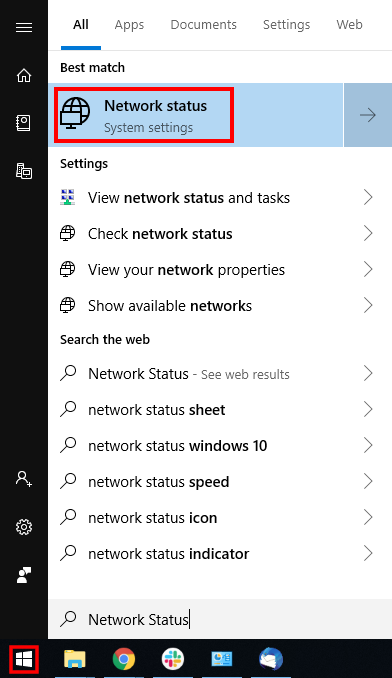
2. Select “Change adapter optons”
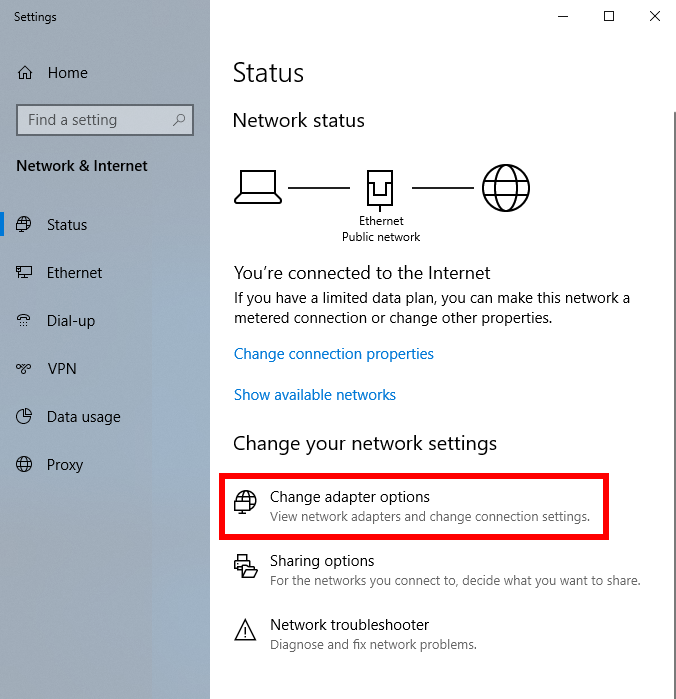
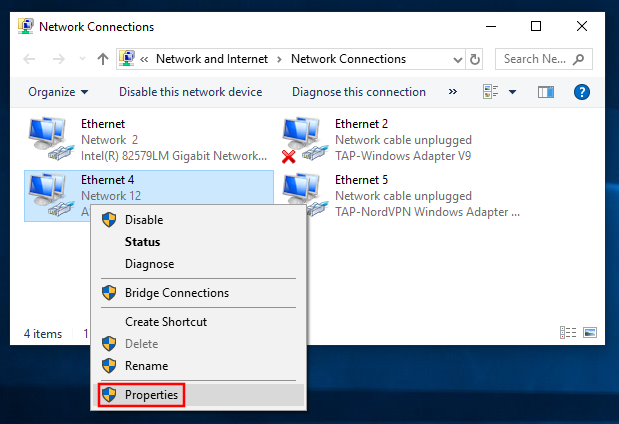
3. Right click on the WiFi and/or ethernet adapter and select Properties.
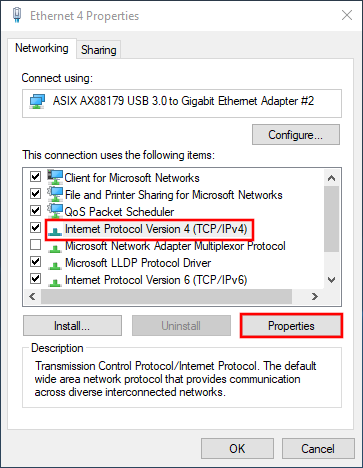
4. Highlight Internet Protocol Version 4 (TCP/IPv4) and click Properties.
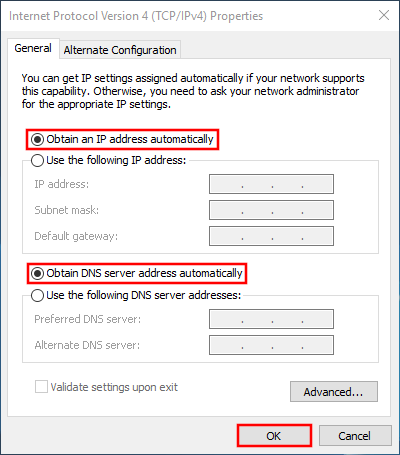
5. Delete the values entered for IP address, Subnet mask, Default gateway, Preferred DNS server, and Alternate DNS server.
6. Select Obtain an IP address automatically and Obtain DNS server address automatically.
7. Click OK.
Check for Static IP Address in Apple / Mac
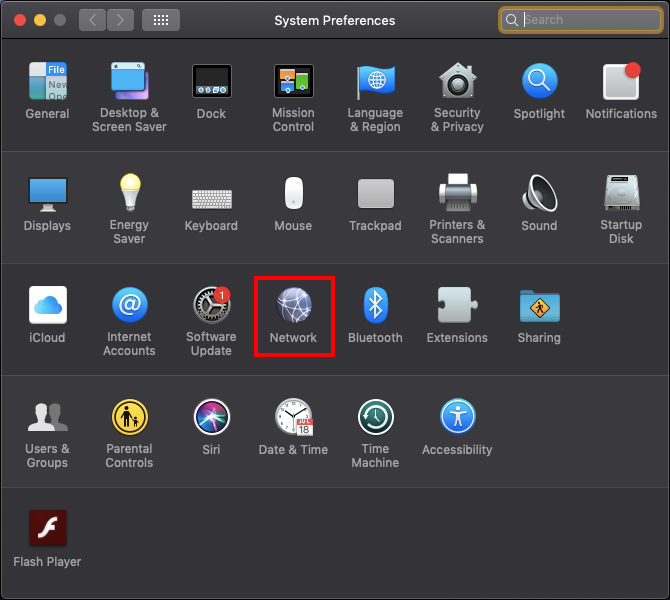
1. Open System Preferences, and select Network.
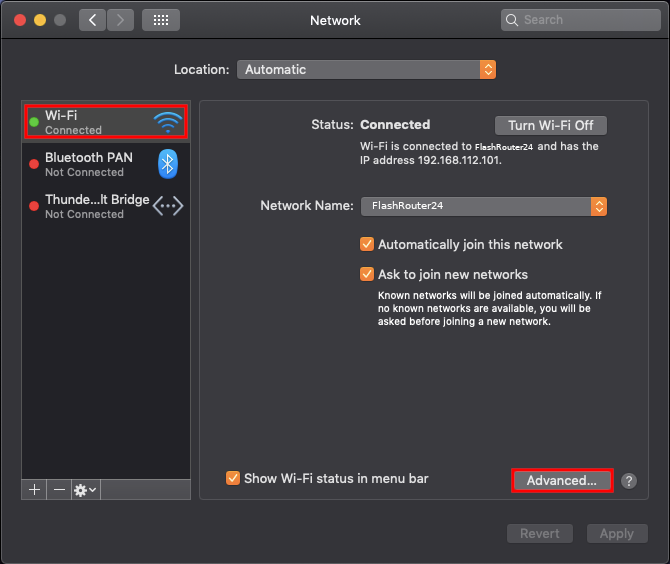
2. Select the adapter that is connected via ethernet or wireless. This will vary based on your current connection.
3. Select Advanced.
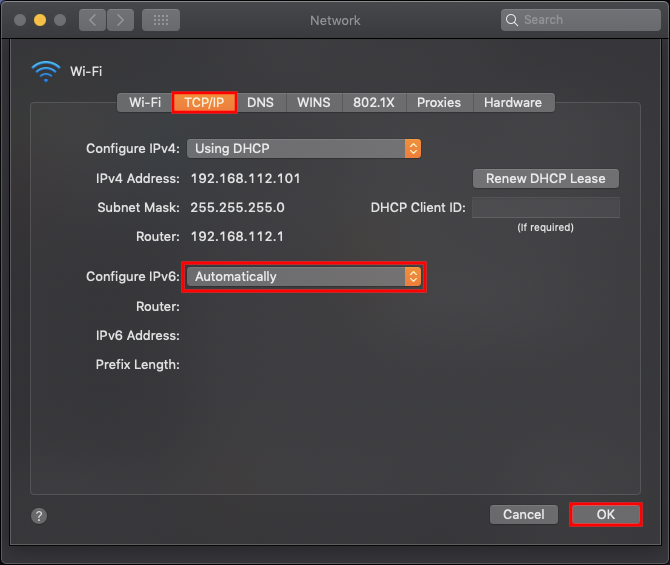
4. Select the TCP/IP tab.
5. Set Configure IPv4 to Automatically.
6. Select the DNS field and highlight any DNS servers you see there. If they can be removed you should click the minus symbol below.
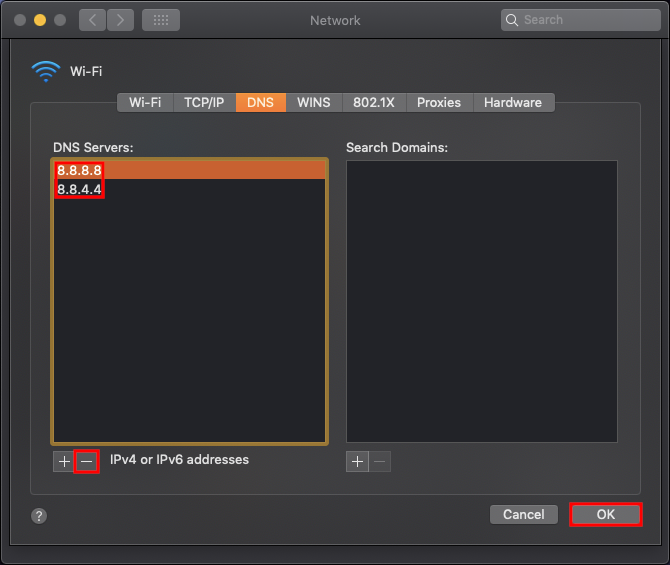
7. Click OK.
8. Click Apply.
Check for Static IP Address in iOS
1. Open Settings 
2. Select WiFi, and select the blue icon next to your current connection.
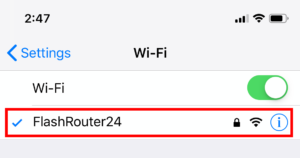
3. Make sure Configure IP is set to Automatically.
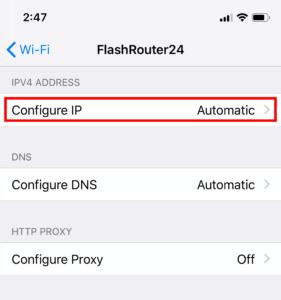
Check for Static IP Address in Android
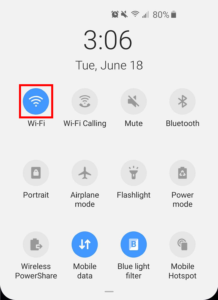
1. From the top of the screen, swipe down to display settings.
2. Select WiFi.
3. Select your current network.
4. Select Advanced.
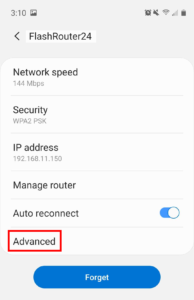
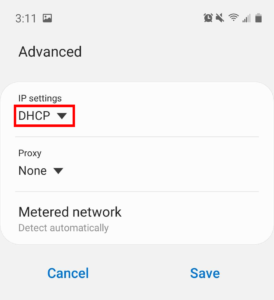
5. Make sure that IP settings is set to DHCP.
NordVPN Setup for AsusWRT Firmware Routers
You can connect to NordVPN on your AsusWRT router using NordLynx, OpenVPN, or a Dedicated IP.
Quick Options
-
NordLynx: Choose your preferred country from NordVPN’s server list
-
OpenVPN: Choose your preferred city or country from NordVPN’s server list.
-
Dedicated IP (optional): Enter your unique configuration file if you’ve been assigned a static NordVPN IP.
 If you are not already a NordVPN user Sign Up Now.
1. Get your NordVPN Access Token for NordLynx connections. Log in to your NordVPN account and select NordVPN from your list of Services.
2. At the bottom of the page click Get Access token and you will receive a code via email. Enter this code to proceed.

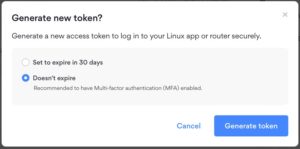
3. After you enter the email code select Generate new token and set it to Doesn’t expire. Copy this token.
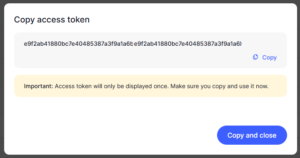
4. Log in to the Asus settings page by connecting to the Asus router’s WiFi (or wired LAN) on your computer. Then, enter 192.168.50.1 or asusrouter.com in the browser.
View our guide for more instructions on how to access AsusWRT firmware settings.
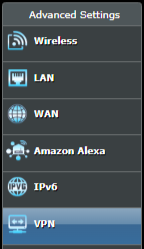
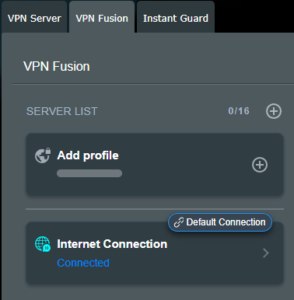
5. Navigate to the VPN tab and then select the VPN Fusion tab, then click Add profile.
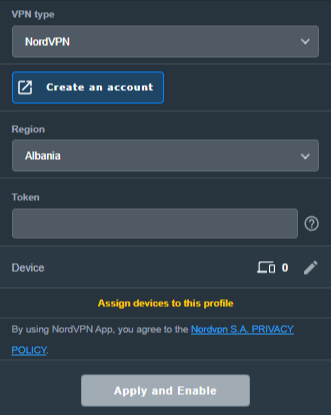
6. Fill in your NordVPN information, then click Apply and Enable.
- Connection Name: Choose a name for your NordLynx connection.
- VPN Type: Select NordVPN
- Region: Choose your VPN server location
- Token: Copy and paste your NordVPN token.
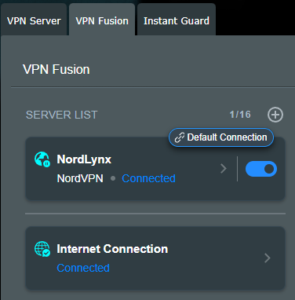
6. You should now see the Profile say Connected, indicating that the NordVPN server is successfully connected to your router!
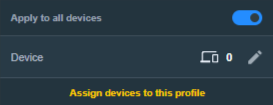
7. The VPN connection is automatically set to Apply to all devices.
If you only want certain devices to connect to the VPN, then turn off the VPN connection and switch off Apply to all devices.
Now click the pencil next to the Device section and select the devices (computer, phone, etc.) that you want to connect to VPN. Click OK and then click Apply all settings.
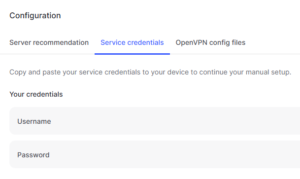
1. Get your NordVPN manual service credentials for OpenVPN connections. Log in to your NordVPN account and select NordVPN from your list of Services.
2. At the bottom of the page in the Manual Setup section click Setup NordVPN manually then under the Configuration section go to Service credentials. Click Verify email to receive a code via email and enter the code to view and copy your credentials.

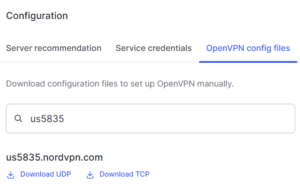
3. Click on OpenVPN config files. Search and download the server file for your preferred NordVPN location, UDP is recommended.
4. Log in to the Asus settings page by connecting to the Asus router’s WiFi (or wired LAN) on your computer. Then, enter 192.168.50.1 or asusrouter.com in the browser.
View our guide for more instructions on how to access AsusWRT firmware settings.
5. Navigate to the VPN tab and then click on the VPN Fusion tab, then click Add Profile.
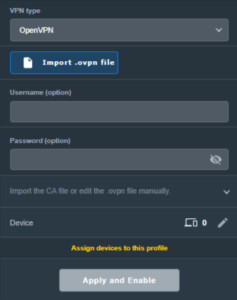
6. Fill in your NordVPN information then click Apply and Enable.
- Connection Name: Choose a name for your NordVPN OpenVPN connection.
- VPN Type: Select OpenVPN
- Import .ovpn File: Upload the OpenVPN file that you downloaded.
- Username and Password: Copy and paste your NordVPN manual service credentials.
6. You should now see the Profile say Connected, indicating that the NordVPN server is successfully connected to your router!
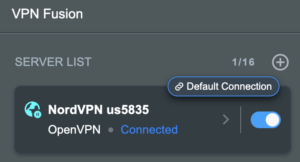
7. The VPN connection is automatically set to Apply to all devices.
If you only want certain devices to connect to the VPN, then turn off the VPN connection and switch off Apply to all devices.
Now click the pencil next to the Device section and select the devices (computer, phone, etc.) that you want to connect to VPN. Click OK and then click Apply all settings.
1. Get your NordVPN manual service credentials for OpenVPN connections. Log in to your NordVPN account and select NordVPN from your list of Services.
2. At the bottom of the page in the Manual Setup section click Setup NordVPN manually then under the Configuration section go to Service credentials. Click Verify email to receive a code via email and enter the code to view and copy your credentials.
3. Now download your Dedicated IP configuration file from the NordVPN website.
4. Log in to the Asus settings page by connecting to the Asus router’s WiFi (or wired LAN) on your computer. Then, enter 192.168.50.1 or asusrouter.com in the browser.
View our guide for more instructions on how to access AsusWRT firmware settings.
5. Navigate to the VPN tab then click on the VPN Fusion tab, then click Add Profile.
6. Fill in your NordVPN information then click Apply and Enable.
- Connection Name: Choose a name for your NordVPN Dedicated IP connection.
- VPN Type: Select OpenVPN
- Import .ovpn File: Upload the Dedicated IP OpenVPN file that you downloaded.
- Username and Password: Copy and paste your NordVPN manual service credentials.
6. You should now see the Profile say Connected, indicating that the NordVPN server is successfully connected to your router!
7. The VPN connection is automatically set to Apply to all devices.
If you only want certain devices to connect to the VPN, then turn off the VPN connection and switch off Apply to all devices.
Now click the pencil next to the Device section and select the devices (computer, phone, etc.) that you want to connect to VPN. Click OK and then click Apply all settings.
- Connect your devices to the Asus router network and visit the NordVPN website, at the top it should display Your Status: Protected.
- Visit NordVPN’s IP Check to verify your new IP address and virtual location.
🚫📱Do not run NordVPN apps on devices connected to your NordVPN router. Using the app at the same time as the router VPN may cause conflicts and connection issues.
Sales FAQs
 Sales FAQs
Can My Router Be Preconfigured With My VPN Information?
Plug and Play VPN Support
Yes you can!
To receive a plug and play with VPN device, you will need to provide our team with the credentials from your VPN provider subscription.
IMPORTANT NOTE: This is not required but recommended for users who wish to have the simplest, most seamless experience when the FlashRouter arrives. You can always change the password when the device arrives if you wish as well.
To have your router VPN preconfigured:
- Check the “Connect To VPN For Me” box under VPN – Preconfiguration on the Product Page during check out.
- Select your VPN provider. If you don’t see your VPN listed select “Other” and you will see an additional field to input who your provider is.
- You’ll receive an email after purchase with detailed instructions. If you have any questions our team is happy to help!
Please note: If you do give a server location, we will automatically start the device with the closest/optimal server for the location we are shipping the device by default. A location has to be added to the initial configuration for plug and play encryption security to occur on the device.
Privacy Hero 2 Only:
While our team isn’t able to pre-configure the Privacy Hero 2 VPN Router before shipping it out since you’ll have to make a Privacy Hero user account and register your router, we can assist you with the VPN set up process once you receive the router and create your Privacy Hero user account via 1-on-1 remote session, email, or live chat on our site.
You can also use our step-by-step Privacy Hero VPN Router Setup Guide to complete the process.
Can I Use My Dedicated IP Address With A FlashRouter?
Dedicated IP Addresses from NordVPN, SurfShark, & TorGuard are supported on almost all of our FlashRouter options.
Check out our Dedicated IP Addresses Blog Post for more details!
Can I Use A FlashRouter With My Current Mesh System?
Yes!
You will be able to connect the FlashRouter of your choosing to your current mesh router via ethernet port as shown below:
ISP Modem/Router —- FlashRouter (VPN) —- Main Mesh Router (VPN from FlashRouter)
This setup will allow you to keep your mesh network with added VPN protection, as well as add the FlashRouter wireless network for your devices.
You can disable the wifi on the FlashRouter also if you only wanted to use the mesh network for wifi.
Can You Flash My Router and Connect me to VPN?
At FlashRouters, we offer expert router flashing and VPN configuration services through our Flash My Router plans. Whether your router needs custom firmware flashing or just a VPN configuration, we ensure it’s set up for maximum security, privacy, and streaming performance with your chosen VPN provider.
The appointment will take place via remote software. During the appointment, our team will also answer any questions you may have about using the VPN on the router. Flashing is done out of the East Coast of the United States – we will do our best to accommodate your time zone difference if you are located in another part of the United States or another country.
👉 Explore our Flash My Router plans:
🔗 Flash My Router Plans
🔹 How It Works
✅ Flashing vs. Configuration: Some routers require custom firmware (flashing) to enable VPN, while others can be configured without flashing.
✅ Fully Optimized: Our team ensures your router is ready to securely connect to your VPN, block ISP tracking, and enhance your streaming experience.
✅ Remote Assistance Available: Get expert help setting up your VPN connection remotely if needed.
Flashing vs. Configuration: Router Compatibility
At FlashRouters, we handle VPN setup differently based on your router brand and model. Some routers require flashing custom firmware (like DD-WRT or AsusWRT-Merlin), while others can be configured without flashing.
🛠 Router Setup Types by Brand
🔹 Flashing Required (Custom Firmware Installation)
These routers require firmware flashing (DD-WRT or AsusWRT-Merlin) to enable VPN compatibility.
- Asus – Flashed with AsusWRT-Merlin or updated to the latest AsusWRT build. Some models only require configuration.
- Linksys – Flashed with DD-WRT firmware.
- Netgear – Flashed with DD-WRT firmware.
🔹 Configuration Only (No Flashing Required)
These routers have built-in VPN support and only require proper setup.
- TP-Link – Configured without flashing.
- GL.iNet – Configured without flashing.
- Cudy – Configured without flashing.
📌 Other brands are not supported at this time. If you have a different router, we recommend checking out our pre-flashed router options.
✅ Supported VPN Providers
We work with a wide range of VPN providers, including:
- NordVPN
- ExpressVPN
- Surfshark
- CyberGhost
- IPVanish
- Private Internet Access (PIA)
- VyprVPN
- ProtonVPN
- PureVPN
- Windscribe
- IVPN
- Mullvad
- StrongVPN
- AzireVPN
- AstrillVPN
- HotspotShield VPN
(If your provider isn’t listed, reach out – we may still be able to support it!)
🔗 Get Started Today!
👉 Explore our Flash My Router plans:
🔗 Flash My Router Plans
🔹 Need help selecting the right option? Contact our support team! We’re happy to assist.
How Can I Add The 1 Year NordVPN Service From My FlashRouters.com Order To My Current NordVPN Account?
You can easily combine the free 1 year of NordVPN included with your FlashRouter purchase once you receive the NordVPN Activation Code Email from FlashRouters.com. The email is typically received within 24 hours of order completion and will contain a link as well as an activation code.
This code can be entered at nordvpn.com/activate with the email address associated with your current NordVPN account to add the 1 year of free service to your existing service.
Privacy Hero 2 Only:
You can easily combine the free 1 year of NordVPN included with the Privacy Hero 2 VPN Router during the router activation process.
After activating the router, you’ll receive a NordVPN activation code within your privacy hero account dashboard. This code can be entered at nordvpn.com/activate with the email address associated with your current NordVPN account to add the 1 year of free service to your existing service.
What Are the Differences Between New, Recertified, And Open Box FlashRouters?
New
- Direct from manufacturer, in new box.
- Custom flashed on demand at time of the order.
- 30 Day Satisfaction Guarantee / 1 Year Warranty.
Recertified (RM)
- Direct from manufacturer/reseller, may be reboxed.
- Custom flashed on demand at time of the order.
- Specialists tested to guarantee same functionality as NEW routers.
- 30 Day Satisfaction Guarantee / 1 Year Warranty.
Open Box
- Limited quantity, discount items reboxed that may have cosmetic imperfections.
- Same testing and functionality level and New and RM.
- 30 Day Satisfaction Guarantee / No Warranty.
Will a FlashRouter Work With My Internet Service Provider?
US Customers (Single Router Solution):
Almost all Internet Service Providers(ISPs) require a modem in place to establish a connection to their service, however a modem by itself doesn’t provide the wifi connectivity needed in the home or office. A FlashRouter can connect directly to all known modems provided by major ISPs to create a wireless network so long as there is an Ethernet port on the modem to connect to the FlashRouter Internet port.
US Customers (Dual Router Solution):
Yes, FlashRouters are compatible with your ISP in what is called a Dual Router Set Up.
For this type of setup, you would use your current router or modem router to connect to your local ISP while using a FlashRouter to connect to your VPN. This is recommended as you will not overhaul your network with a new router, and you will be able to use your selected VPN service on the devices you wish to use it with.
This set up would result in the creation of two networks, which can be seen as the “Local Network” and the “FlashRouter Network”. All devices connected to the FlashRouter Network will go through the VPN service.
For any device you would prefer to use without a VPN, you can connect to the local network. The chain of devices would be connected from LAN ton your modem or modem/router to WAN on the FlashRouter, with your current router connected to the FlashRouter via Ethernet cable.
International Customers (Single Router Solution):
Almost all Internet Service Providers (ISPs) require a modem in place to establish a connection to their service, however a modem by itself doesn’t provide the wifi connectivity needed in the home or office. A FlashRouter can connect directly to all known modems provided by major ISPs to create a wireless network so long as there is an Ethernet port on the modem to connect to the FlashRouter Internet port.
International Customers (Dual Router Solution):
ISPs should all be compatible. Some providers require VLAN tagging/VID settings when wiring directly from modem to FlashRouter.
For this type of setup, you would use your current router or modem router to connect to your local ISP while using a FlashRouter to connect to your VPN. This is recommended as you will not overhaul your network with a new router, and you will be able to use your selected VPN service on the devices you wish to use it with.
This set up would result in the creation of two networks, which can be seen as the “Local Network” and the “FlashRouter Network”. All devices connected to the FlashRouter Network will go through the VPN service.
For any device you would prefer to use without a VPN, you can connect to the local network. The chain of devices would be connected from LAN ton your modem or modem/router to WAN on the FlashRouter, with your current router connected to the FlashRouter via Ethernet cable.
What Stock Firmware Features Will I Lose If I Flash My Router
Open Source firmware like DD-WRT or Assu Merlin has many features equivalent to what stock firmware has, in addition to adding new features to a router. However, some features are lost from the stock firmware when a router is flashed.
These are typically features that are put into the stock firmware by the manufacturers themselves. Things like the Linksys App and the NetGear Genie are examples of what would not be available or compatible on the router after flashing.
Most routers also have a WPS button. By default, the WPS button’s functionality is disabled when a router is flashed as it can be vulnerable and a security risk. It can be re-enabled by following this guide but we do not recommend it.
Does a FlashRouter or Service Plan Purchase Include a VPN Subscription?
A subscription to a VPN does not come with a FlashRouter or Service plan. If you are planning to use a VPN, you would need to sign up for one separately, directly from a provider.
Need assistance in finding a VPN Provider? Please visit our recent VPN Provider Best Seller List.
Plug and Play VPN Support
Unlike other VPN Router providers, FlashRouters is proud to offer free VPN service integration with any purchase.
To receive a plug and play with VPN device, you will need to provide our team with the credentials from your VPN provider subscription.
IMPORTANT NOTE: This is not required but recommended for users who wish to have the simplest, most seamless experience when the FlashRouter arrives. You can always change the password when the device arrives if you wish as well.

To have your router VPN pre-configured:
- Select Yes from the “Want Your Router Preconfigured?” on the Payment Page during checkout.
- Select your VPN provider. If you don’t see your VPN listed select “Other” and you will see an additional field to input who your provider is.
- Enter your your VPN username and password
- For ExpressVPN Firmware Routers there will be an additional box for your activation code.
Please note: If you do not enter a server location request in “Order Comments”, we will automatically start the device with the closest/optimal server for the location we are shipping the device by default. A location has to be added to the initial configuration for plug and play encryption security to occur on the device.
Can I Use A FlashRouter To Work From Home?
Yes! A large number of our customers use their FlashRouters to “work from home” no matter where your travels take you. Check out our Working Remotely Blog Post for more details.
What is the Difference Between Business VPNs and VPN Services?
Location: VPN Services offer many server locations to encrypt your traffic through. They are located in several countries worldwide for creating a private VPN tunnel for your online activities. A business VPN connects to specific central servers for data or directly to your office, creating a direct tunnel for accessing sensitive work documents and information.
Logging: Most VPN services offer log-free connections for total anonymity and security when connected (it is important to check out their terms of service and privacy policy for full details). A business VPN is monitored and maintained by employers such as corporations, hospitals or universities.
Protection: VPN services secure your family’s personal data while using computers, SmartTVs and various Internet of Things devices. Business VPNs protect the data of the company while you are tunneling into work.
Are There VPN Service Providers That Offer VPN for Business?
There are in fact several trusted VPN providers that have services specially tailored for business use. NordVPN Teams and VyprVPN for Business offer a full suite of solutions like user management tools, dedicated IPs, personal product managers, global server access, business pricing, and more.
These solutions allow you to quickly deploy a safe and secure corporate network without building and maintaining your own servers. If you are a small business looking to quickly secure remote workers as they shift to work from home, and you do not have an in-house IT expert, then you should consider NordVPN Teams or VyprVPN for Business.
Even better, when choosing a business VPN provider like NordVPN or VyprVPN, employees can use routers with direct NordVPN and VyprVPN integration already included through the FR Privacy App. Meaning that a full network kill switch, routing by device, automatic connections, and more are all included as features with your business VPN connection.
Can I use a VPN on a FlashRouter With My Work/Corporate VPN?
Many of our customers have found that they can connect to both their corporate and personal VPN, however due to the variables beyond our control, we cannot guarantee this for every unique situation.
Using two VPNs at once can lead to unpredictable results. Bouncing your network traffic to multiple servers before finally arriving at it’s intended destination can sometimes introduce speed and connection issues.
Please consider that some employers and agencies are more vigilant regarding third party VPN use than others. There are tools readily available that detect the use of VPN services.
While these tools cannot decrypt and view your network traffic, they can tell your employer that you are potentially using a VPN, which can be against company policy.
If your corporate and personal VPN do not work together, then you can always set the computer using your work VPN to bypass the FlashRouter’s VPN tunnel by accessing the router admin panel for your device.
This way, your computer would only use the work VPN. Keep in mind however, your location would appear as your actual location to your work.
Every FlashRouter also comes with a 30 Day Satisfaction Guarantee.
If in the event you determine the FlashRouter is not working out for you, you can return the device within the first 30 Days. A $25 restocking fee does apply.
Can I Use a FlashRouter to Connect to a Dedicated Business VPN Network?
Of course! If you have an OpenVPN server running on a local machine or hosted on a cloud provider like Amazon Web Services (AWS), FlashRouters can create a custom router client configuration to connect the entire router and all connected devices to your OpenVPN server. Instead of employees connecting device-by-device, a router-based VPN connection allows for always-on secure VPN tunneling.
Our service team is here to work with you to test and ensure compatibility before purchasing. Interested in a router based custom client VPN solution for your remote workers? Please do not hesitate to contact us.
And, if you’re looking for a specific router, take a look at some of our most popular options!
How can I Reset the Password for My FlashRouters.com Customer Account?
To reset your password, you’ll want to click the “Account” icon in the upper right hand corner on our main website (Flashrouters.com). Once clicked, a menu will open where you can enter your login information, or select the “Forgot Password” button to trigger a reset email.
If you’re still having issues accessing your FlashRouters.com customer account after attempting a password reset, please reach out to us at support@flashrouters.com for further assistance.
What Payment Methods does FlashRouters Accept?
We accept Apple Pay, Google Pay, and all major cred/debit card providers on our payment method options page during checkout.
If you’d like to complete a purchase using PayPal as a payment method, please contact our team at support@flashrouters.com to request an invoice.
Can I Make Change/Update/Cancel My Order?
We strive to process and ship all orders within one business day. If you wish to make changes or cancellations, please contact us within 24 hours of placing your order at support@flashrouters.com with your order number and the changes you’d like to make.
While we will do our best to accommodate your request, please note that we cannot guarantee changes or cancellations.
Please note that if you need to update the shipping address, the order will require reapproval through our fraud prevention system with the new address.
Trouble Checking Out
Some customers have found that trying the methods below have helped solve any checkout errors they may have encountered:
⚡️Clearing cache
⚡️Refreshing web page
⚡️Switching web browsers
⚡️Using an incognito/private window
⚡️Confirming all billing information is accurate
⚡️Disable VPN if one is enabled
⚡️Disable Ad & Script Blockers if enabled
⚡️If you’re using a mobile device, switching to a computer or laptop would be ideal.
ExpressVPN Merlin OpenVPN Setup
Preparing for ExpressVPN Merlin Setup
Obtain your ExpressVPN OpenVPN Information
If you are not already an ExpressVPN user Sign Up Now.
1. Log in to your account on the ExpressVPN website.
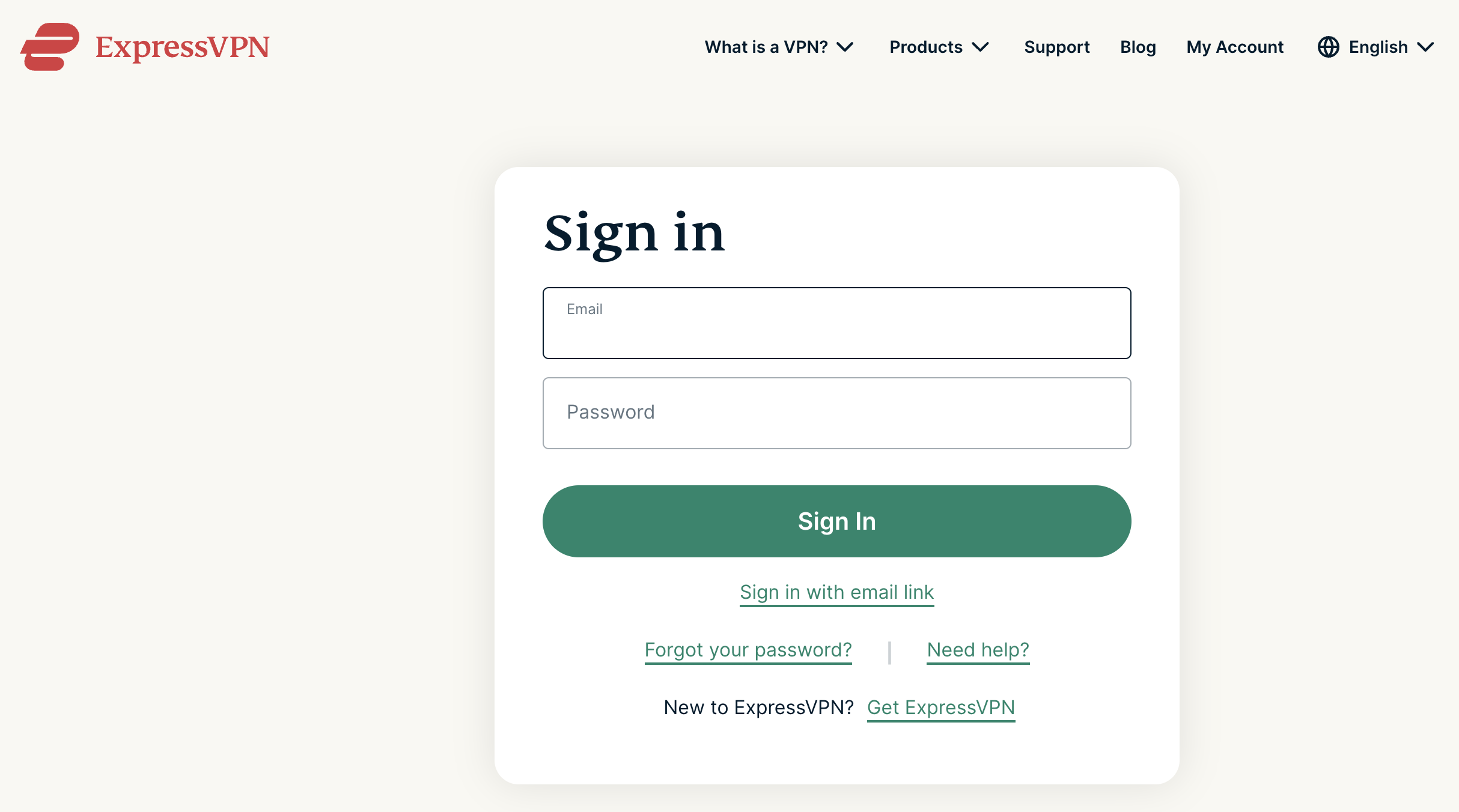
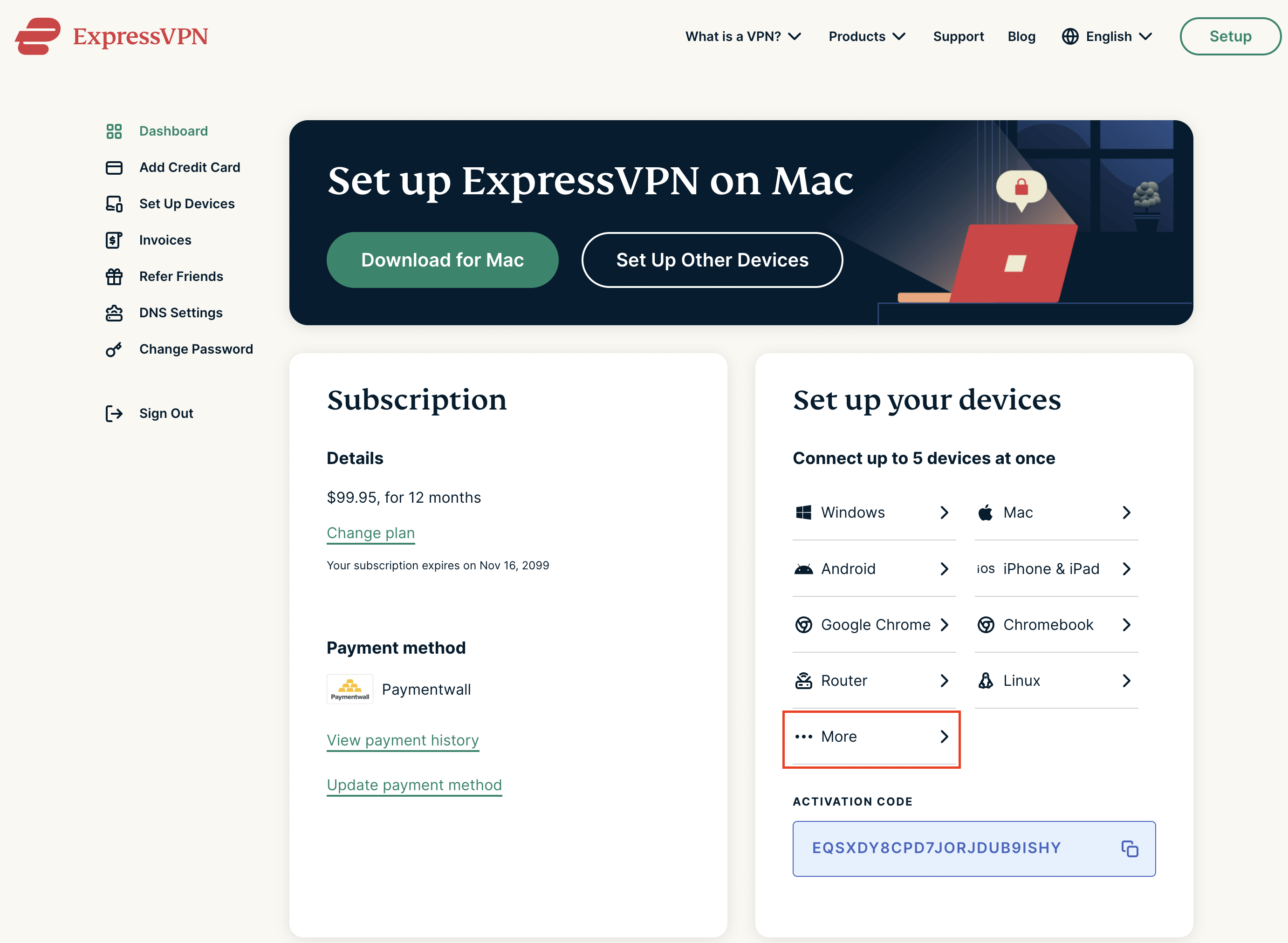
2. Successfully log in with your account information. Select More.
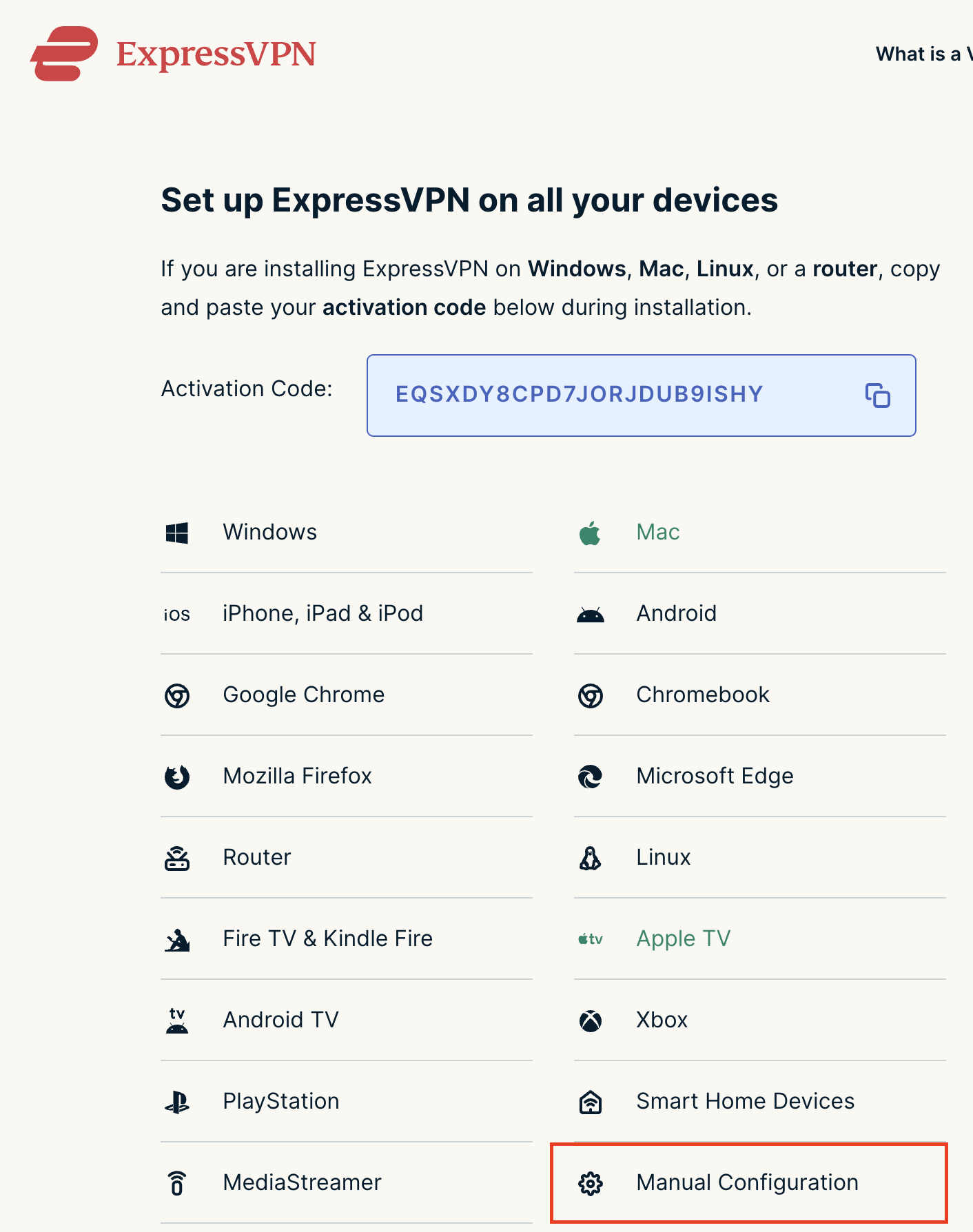
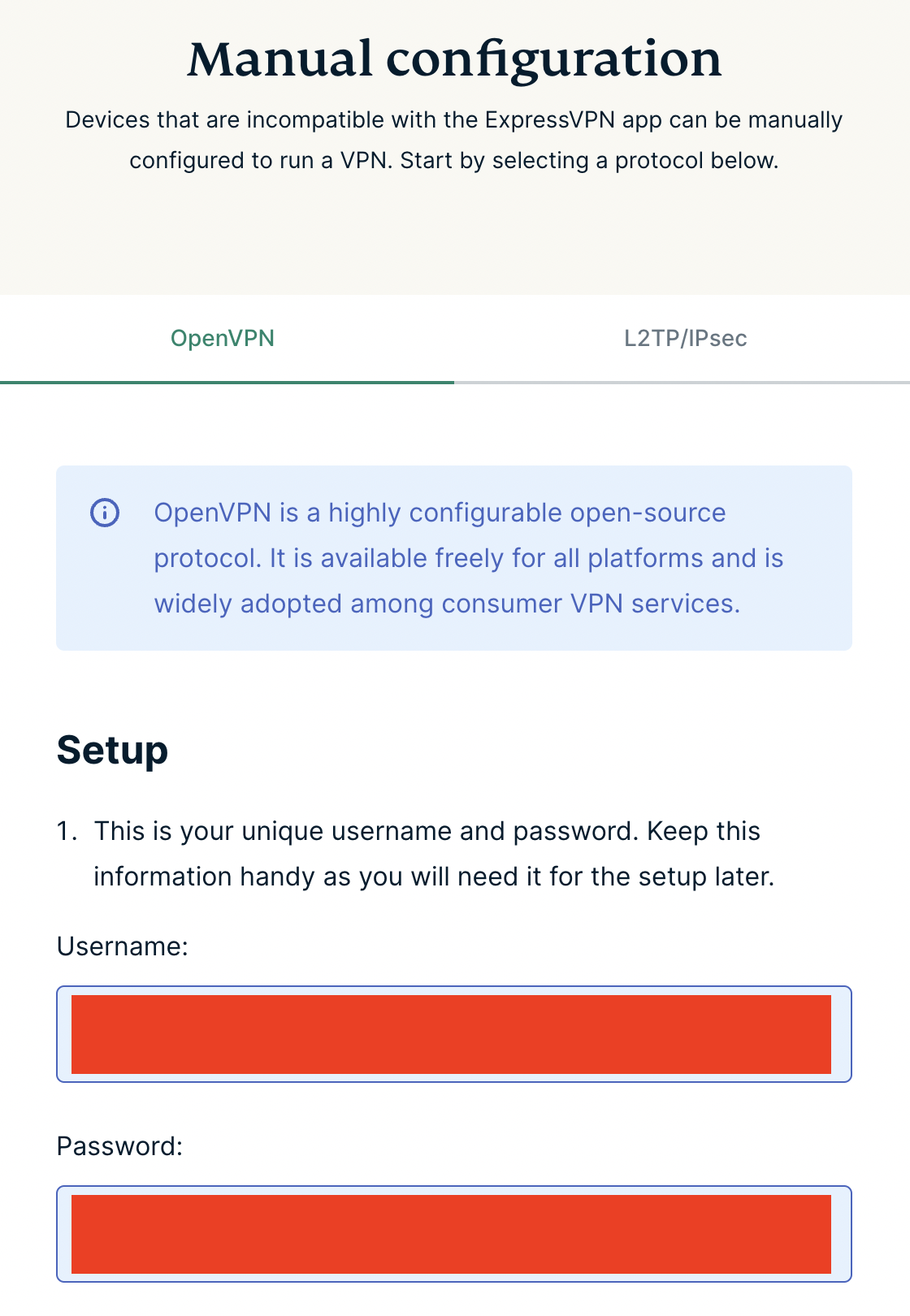
3. Select Manual Configuration and copy the Username and Password that are displayed on the right hand side of the screen.
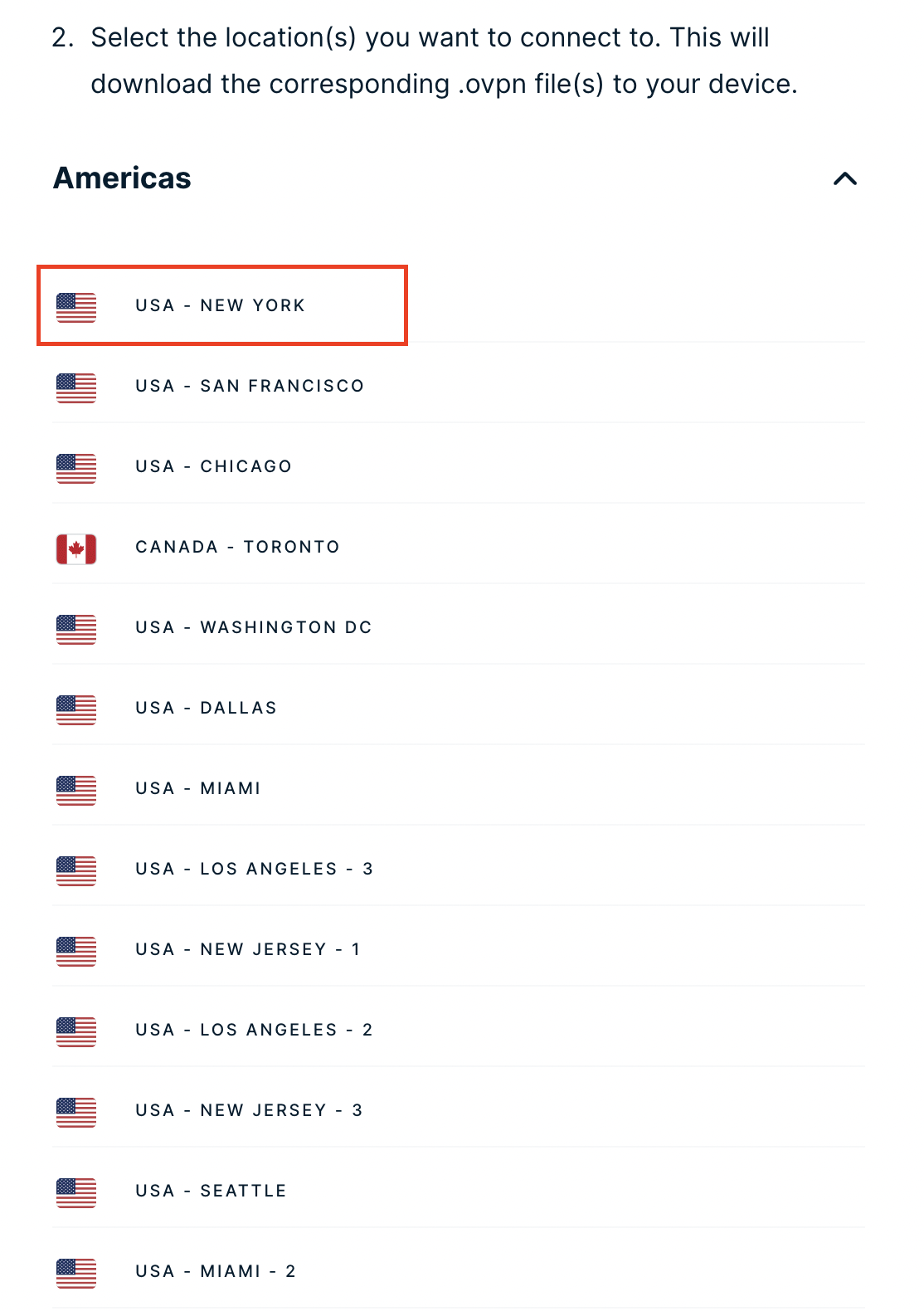
4. Click the Server Location that you want to connect to. This will download a .ovpn file to your computer that we will use later on. There is no need to open the file. For this example I have selected New York but feel free to select any server listed there.
Merlin Router Setup for ExpressVPN
Login to Asus Merlin firmware settings in a browser on any computer or smart device connected to the Merlin FlashRouter’s network.
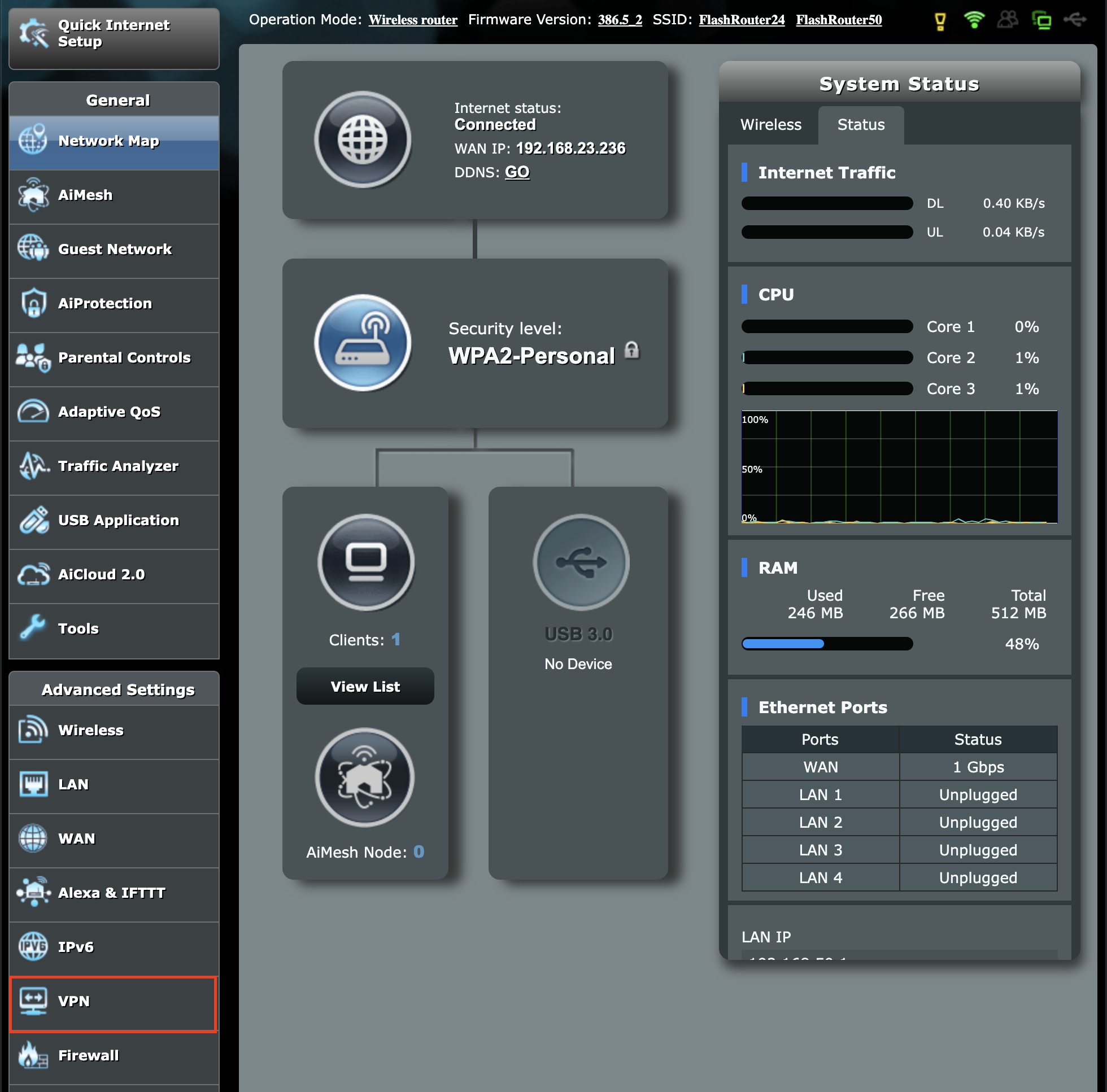
1. Navigate to the VPN tab.
2. Navigate to the VPN Client tab.
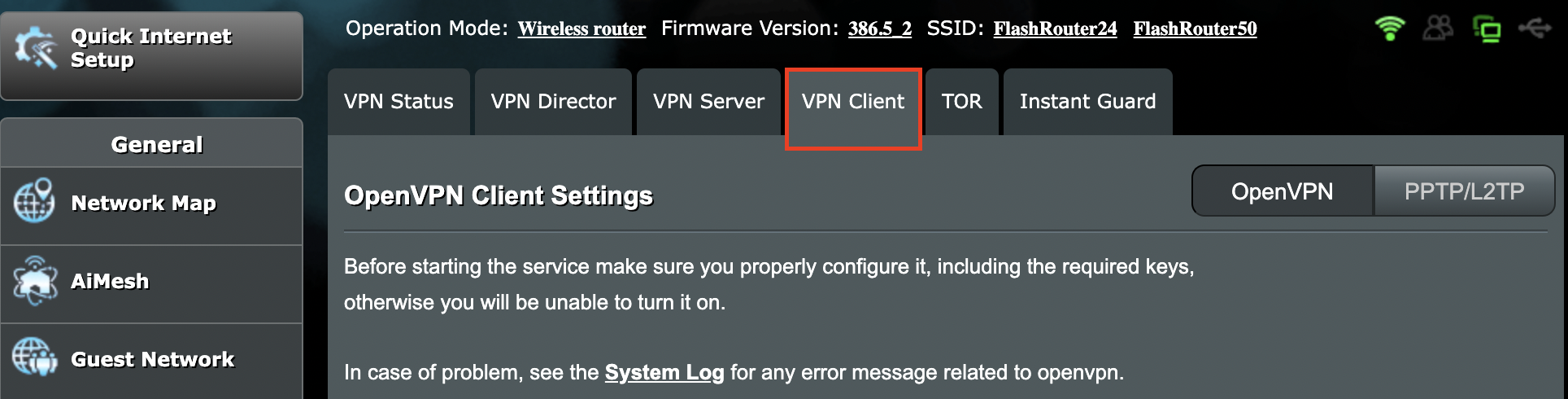
3. Click Choose file and select the .ovpn file you downloaded earlier. Then click Upload.
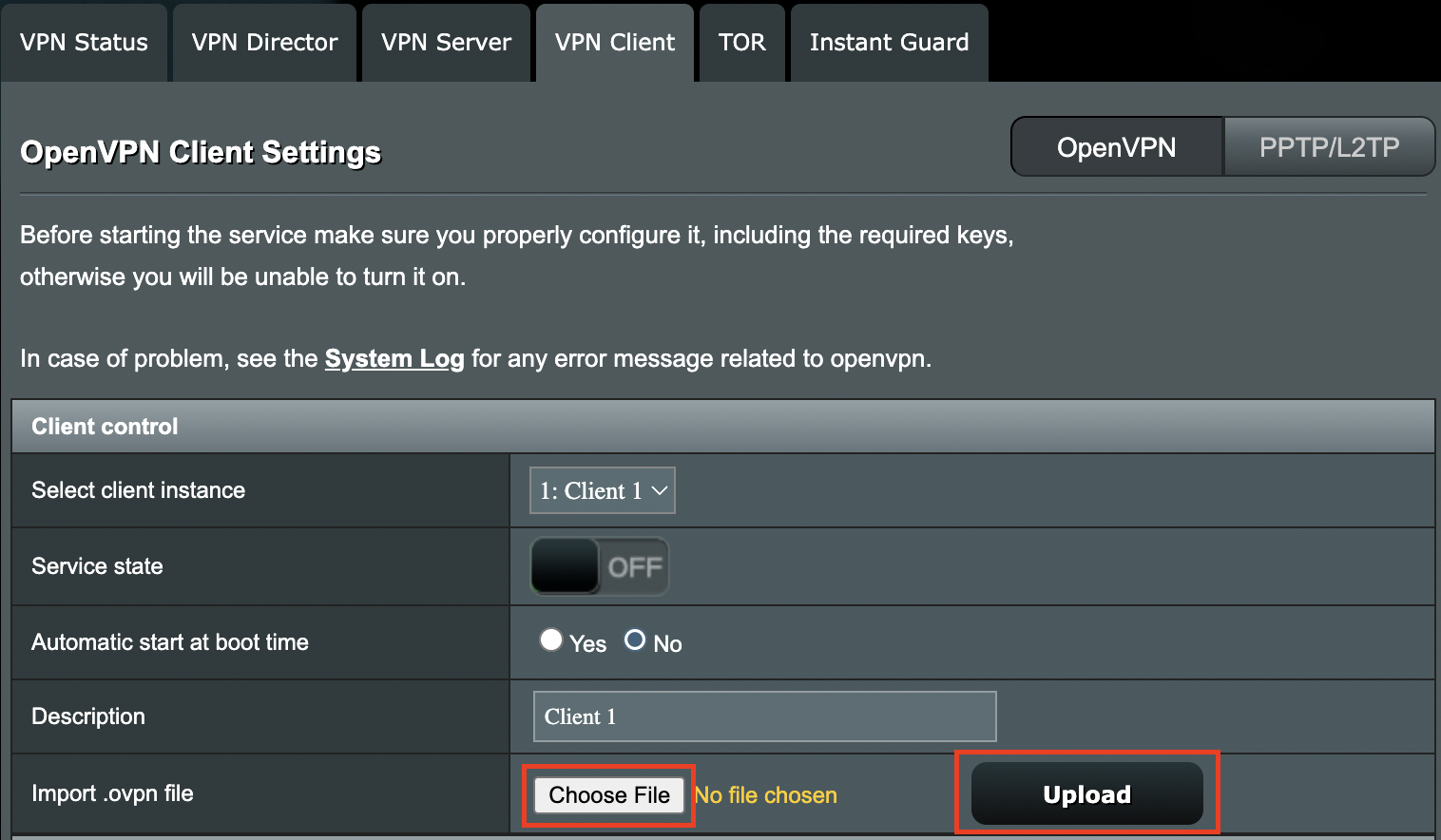
4. Set Automatic Start at boot time to Yes if you want the VPN connection to begin automatically when the router is powered off and back on.
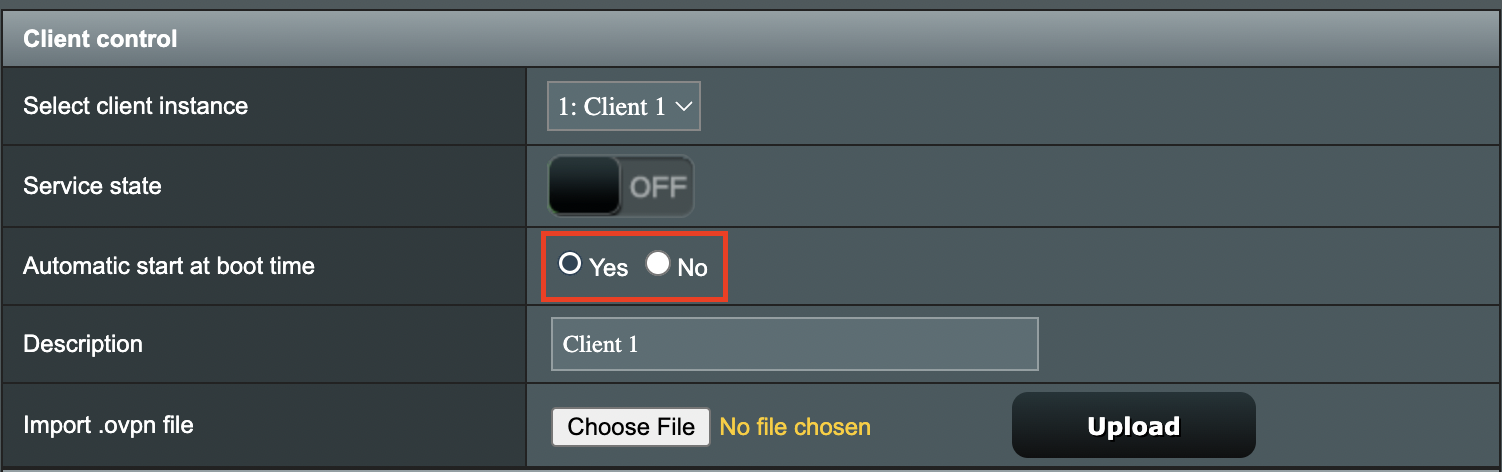
5. In the Description field enter in the name you’d like to use for this OpenVPN Client profile. We typically advise entering in the location or server number here. Our example server was in New York so I have entered in ExpressVPN New York.
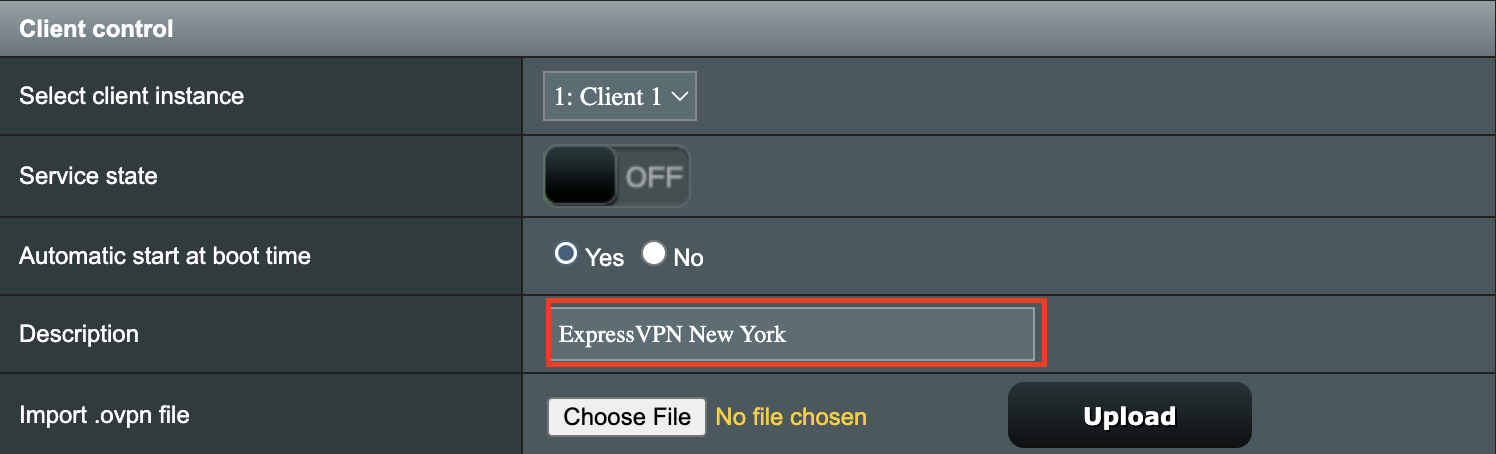
6. Set Accept DNS Configuration to Strict. Set Redirect Internet traffic through tunnel to Yes (all). Set Kill Switch to Yes or No depending on if you want the Internet to be killed if the VPN connection drops.
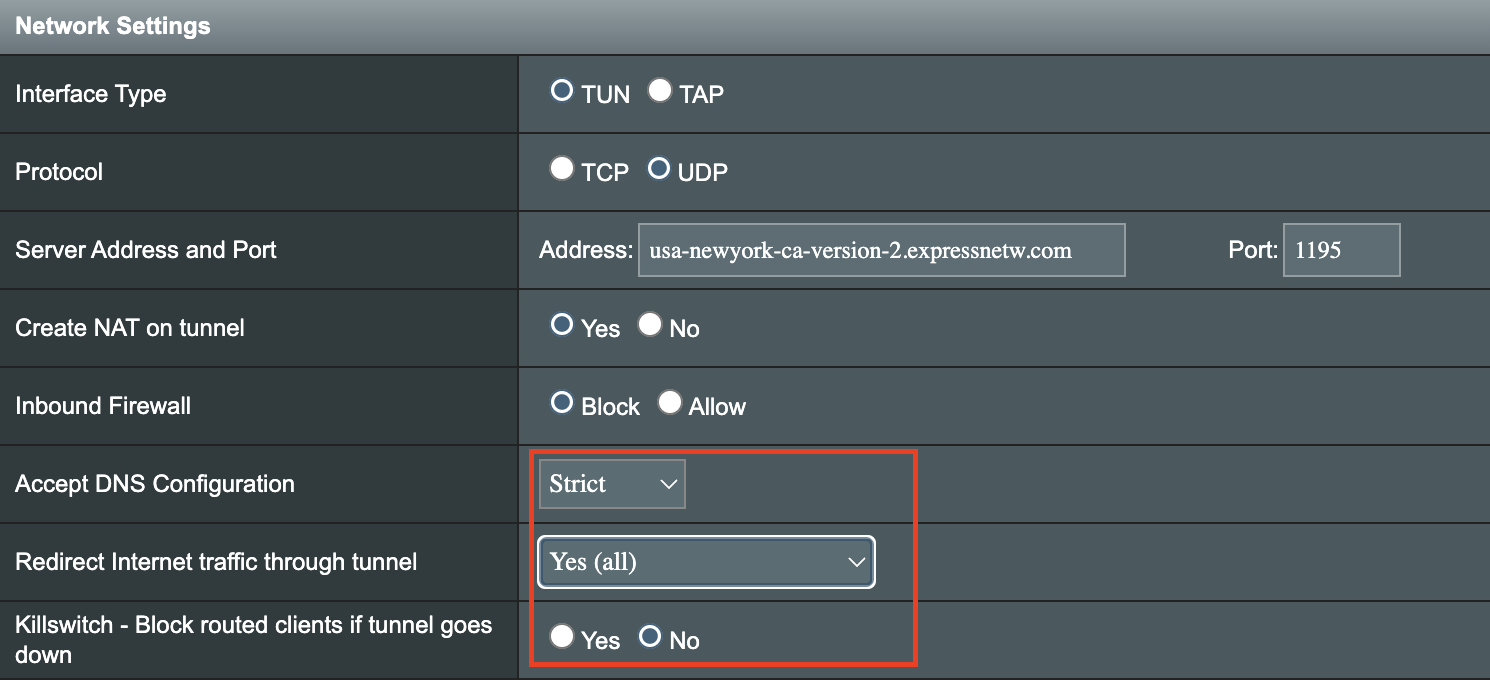
If you only want certain devices to connect to the OpenVPN Client profile you are setting up instead of all the devices connected to the FlashRouter’s network please set the Redirect Internet traffic through tunnel to VPN Director. Then complete the instructions on this page and then view our VPN Director guide.
7. Enter your ExpressVPN username and password that you obtained earlier in the Username and Password. Note that these are different from your ExpressVPN email login and password.
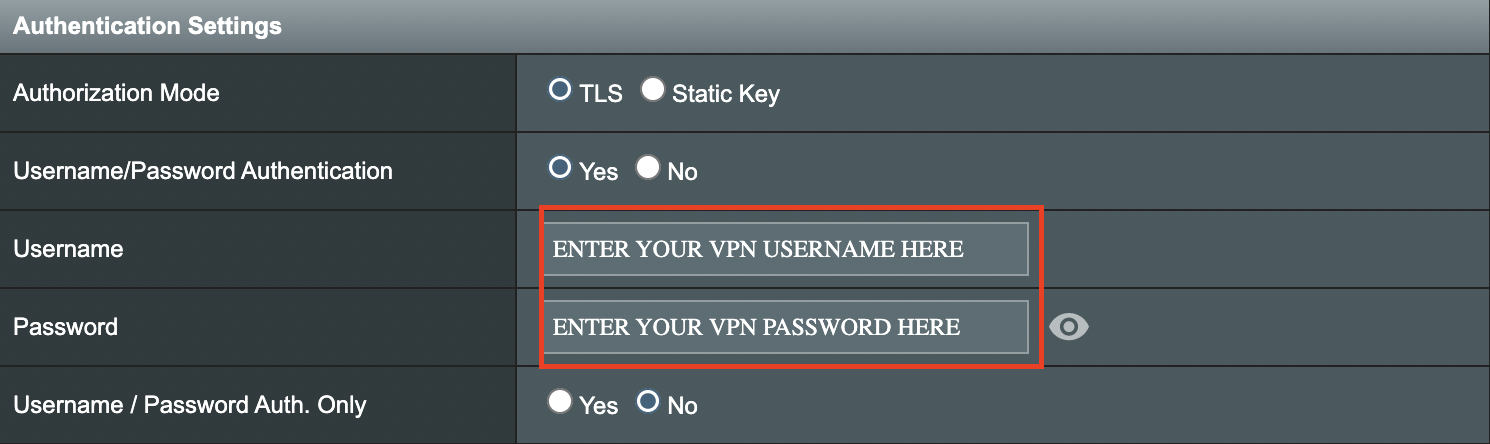
8. Click Apply at the bottom of the page.
9. At the top of the page set the Service State toggle to ON to activate the VPN connection.

Verify a successful ExpressVPN connection
- You should now see a CONNECTED message.
- Visit ExpressVPN’s IP Check to verify your new IP address and virtual location.
In some cases you may notice that the location is not showing the same location as the server you have input in your router settings; this is because geo tracking tools are often tricked by VPN connections. As long as you see an IP address that is not the same as your normal Internet IP address then you are indeed connected to ExpressVPN.
How to change the ExpressVPN server
- Copy the new ExpressVPN server address from the below server list.
- Paste the server into the Server Address field.
- Click Apply at the bottom of the page.
ExpressVPN Server Addresses
Americas
usa-atlanta-ca-version-2.expressnetw.com
usa-boston-ca-version-2.expressnetw.com
usa-chicago-ca-version-2.expressnetw.com
usa-dallas-ca-version-2.expressnetw.com
usa-dallas-2-ca-version-2.expressnetw.com
usa-denver-ca-version-2.expressnetw.com
usa-kansascity-ca-version-2.expressnetw.com
usa-losangeles-ca-version-2.expressnetw.com
usa-losangeles-1-ca-version-2.expressnetw.com
usa-losangeles-2-ca-version-2.expressnetw.com
usa-losangeles-3-ca-version-2.expressnetw.com
usa-los-angeles-4-ca-version-2.expressnetw.com
usa-miami-ca-version-2.expressnetw.com
usa-miami-2-ca-version-2.expressnetw.com
usa-minneapolis-ca-version-2.expressnetw.com
usa-newjersey-1-ca-version-2.expressnetw.com
usa-newjersey-3-ca-version-2.expressnetw.com
usa-newyork-ca-version-2.expressnetw.com
us-new-york-2-ca-version-2.expressnetw.com
usa-phoenix-ca-version-2.expressnetw.com
usa-saltlakecity-ca-version-2.expressnetw.com
usa-sanfrancisco-ca-version-2.expressnetw.com
usa-sanjose-ca-version-2.expressnetw.com
usa-seattle-ca-version-2.expressnetw.com
usa-tampa-1-ca-version-2.expressnetw.com
usa-virginia-ca-version-2.expressnetw.com
usa-washingtondc-ca-version-2.expressnetw.com
usa-washingtondc-2-ca-version-2.expressnetw.com
canada-montreal-ca-version-2.expressnetw.com
canada-toronto-ca-version-2.expressnetw.com
canada-toronto-2-ca-version-2.expressnetw.com
canada-vancouver-ca-version-2.expressnetw.com
mexico-ca-version-2.expressnetw.com
argentina-ca-version-2.expressnetw.com
brazil-ca-version-2.expressnetw.com
brazil-2-ca-version-2.expressnetw.com
chile-ca-version-2.expressnetw.com
colombia-ca-version-2.expressnetw.com
costarica-ca-version-2.expressnetw.com
ecuador-ca-version-2.expressnetw.com
guatemala-ca-version-2.expressnetw.com
panama-ca-version-2.expressnetw.com
peru-ca-version-2.expressnetw.com
uruguay-ca-version-2.expressnetw.com
venezuela-ca-version-2.expressnetw.com
Europe
uk-berkshire-ca-version-2.expressnetw.com
uk-berkshire-2-ca-version-2.expressnetw.com
uk-docklands-ca-version-2.expressnetw.com
uk-east-london-ca-version-2.expressnetw.com
uk-kent-ca-version-2.expressnetw.com
uk-london-ca-version-2.expressnetw.com
france-paris-1-ca-version-2.expressnetw.com
france-paris-2-ca-version-2.expressnetw.com
france-strasbourg-ca-version-2.expressnetw.com
germany-darmstadt-ca-version-2.expressnetw.com
germany-frankfurt-1-ca-version-2.expressnetw.com
germany-frankfurt-2-ca-version-2.expressnetw.com
germany-nuremberg-ca-version-2.expressnetw.com
italy-cosenza-ca-version-2.expressnetw.com
italy-milan-ca-version-2.expressnetw.com
netherlands-amsterdam-ca-version-2.expressnetw.com
netherlands-rotterdam-ca-version-2.expressnetw.com
netherlands-thehague-ca-version-2.expressnetw.com
spain-barcelona-ca-version-2.expressnetw.com
spain-ca-version-2.expressnetw.com
sweden-ca-version-2.expressnetw.com
sweden-2-ca-version-2.expressnetw.com
switzerland-ca-version-2.expressnetw.com
switzerland-2-ca-version-2.expressnetw.com
albania-ca-version-2.expressnetw.com
andorra-ca-version-2.expressnetw.com
armenia-ca-version-2.expressnetw.com
austria-ca-version-2.expressnetw.com
azerbaijan-ca-version-2.expressnetw.com
belarus-ca-version-2.expressnetw.com
belgium-ca-version-2.expressnetw.com
bosniaandherzegovina-ca-version-2.expressnetw.com
bulgaria-ca-version-2.expressnetw.com
croatia-ca-version-2.expressnetw.com
cyprus-ca-version-2.expressnetw.com
czechrepublic-ca-version-2.expressnetw.com
denmark-ca-version-2.expressnetw.com
estonia-ca-version-2.expressnetw.com
finland-ca-version-2.expressnetw.com
georgia-ca-version-2.expressnetw.com
greece-ca-version-2.expressnetw.com
hungary-ca-version-2.expressnetw.com
iceland-ca-version-2.expressnetw.com
ireland-ca-version-2.expressnetw.com
isleofman-ca-version-2.expressnetw.com
jersey-ca-version-2.expressnetw.com
latvia-ca-version-2.expressnetw.com
liechtenstein-ca-version-2.expressnetw.com
lithuania-ca-version-2.expressnetw.com
luxembourg-ca-version-2.expressnetw.com
macedonia-ca-version-2.expressnetw.com
malta-ca-version-2.expressnetw.com
moldova-ca-version-2.expressnetw.com
monaco-ca-version-2.expressnetw.com
montenegro-ca-version-2.expressnetw.com
norway-ca-version-2.expressnetw.com
poland-ca-version-2.expressnetw.com
portugal-ca-version-2.expressnetw.com
romania-ca-version-2.expressnetw.com
serbia-ca-version-2.expressnetw.com
slovakia-ca-version-2.expressnetw.com
slovenia-ca-version-2.expressnetw.com
ukraine-ca-version-2.expressnetw.com
Asia Pacific
australia-brisbane-ca-version-2.expressnetw.com
australia-melbourne-ca-version-2.expressnetw.com
australia-perth-ca-version-2.expressnetw.com
australia-sydney-ca-version-2.expressnetw.com
australia-sydney-2-ca-version-2.expressnetw.com
australia-sydney-3-ca-version-2.expressnetw.com
hongkong-2-ca-version-2.expressnetw.com
hongkong4-ca-version-2.expressnetw.com
hongkong-1-ca-version-2.expressnetw.com
japan-tokyo-1-ca-version-2.expressnetw.com
japan-tokyo-2-ca-version-2.expressnetw.com
india-chennai-ca-version-2.expressnetw.com
india-mumbai-1-ca-version-2.expressnetw.com
singapore-cbd-ca-version-2.expressnetw.com
singapore-jurong-ca-version-2.expressnetw.com
southkorea-ca-version-2.expressnetw.com
southkorea2-ca-version-2.expressnetw.com
bangladesh-ca-version-2.expressnetw.com
bhutan-ca-version-2.expressnetw.com
brunei-ca-version-2.expressnetw.com
cambodia-ca-version-2.expressnetw.com
indonesia-ca-version-2.expressnetw.com
kazakhstan-ca-version-2.expressnetw.com
kyrgyzstan-ca-version-2.expressnetw.com
laos-ca-version-2.expressnetw.com
macau-ca-version-2.expressnetw.com
malaysia-ca-version-2.expressnetw.com
mongolia-ca-version-2.expressnetw.com
myanmar-ca-version-2.expressnetw.com
nepal-ca-version-2.expressnetw.com
newzealand-ca-version-2.expressnetw.com
pakistan-ca-version-2.expressnetw.com
ph-via-sing-ca-version-2.expressnetw.com
srilanka-ca-version-2.expressnetw.com
taiwan-3-ca-version-2.expressnetw.com
thailand-ca-version-2.expressnetw.com
vietnam-ca-version-2.expressnetw.com
Middle East and Africa
algeria-ca-version-2.expressnetw.com
israel-ca-version-2.expressnetw.com
kenya-ca-version-2.expressnetw.com
southafrica-ca-version-2.expressnetw.com
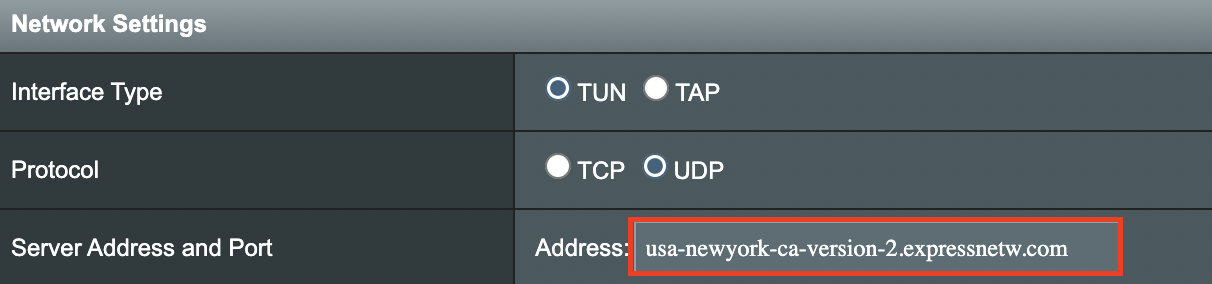
NordVPN Merlin OpenVPN Setup
Preparing for NordVPN Merlin Setup
Obtain your NordVPN manual Username and Password
If you are not already an NordVPN user Sign Up Now.
1. Log in to your account on the NordVPN website.
2. Click NordVPN on the left hand side and then click Setup NordVPN manually.
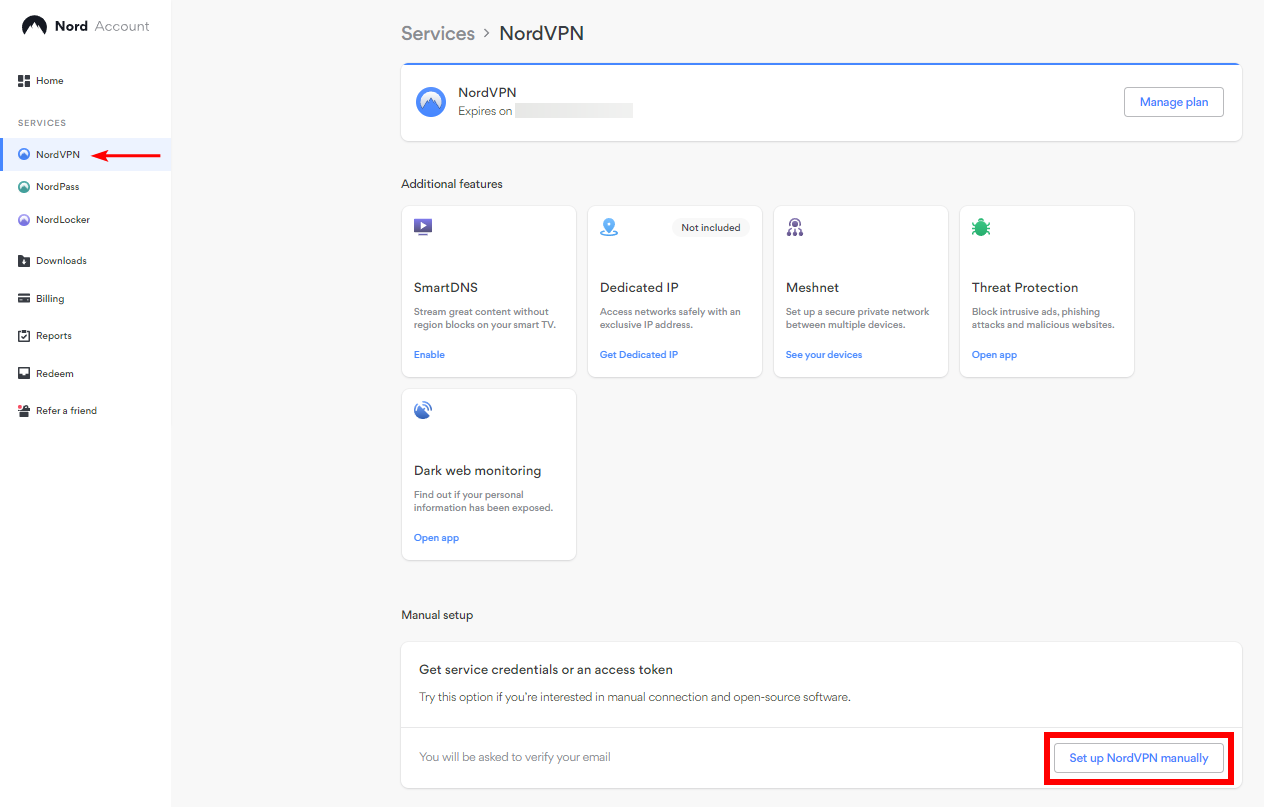
3. Enter in the verification code that was sent to your email.
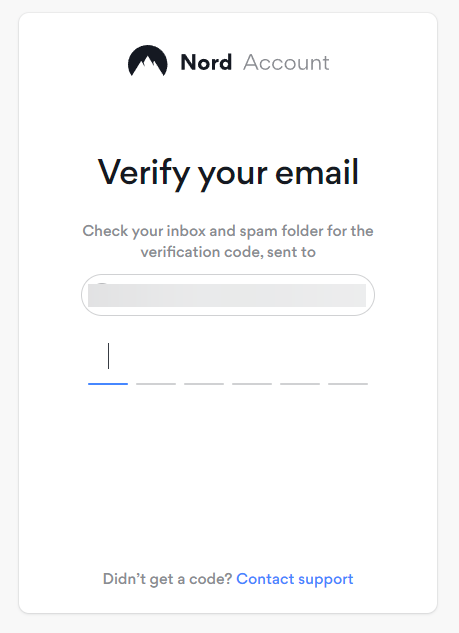
4. Copy and paste your NordVPN manual username and password to a secure location. This is the username and password you will enter into the router settings to connect to NordVPN.
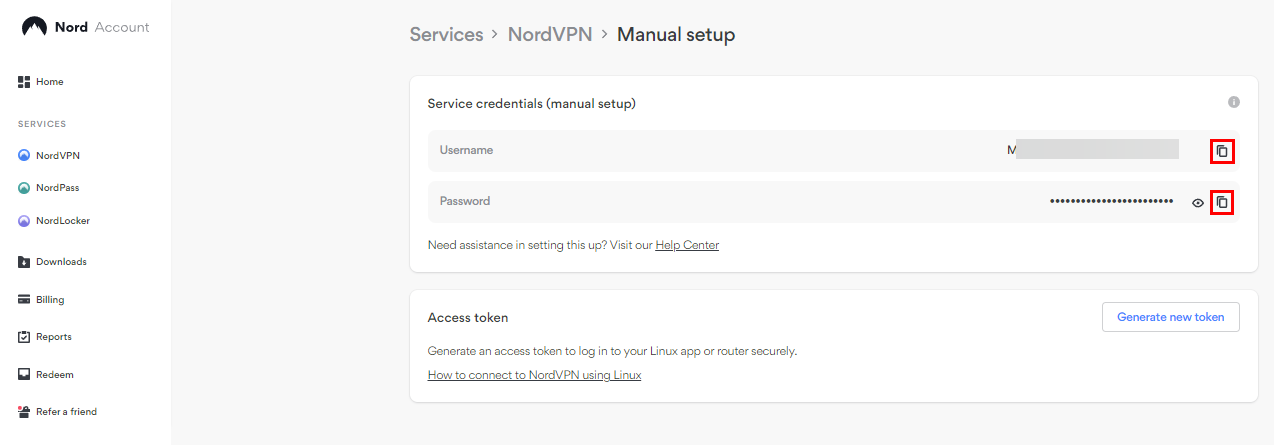
Download your NordVPN .ovpn file
1. There are two options for obtaining the .ovpn file. The first and recommended is to navigate to NordVPN’s server recommendation page. Click Recommended Server to display the fastest server based on your actual location. You can adjust the country if you don’t want to connect to the recommended country.
Then click Show Available Protocols. Click Download Config next to OpenVPN UDP. This will download the .ovpn file to your computer for this server. Do not open this file.
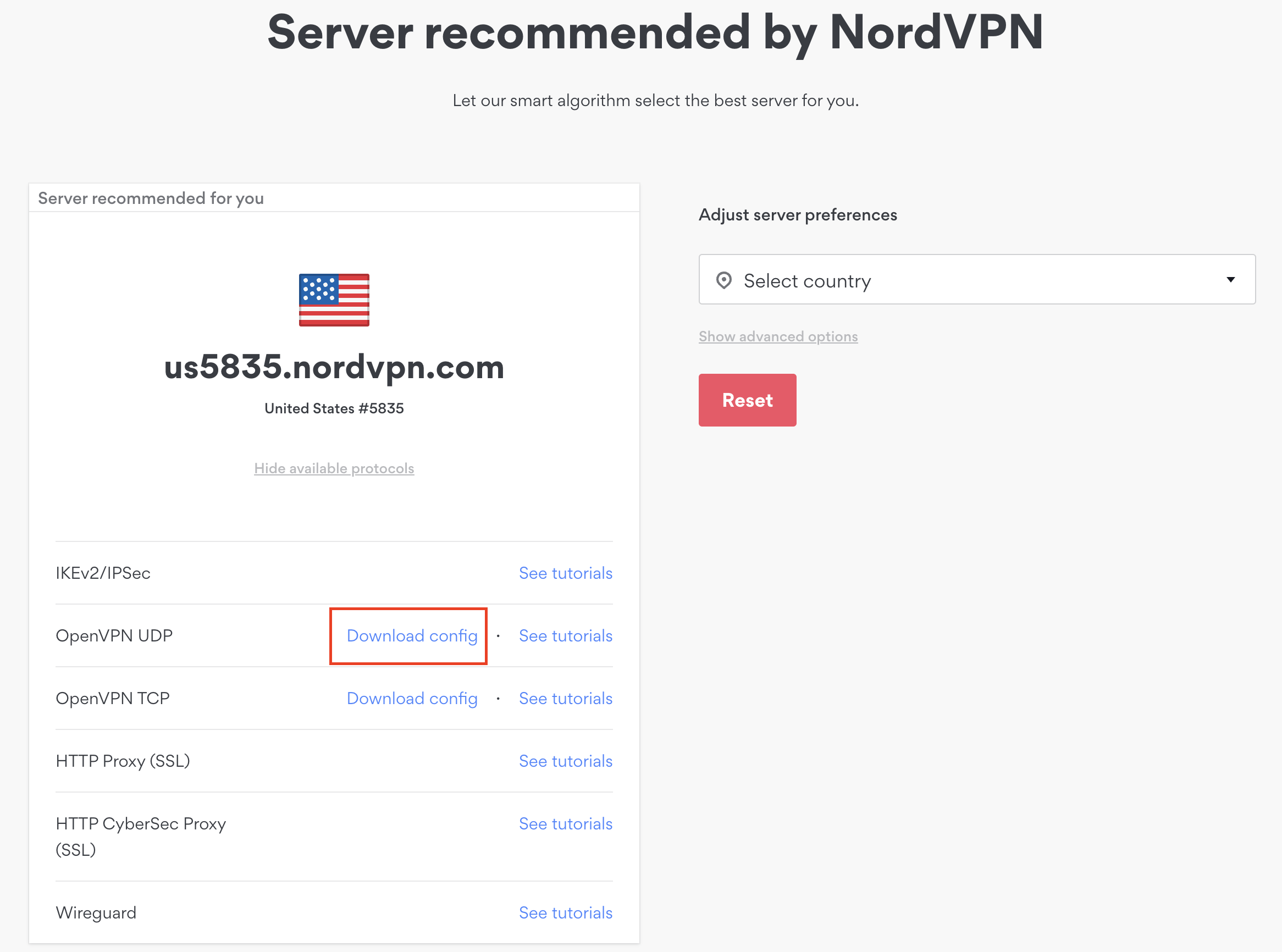
The second method to obtain a server is for connecting to a specific server number that you know you want to use. This applies to NordVPN Dedicated IP servers if you are signed up for that service. Go to NordVPN’s .ovpn file page. Then search for the server number that you want to use and click Download UDP.
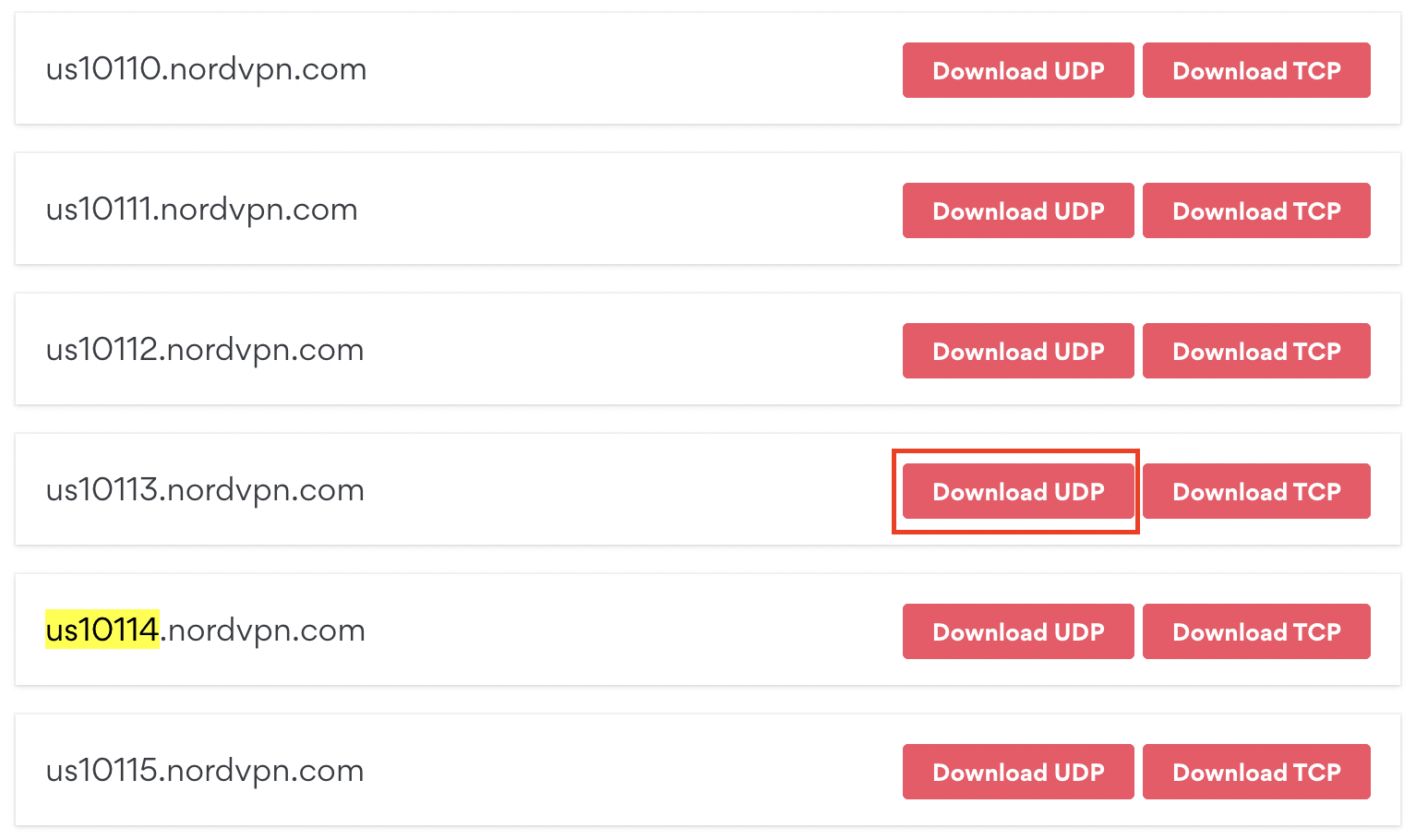
Merlin Router Setup for NordVPN
Login to Asus Merlin firmware settings in a browser on any computer or smart device connected to the Merlin FlashRouter’s network.
1. Navigate to the VPN tab.
2. Navigate to the VPN Client tab.
3. Click Choose file and select the .ovpn file you downloaded earlier. Then click Upload.
4. Set Automatic Start at boot time to Yes if you want the VPN connection to begin automatically when the router is powered off and back on.
5. In the Description field enter in the name you’d like to use for this OpenVPN Client profile. We typically advise entering in the location or server number here. Our example server was in us5835.nordvpn.com so I have entered in NordVPN us5835.
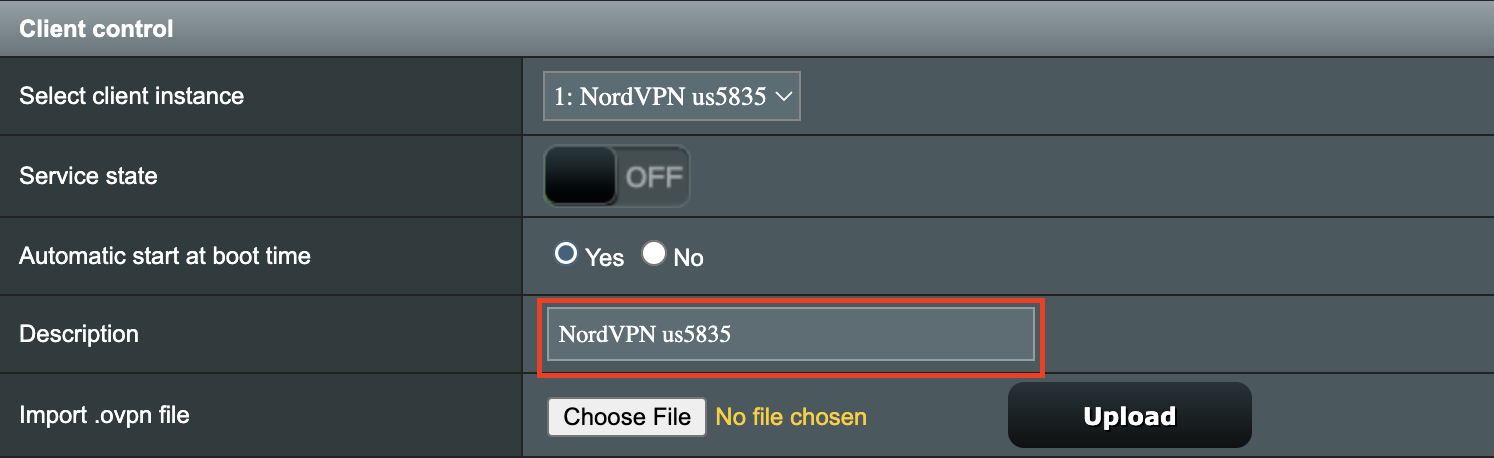
6. Set Accept DNS Configuration to Strict. Set Redirect Internet traffic through tunnel to Yes (all). Set Kill Switch to Yes or No depending on if you want the Internet to be killed if the VPN connection drops.
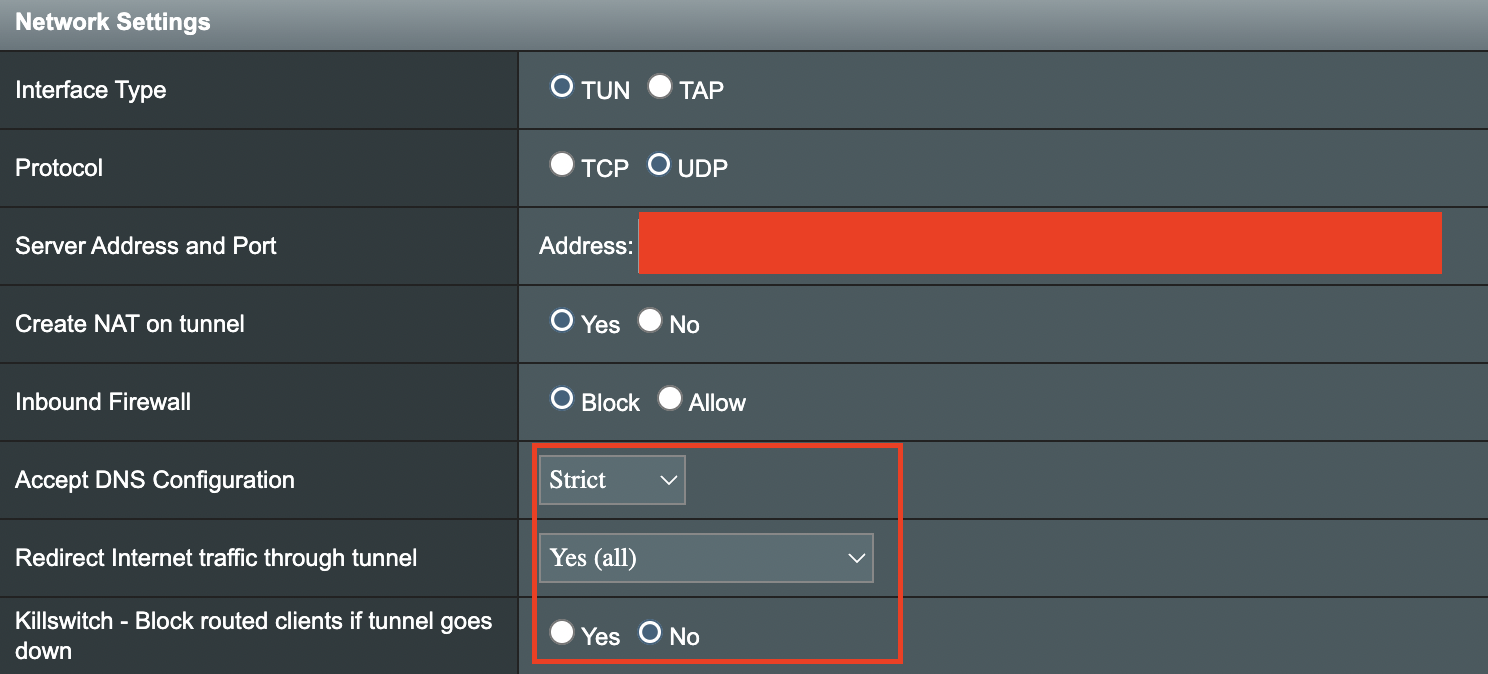
If you only want certain devices to connect to the OpenVPN Client profile you are setting up instead of all the devices connected to the FlashRouter’s network please set the Redirect Internet traffic through tunnel to VPN Director. Then complete the instructions on this page and then view our VPN Director guide.
7. Enter your NordVPN username and password that you obtained earlier in the Username and Password. Note that these are different from your NordVPN email login and password.
8. Click Apply at the bottom of the page.
9. At the top of the page set the Service State toggle to ON to activate the VPN connection.

Verify a successful NordVPN connection
- You should now see a CONNECTED message.
- Visit NordVPN’s IP Check to verify your new IP address and virtual location.
In some cases you may notice that the location is not showing the same location as the server you have input in your router settings; this is because geo tracking tools are often tricked by VPN connections. As long as you see an IP address that is not the same as your normal Internet IP address then you are indeed connected to NordVPN.
How to change the NordVPN server
- Follow the steps at the top of the page to obtain a new .ovpn file.
- Then proceed with the settings same as initial setup.
PrivateInternetAccess (PIA) Merlin OpenVPN Setup
Preparing for PIA Merlin Setup
Download your PIA .ovpn file
If you are not already a PIA user Sign Up Now.
1. Log in to your account on the PIA website.
2. Successfully log in with your account information then go to PIA’s OpenVPN Config Generator.
3. On the OpenVPN Configuration Generator select the following:
OpenVPN Version: OpenVPN 2.4 or newer
Select Platform: Linux
Select Region: Choose the server location you’d like to connect to
Select Port: Typically we recommend UDP/1198 RSA-2048 AES-128-CBC SHA1 for best speeds but feel free to select the one you want to use.
4. Click Generate to download the .ovpn file. Do not open this file once it is downloaded.
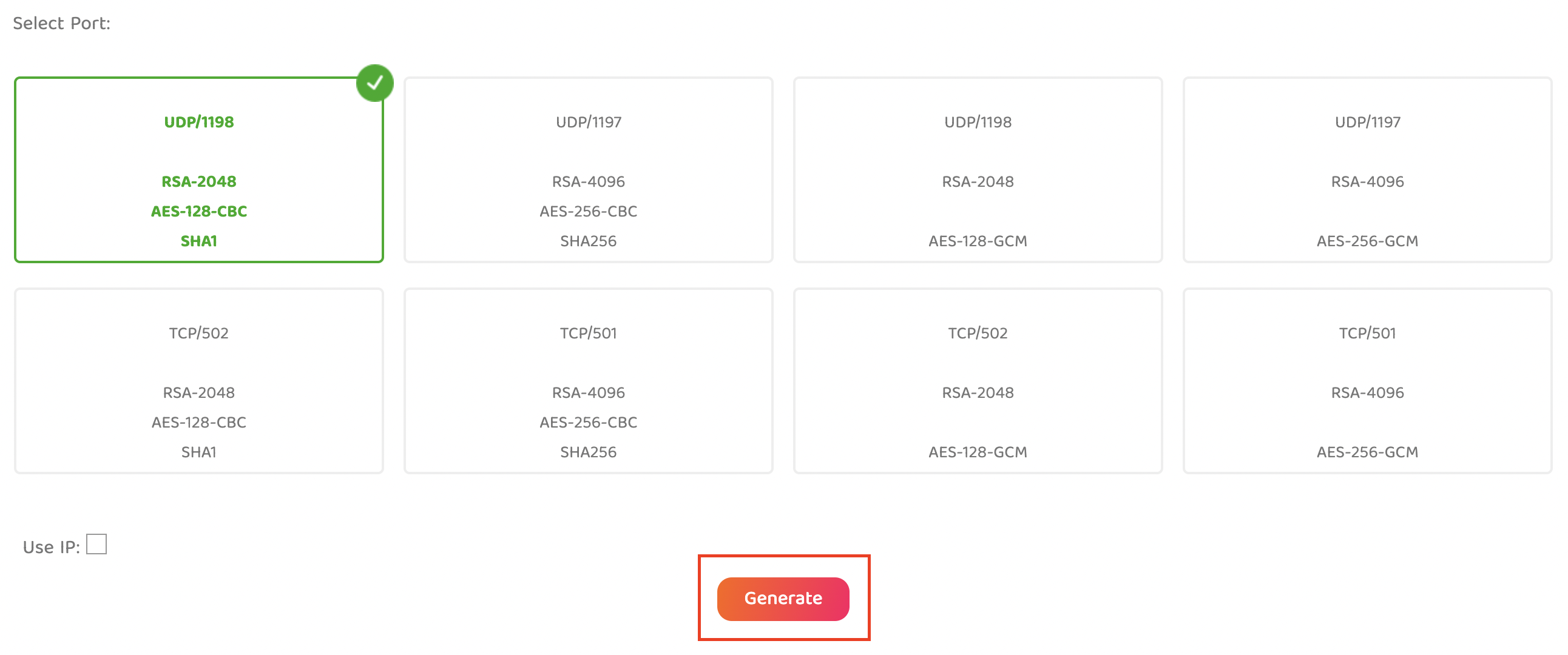
Merlin Router Setup for PIA
Login to Asus Merlin firmware settings in a browser on any computer or smart device connected to the Merlin FlashRouter’s network.
1. Navigate to the VPN tab.
2. Navigate to the VPN Client tab.
3. Click Choose file and select the .ovpn file you downloaded earlier. Then click Upload.
4. Set Automatic Start at boot time to Yes if you want the VPN connection to begin automatically when the router is powered off and back on.
5. In the Description field enter in the name you’d like to use for this OpenVPN Client profile. We typically advise entering in the location here. Our example server was in US East Streaming so I have entered in PIA US East Streaming.
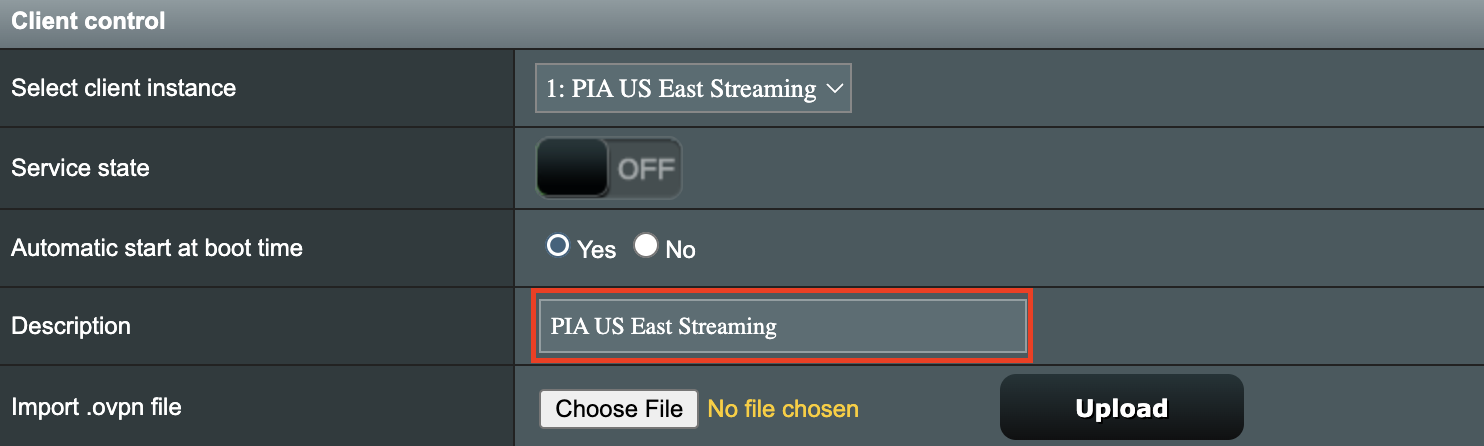
6. Set Accept DNS Configuration to Strict. Set Redirect Internet traffic through tunnel to Yes (all). Set Kill Switch to Yes or No depending on if you want the Internet to be killed if the VPN connection drops.
If you only want certain devices to connect to the OpenVPN Client profile you are setting up instead of all the devices connected to the FlashRouter’s network please set the Redirect Internet traffic through tunnel to VPN Director. Then complete the instructions on this page and then view our VPN Director guide.
7. Enter your PIA account username and password.
8. Click Apply at the bottom of the page.
9. At the top of the page set the Service State toggle to ON to activate the VPN connection.
Verify a successful PIA connection
- You should now see a CONNECTED message.
- Visit PIA’s IP Check to verify your new IP address and virtual location.
In some cases you may notice that the location is not showing the same location as the server you have input in your router settings; this is because geo tracking tools are often tricked by VPN connections. As long as you see an IP address that is not the same as your normal Internet IP address then you are indeed connected to PIA.
How to change the PIA server
- Follow the steps at the top of the page to obtain a new .ovpn file.
- Then proceed with the settings same as initial setup.
IPVanish Merlin OpenVPN Setup
Preparing for IPVanish Merlin Setup
Download your IPVanish .ovpn file
If you are not already an IPVanish user Sign Up Now.
1. Log in to your account on the IPVanish website.
2. Successfully log in with your account information then go to IPVanish .ovpn file page.
3. Click on the .ovpn file for the server location you want to use to dowloand the .ovpn file. Do not open this file.
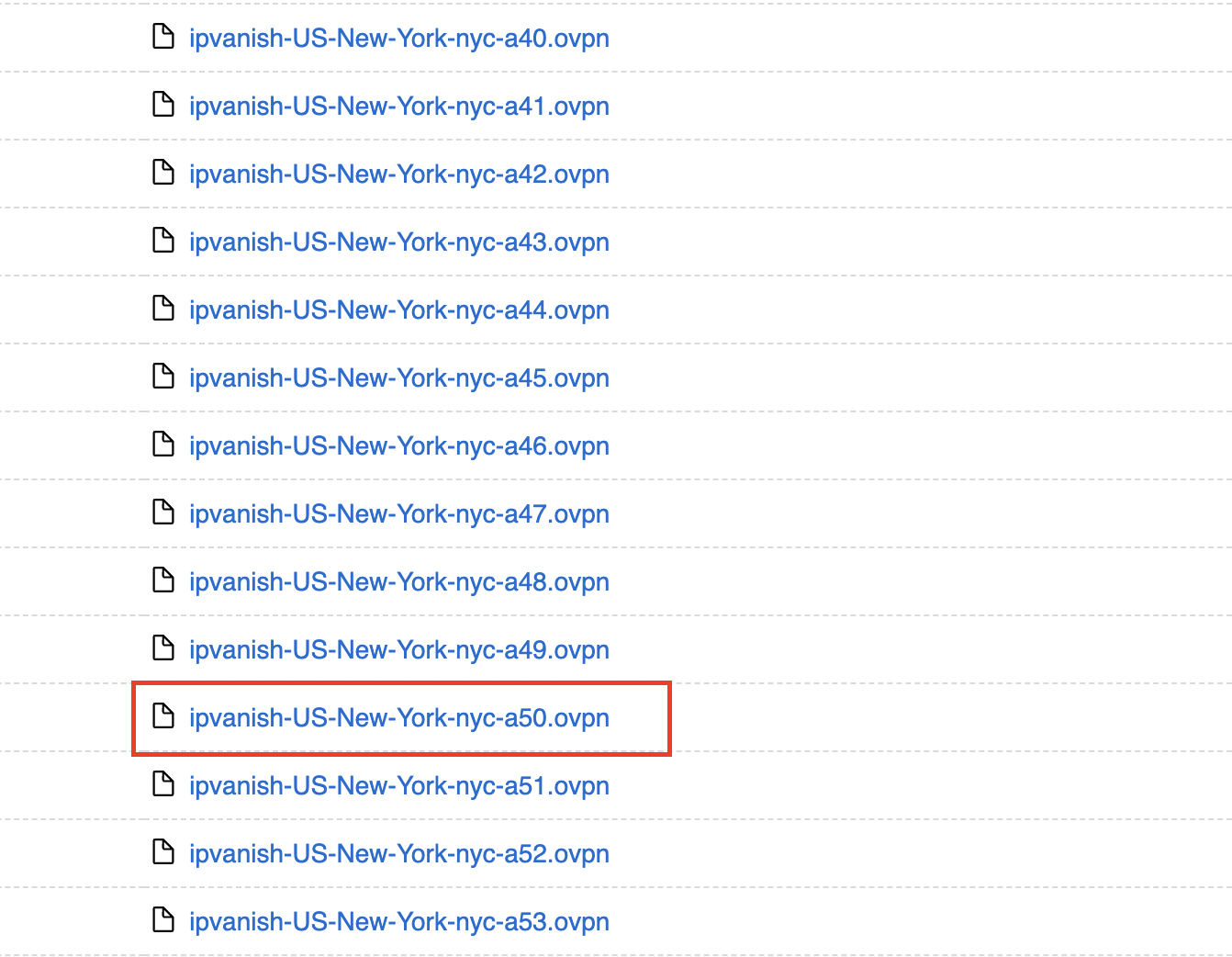
Merlin Router Setup for IPVanish
Login to Asus Merlin firmware settings in a browser on any computer or smart device connected to the Merlin FlashRouter’s network.
1. Navigate to the VPN tab.
2. Navigate to the VPN Client tab.
3. Click Choose file and select the .ovpn file you downloaded earlier. Then click Upload.
4. Set Automatic Start at boot time to Yes if you want the VPN connection to begin automatically when the router is powered off and back on.
5. In the Description field enter in the name you’d like to use for this OpenVPN Client profile. We typically advise entering in the location here. Our example server was in nyc-a50 so I have entered in IPVanish a-50.
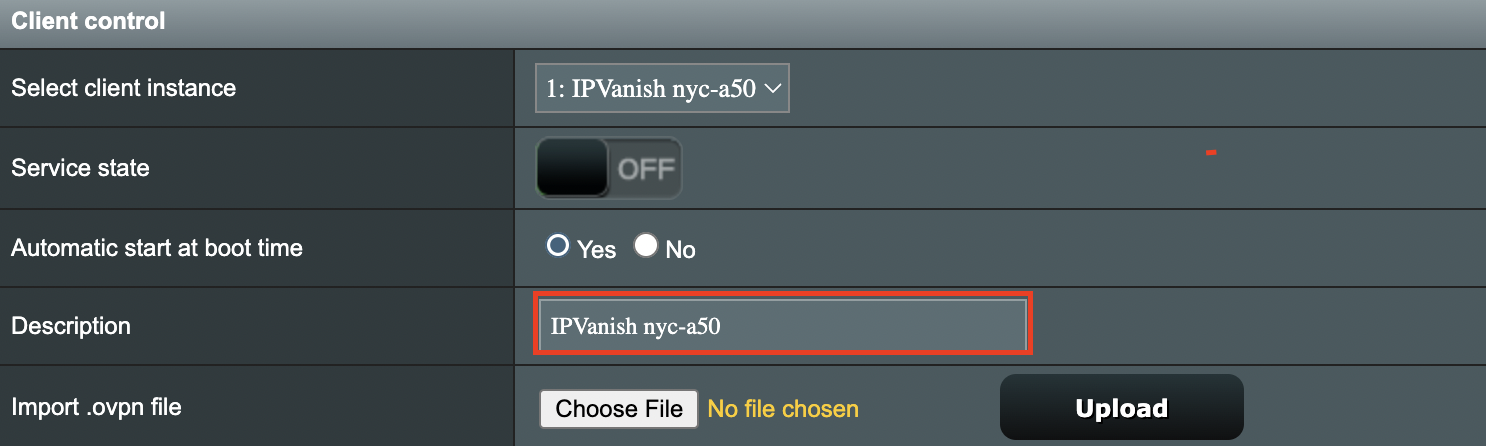
6. Set Accept DNS Configuration to Strict. Set Redirect Internet traffic through tunnel to Yes (all). Set Kill Switch to Yes or No depending on if you want the Internet to be killed if the VPN connection drops.
If you only want certain devices to connect to the OpenVPN Client profile you are setting up instead of all the devices connected to the FlashRouter’s network please set the Redirect Internet traffic through tunnel to VPN Director. Then complete the instructions on this page and then view our VPN Director guide.
7. Enter your IPVanish account email/username and password.
8. Click Apply at the bottom of the page.
9. At the top of the page set the Service State toggle to ON to activate the VPN connection.
Verify a successful IPVanish connection
- You should now see a CONNECTED message.
- Visit IPVanish’s IP Check to verify your new IP address and virtual location.
In some cases you may notice that the location is not showing the same location as the server you have input in your router settings; this is because geo tracking tools are often tricked by VPN connections. As long as you see an IP address that is not the same as your normal Internet IP address then you are indeed connected to IPVanish.
How to change the IPVanish server
- Follow the steps at the top of the page to obtain a new .ovpn file.
- Then proceed with the settings same as initial setup.
How do I boost my Wireless Transmission power?
Boost the wireless transmission power if you need to increase the wireless range of the FlashRouter.
Important Information
We recommend reading the entry in the DD-WRT Wiki to familiarize yourself with what TX Power values represent.
Broadcom routers
- Netgear R8500
- Netgear R7000
- Netgear R6400 V2
- Netgear R6300 V2
- Asus RT-AC5300
- Asus RT-AC66U
- Asus RT-AC56U
Navigate to Wireless > WL# or ath# Advanced
- Set the TX Power to the desired value.
- Click Apply Settings.

Atheros routers
- Netgear R9000
- Netgear R7800
- Linksys WRT3200ACM
- LinksysWRT32X
- Linksys WRT1900AC/v2/ACS
- LinksysWRT1200AC
Navigate to Wireless > Basic Settings
- Check Advanced Settings under the wireless interface you would like to boost.
- Set the TX Power to the desired value.
- Click Apply Settings.

We advise to proceed with caution when setting the TX Power. This has been known to negatively effect the hardware if set too high.
How to Access Your AsusWRT FlashRouter Settings
This quick guide will walk you through connecting to your AsusWRT FlashRouter and logging into the admin settings page. You’ll use either WiFi or an Ethernet cable, then access the router dashboard through your browser.
Step 1. Connect Your Device to the Router
You can connect by WiFi or Ethernet:
- WiFi: Look for a network name like FlashRouter24 or FlashRouter50.
- The WiFi password is set to: Wireless#[First 5 characters of your router’s MAC]
- Example: If your MAC is CC28A07E70A8, your WiFi password is Wireless#CC28A.
- ⚠️ Be sure to capitalize the “W” in Wireless.
- Ethernet: Plug an Ethernet cable from your computer into one of the router’s LAN ports (usually marked or color-coded differently from the WAN port).
👉 Pro tip: Disconnect from any other WiFi networks during setup.
Step 2. Open the Router Login Page
- Open a web browser (Chrome, Safari, Firefox, Edge).
- In the address bar, type: 192.168.50.1 or go to asusrouter.com
- Press Enter.
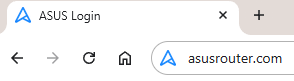
This is the local router dashboard address (not a public website). If the page doesn’t load:
- Try a different browser.
- Clear your cache.
- Ensure your device is connected to the FlashRouter network.
Step 3. Log In to the Router Settings
- Default username:
flashrouter - Default password:
asuswrt-admin1 - Some older devices may use:
asuswrt1orasuswrt - This is the factory default for AsusWRT routers shipped by FlashRouters.
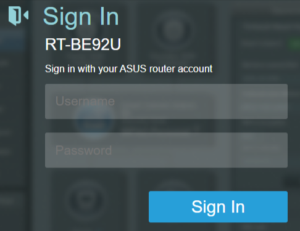
💡 Once you’re in, you can update your admin password in the settings for extra security.
Next Steps
Now that you’ve accessed your AsusWRT FlashRouter, you can:
- Set up your VPN service
- Customize your WiFi name and password
- Adjust device controls and security settings
Check our support library for your specific VPN setup guide.
How do I reset and reconfigure my ExpressVPN/Aircove FlashRouter?
When is a router reset needed?
A reset of the FlashRouter should only be performed in the following instances:
- You have exhausted all other troubleshooting methods and cannot access your router settings.
- Password to access the FlashRouter’s settings are not working.
- Power light on the router is blinking steadily.
- Router is not accessible after upgrading the firmware
Reset Router
Asus FlashRouters:
- While the router is powered off press and hold the WPS button on the back or side of the router. Power up the router while continuing to hold the WPS. Continue to hold for 15 seconds as the router powers on (note this could be up to 45 seconds on some models before lights flash).
- You will see the lights on the router flashing steadily and this is how you know you have reset the router.
- Let the router sit for about a minute and then reboot the router.
Aircove, Linksys and Netgear FlashRouters:
- While the router is plugged in, find the reset button located on the back of the router. You will need a pin or pencil to hold down the button for 15 seconds.
- You will see the lights on the back of the router flash simultaneously and this is how you know you have reset the router.
- Let the router sit for about a minute and then reboot the router.
Access Router Settings
1. Connect to the FlashRouter’s network via ethernet cable or wireless.
The wireless network will appear as “Aircove”, “Linksys##”, “Netgear##”, or “Asus” and the password to join the network will be the default wireless password printed on the bottom of the router.
2. Open your web browser and enter expressvpnrouter.com or 192.168.132.1 in the URL.
3. Click Get Started on the ExpressVPN page that is displayed.
4a. If your FlashRouter is wired to the Internet correctly then you will be prompted to enter your ExpressVPN Activation Code found in your ExpressVPN account. Paste that in and click Sign in to ExpressVPN.
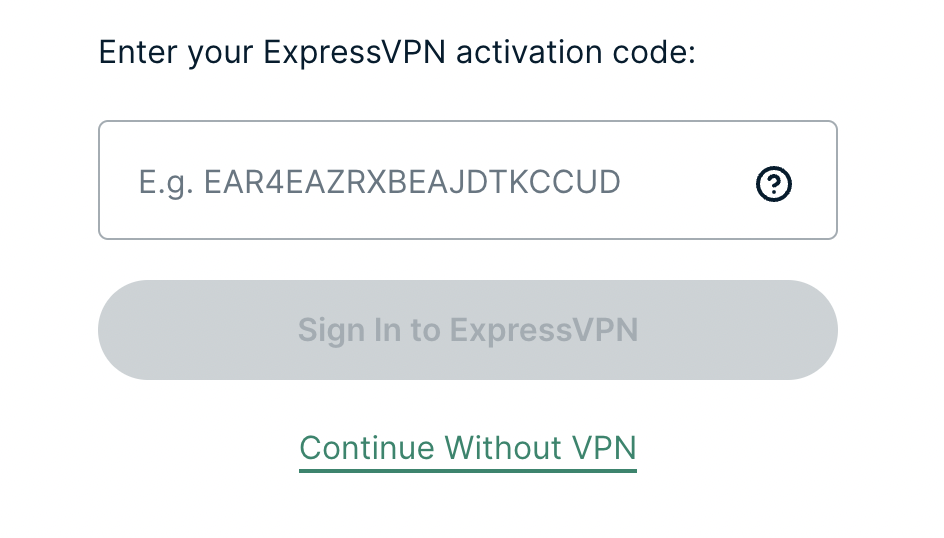
4b. If your FlashRouter is not wired correctly or is not receiving Internet properly make sure you are wired as detailed in the diagram that appears. If you are stuck at this screen we recommend powering off your ISP modem and any other router that the ExpressVPN FlashRouter is wired to and then powering them back up one by one.
Proceed with step “4a” above once the router is receiving Internet and you are prompted to enter the Activation Code.
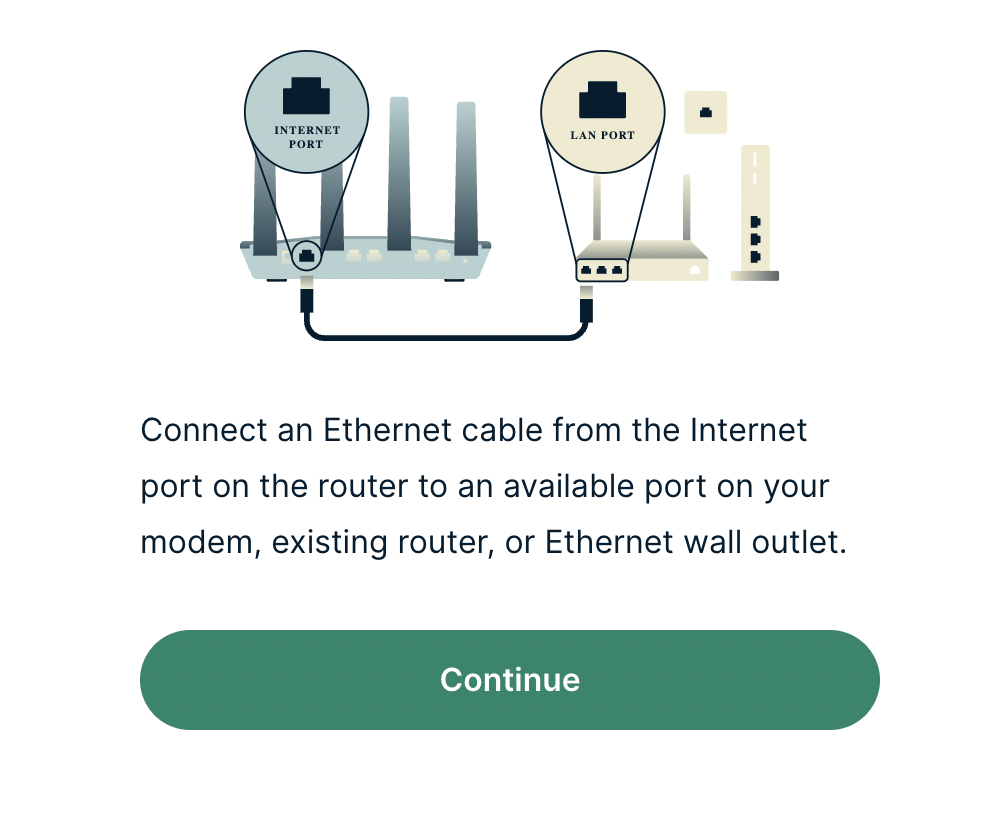
5. Select if you want to share anonymous crash report data with ExpressVPN to help them improve the firmware for future releases.
6. Set the WiFi name and password your wireless devices will use to connect to the FlashRouter’s network. Make sure the WiFi name is unique and not a duplicate of an existing WiFi name if you change it. You can also leave it as the default information if you like. Click Continue.
7. Enter the admin password you will use to access the ExpressVPN router settings. Be sure to TYPE CAREFULLY when setting the admin password as a typo will result in needing to reset the router again. Note this password in a secure location or commit it to memory.
8. Your ExpressVPN FlashRouter is now fully setup!
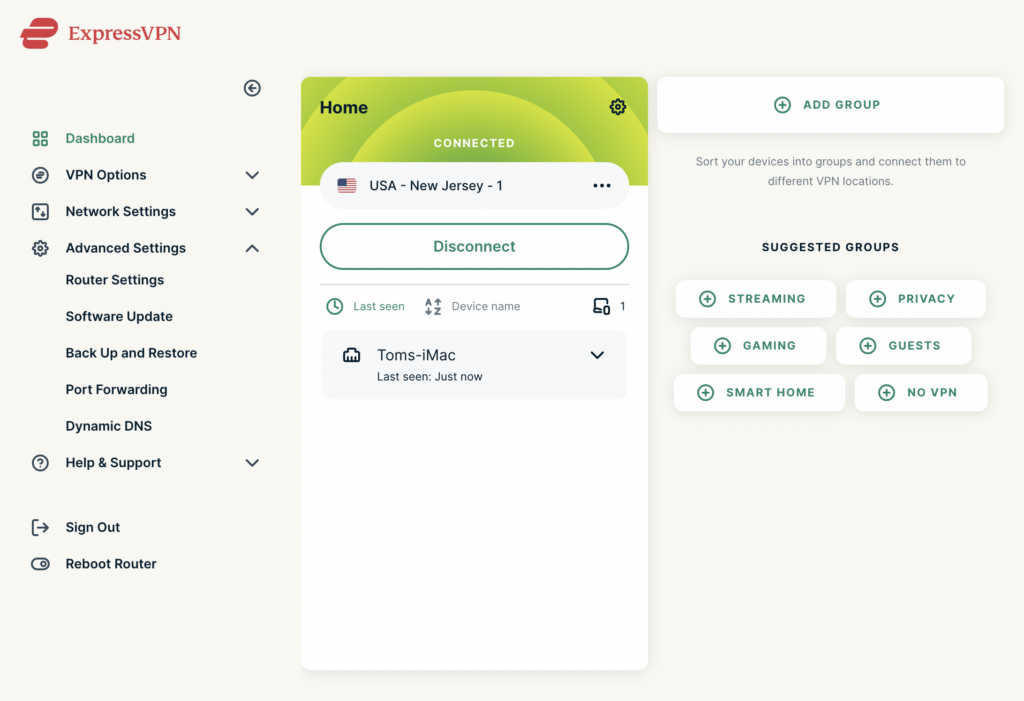
Wireless Guest Network Setup – Bridged (Advanced)
If you would like to prevent visitors from connecting to your main WiFi network then you can create a Bridged Guest Network that will prevent access to the main router. This setup also allows you to create different rules for different WiFi SSID’s in your home ranging from QoS controls, access restrictions, VPN network segmentation, and more.
Preparing for Wireless Guest Network Setup
If you have a Dual-band or Tri-Band router you can setup a WiFi Guest Network, creating a separate VLAN (virtual local area network) for your visitors, or in order to segment your VPN networks on any band you like. We recommend using the 2.4GHz network for your DD-WRT Guest Wireless Network so it is compatible with the most possible WiFi devices. Setting up a guest network for visitors in your home allows you to keep them off of your main WiFi network.
We recommend performing this setup while connected to the FlashRouter via ethernet cable. If your computer does not have an ethernet port and you must proceed via wireless connection to the FlashRouter pay attention to the wireless connection as you may need to rejoin the FlashRouter’s network after making changes.
DD-WRT Router Setup for Wireless Guest Network
Enter Wireless settings
Navigate to Wireless > Basic Settings
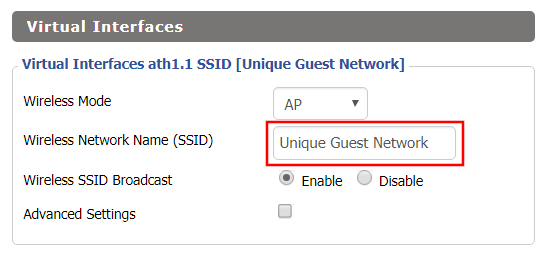
- Under the 2.4GHz or 5GHz Interface click the Add button.
- In the Wireless Network Name (SSID) field enter the unique network name of the guest network.
- Click Save.
Enter Wireless Security settings
Navigate to Wireless > Wireless Security
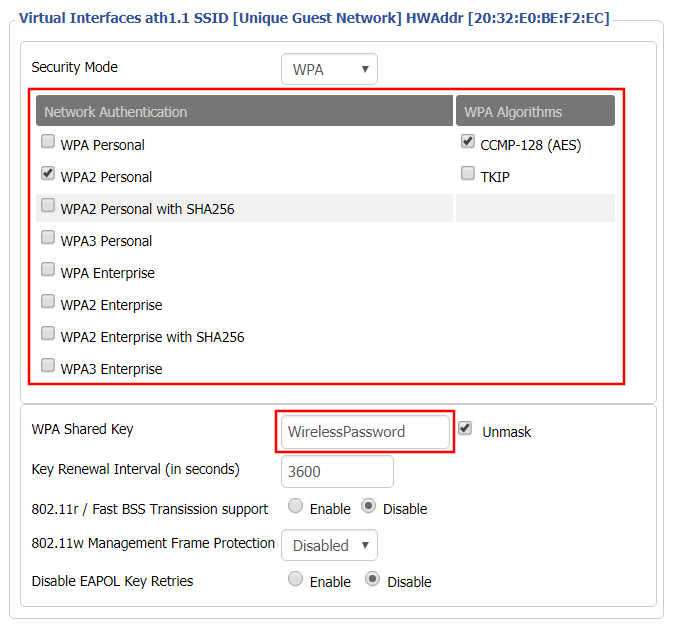
- Duplicate the wireless security settings that are set for the other bands for the newly created virtual interface.
- Click Apply Settings.
- Reboot your router.
Create Bridge
Navigate to Setup > Networking
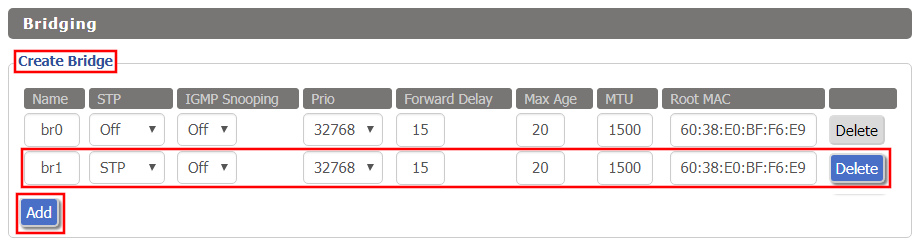
- Under Create Bridge click Add. Name the newly created bridge br1.
- Click Apply Settings
Assign to Bridge

- Under Assign to Bridge select br1 from the Assignment dropdown. Select wl1.1 or ath1.1 depending on your router model.
- Click Apply Settings.
Depending on the router model and WiFi band you are using, the wireless interfaces will be labelled differently.
This setting can be labelled wl1.1, ath0.1, wl2.1, and so on. Make sure when you get up to the bridge assignment section that you are using the correct guest network Virtual Interface.
Network Configuration br1
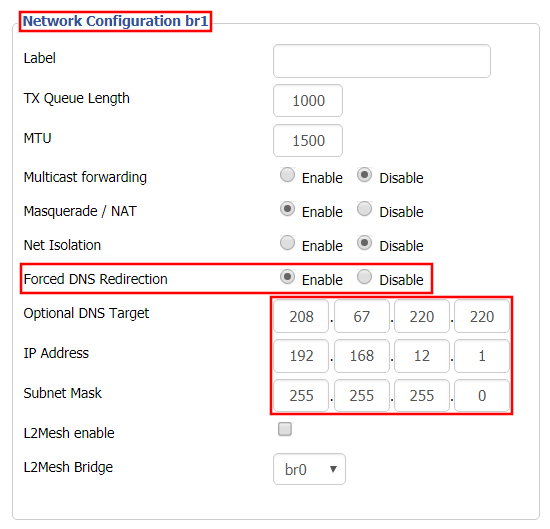
- Under Network Configuration br1 select Enable for Forced DNS Redirection.
- Set Optional DNS Target to 208.67.220.220
- Set IP Address to 192.168.12.1
- Set Subnet Mask to 255.255.255.0
- Click Apply Settings.
Multiple DHCP Server
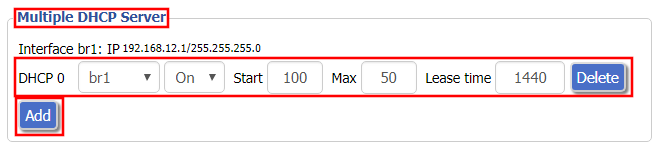
- Under Multiple DHCP Server click Add.
- Set the first dropdown to br1.
- Click Apply Settings.
- Reboot your router.
Firewall Rules
Navigate to Administration > Commands
- Copy the fire script from below and paste into the empty Commands shell
- Click Save Firewall.
- Wait one minute and then reboot your router.
iptables -I FORWARD -i br1 -o br0 -m state –state NEW -j DROP
iptables -I FORWARD -i br0 -o br1 -m state –state NEW -j DROP
iptables -I INPUT -i br1 -p tcp –dport telnet -j REJECT –reject-with tcp-reset
iptables -I INPUT -i br1 -p tcp –dport ssh -j REJECT –reject-with tcp-reset
iptables -I INPUT -i br1 -p tcp –dport www -j REJECT –reject-with tcp-reset
iptables -I INPUT -i br1 -p tcp –dport https -j REJECT –reject-with tcp-reset
You will now have a working Bridged Guest Network on the FlashRouter. By inputting the firewall rules, this will also prevent any guests on your network from gaining access to your router settings.
Back up your settings
Navigate to Administration > Backup
- Click the Backup button.
- A file named nvrambak.bin will be saved to your computer.
- You can load nvrambak.bin to restore your settings in the event of a reset.
Setting up a Guest WiFi Network on Roqos
Create a Guest WiFi network on your Roqos to segment certain devices from the main network and set custom content filters as you see fit. Note that this is only for 2.4GHz wireless.
Login to Roqos Core UI web app in a browser on any computer or smart device.
1. Click the navigation menu and select Basic Settings > WiFi Settings.
2. Click Guest WiFi.
3. Toggle the Enable slider and set the Network Name and Guest WiFi Password. Click Save.
4. Optional: If you wish to set specific Content Filters for the Guest Network and set the Filters that you see fit.
How to Access Your GL.iNet FlashRouter Settings
This quick guide walk you through connecting to your GL.iNet FlashRouter (Flint, Slate, Beryl, or Marble) and logging into the admin settings page. You’ll use either WiFi or an Ethernet cable, then access the router dashboard through your browser.
Step 1. Connect Your Device to the Router
You can connect by WiFi or Ethernet:
- WiFi: Look for a network name like FlashRouter24 or FlashRouter50
- The WiFi password has been set to: Wireless#9483C
- ⚠️ Be sure to capitalize the “W” in
- Ethernet: Plug an Ethernet cable from your computer into one of the router’s LAN ports (usually marked or color-coded differently from the WAN port).
👉 Pro tip: Disconnect from any other WiFi networks during setup.
Step 2. Open the Router Login Page
- Open a web browser (Chrome, Safari, Firefox, Edge).
- In the address bar, type: 192.168.8.1
- Press Enter.
This is the local router dashboard address (not a public website). If the page doesn’t load:
- Try a different browser.
- Clear your cache.
- Ensure your device is connected to the FlashRouter network.
Step 3. Log In to the Router Settings
- Default password:
glopenwrt1oropenwrt - This is the factory default for all GL.iNet routers shipped by FlashRouters.
💡 Once you’re in, you can update your admin password in the settings for extra security.
Next Steps
Now that you’ve accessed your GL.iNet FlashRouter, you can:
- Set up your VPN service
- Customize your WiFi name and password
- Adjust device controls and security settings
Check our support library for your specific VPN setup guide.
How do I access my Roqos device settings?
Your Roqos Core’s settings or UI (User Interface) is accessible via a secure cloud based connection rather than the typical local access of other routers. This means that you can manage your Roqos from anywhere in the world not just at home.
Visit the Roqos Login URL
From any device that has a browser such as a computer, smartphone, or tablet visit login.roqos.com

Login with your Roqos account
Enter in the email and password that you set when your Roqos was initially setup. If you still need to create your Roqos account and activate your Roqos follow our Activate and Connect Roqos to Internet guide.
Proceed with making the changes to the settings you desire
Now that you are logged in to your Roqos UI you adjust any settings as you see fit for your network. For guides on how to make specific changes to your Roqos view our Roqos Setup Guide area.
Why is my DNS showing as 192.168.11.1 on my devices?
When connected to a FlashRouter’s network the DNS settings of the devices will be reporting as 192.168.11.1. This means that the router is handling DNS internally through the servers you have set in the Setup > Basic Setup section of the router. If you did not set any custom DNS here, then you will using your ISP or VPN DNS servers automatically.
You can always customize the DNS servers in the router to your preferred servers and through DNSmasq the router will use 192.168.11.1 to route these servers to your connected devices.
In some instances disabling DNSMasq in the DD-WRT settings can help unblock previously blocked websites while connected to VPN. This will force devices to report the DNS servers set in the router directly as opposed to 192.168.11.1.
Disabling DNSMasq is not recommended unless FlashRouters specifically advises you but we have seen this work for certain VPN providers. To disable the DNSMasq do the following.
Navigate to Setup > Basic Setup
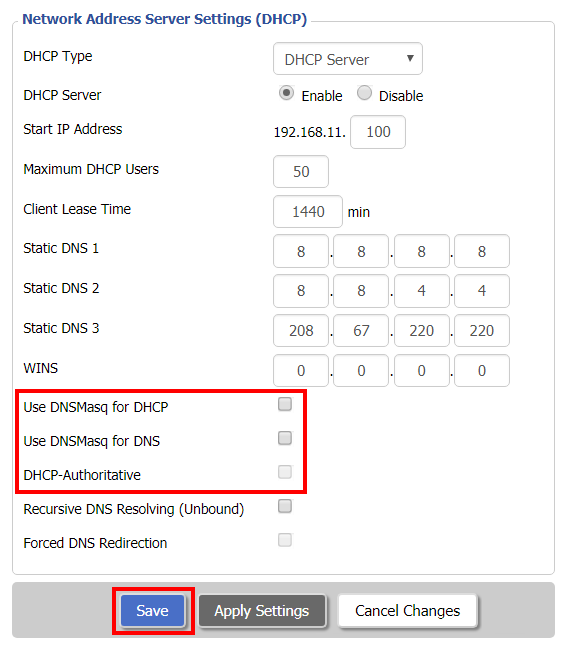
- Uncheck Use DNSMasq for DHCP.
- Uncheck Use DNSMasq for DNS.
- Uncheck DHCP-Authoritative.
- Click Save.
Navigate to Services > Services
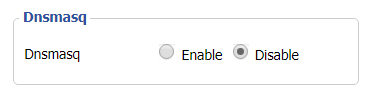
- Set DNSMasq to Disable.
- Click Apply Settings.
- Reboot router.
Set a Static IP for your connected devices on Roqos
By assigning specific Static IP addresses to your devices you can better manage your network and make sure they connect with the same Local IP Address each time they connect to your Roqos.
Login to Roqos Core UI web app in a browser on any computer or smart device.
1. Click the navigation menu and select Basic Settings > LAN Settings.
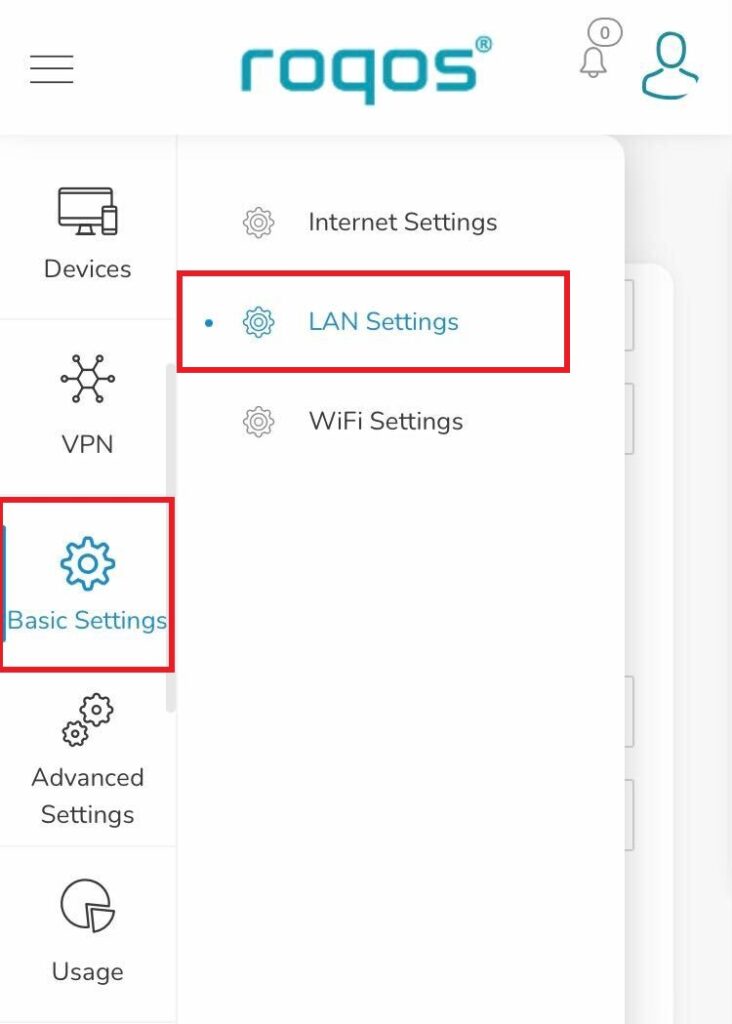
2. Click Static IP Assignments.
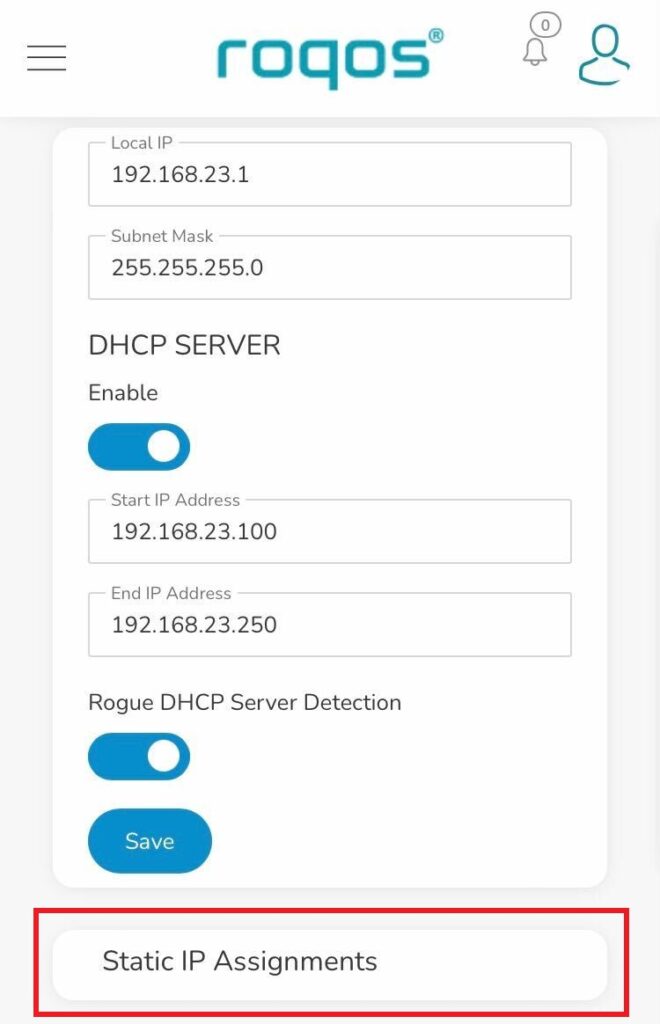
3. Click Add Assignment.
4. Toggle the device hat you want to set a Static IP for and then enter 192.168.23.x with x being any number between 2 and 254. Click Save.
Now, every time the device connects to the Roqos network it will be assigned the same Static IP address on the Local network.